West Bank: Israeli settlers attack European diplomats and beat a French mayor
published on
countries
sources
articles
More divergent than 37% of recent comparable stories (reference: 90 recent stories measured with the same method).
Accounts of the Taybeh attack come from witnesses, diplomatic missions, and Israeli authorities, and do not all focus on the same elements: the events on the ground, the role of the army, the political response, and the series of olive harvest violence.
The Israeli police have opened an investigation; no arrests are mentioned in the sources, and Paris and Brussels continue to demand prosecutions and sanctions.
What the witnesses are saying
Digi24 reports that the settlers allegedly first attacked Palestinians before reaching the diplomats. The Romanian website mentions a woman of around 70 years old being hit and insulted, and a man beaten to the point of requiring six stitches to the head.
« I think that if the settlers act like this, there is tolerance from the Israeli government. »
According to Army Radio, cited by the Jerusalem Post, about seven masked settlers are implicated. PerthNow relays the account of the radio's correspondent, Doron Kadosh: they surrounded a diplomatic vehicle, demanded identity papers, and broke a window. Haaretz quotes Israeli activist Amit Orfali, who speaks of "seven masked settlers armed with clubs" and death threats.
The descriptions of the weapons vary according to the media: iron bars in the mayor's account reported by Channel News Asia, sticks for La Libre Belgique, clubs for RFI. Digi24 quotes a witness who says a masked assailant shouted "Vive la France", and indicates that the mayor's wife and the Archbishop of Cambrai, Vincent Dollmann, were threatened.
The army and the coordination of the visit
Gideon Saar condemned the attack and spoke of "Israeli rioters," reproaching the consulates for not having coordinated the visit with the army. According to CBS News, the Israeli army also condemned an act of violence and specified that the visit had not been coordinated with it, with no soldier on site.
The Jerusalem Post published the testimony of an Israeli activist who was present: "We informed the army in real time, but it neither arrived nor responded." The newspaper recalled that Tsahal had completed its preparations for the harvest earlier in October, due to fear of nationalist violence.
The Israeli police opened an investigation, according to The Jerusalem Post and CBS News. CBS wrote that it is seeking to locate the victims and identify the suspects. None of the seven reports mention an arrest.
The responses from Paris, Brussels, and Jerusalem
Jean-Noël Barrot has called on Israel to "imperatively stop the perpetrators" and to "bring them to justice", according to the French press. Maxime Prévot, according to La Libre Belgique, is calling on the Israeli authorities to bring the perpetrators to justice. According to ABC News, he links the attack to Israel's "illegal colonization policy" and announces that he will advocate for new European Union sanctions.
« Picking olives, informing or exercising diplomatic functions should never expose anyone to an attack »
Reuters, via the Straits Times, indicates that the Israeli army, the European Commission, and the French and Polish ministries had not responded to requests for comment. Channel News Asia, on its part, recalls that Britain has imposed economic sanctions and that Israel subsequently closed the British consulate in Jerusalem.
Benjamin Netanyahu's office is quoted in two ways. According to CBS News, it deems any violence against diplomats unacceptable and demands evidence before drawing conclusions. The French press notes that it denounces a campaign of "slander" against the settlers. The HuffPost recalls that after the aggression against the Washington Post photographer, the same office had said that those responsible should be held accountable.
A series of violent incidents before the election
The French press mentions an AFP photographer who was beaten up the previous week. On Friday, October 16, 2026, a Washington Post photographer was seriously injured, according to French and Australian media. Channel News Asia reports that the American photographer's vertebrae are broken and their condition is moderate.
The Palestinian Ministry of Health has counted at least four dead and more than 100 injured since the start of the harvest, according to ABC News and PerthNow. Only Australian and American coverage provides this toll. This count measures what these two datasets have retained, not the extent of the violence on the ground.
ABC News places these events less than two weeks before highly contested elections. Channel News Asia talks about increasing violence ahead of a fiercely contested vote. Militants quoted by ABC estimate that Israeli authorities are doing little to stop these attacks.
About seven masked settlers, according to Army Radio as cited by the Jerusalem Post, armed with sticks according to the Belgian press.
The window of Consul General Anick Van Calster's vehicle was broken; the two Belgian diplomats are unharmed.
Maxime Prévot, Belgian minister, calls for EU sanctions against the perpetrators and those who support them.
Gideon Saar condemns the acts but cites the lack of coordination with the army; Netanyahu denounces a "slander".
Key figures
- 4 deaths, 100+ injuredToll since the start of the olive harvest, according to the Palestinian Ministry of Health1 source · ABC News
What the comparison reveals
Common ground and differences in coverage across the media analysed.
What the media report in common
Israeli settlers attacked a convoy of European diplomats (Belgian, French, Polish) in Taybeh, in the occupied West Bank, during the olive harvest.
Belgian Minister Maxime Prévot condemned the attack and stated that Belgium will continue to advocate for European sanctions against those responsible.
The mayor of Aulnoye-Aymeries, Bernard Baudoux, was hit during the attack, without being hospitalized according to sources that specify this.
Where media coverage diverges
Part de responsabilité des consulats
Question : la visite devait-elle être coordonnée avec l'armée israélienne ? Gideon Saar le reproche aux consulats, relayé par la presse australienne, française et roumaine ; la presse israélienne met en avant l'absence de réaction de l'armée alertée sur place.
Réponse du bureau de Netanyahu
Question : comment lire la réaction du bureau du Premier ministre ? La presse française cite sa dénonciation d'une campagne de « diffamation » ; la presse américaine retient sa demande de preuves face à une accusation grave.
Coverage aligned with this reading
Coverage that diverges
This grouping describes the publications analysed, not the position of these countries’ populations or of their governments.
Blind spots
What the coverage of each country leaves aside, while others put it forward.
 Singapore
- Gideon Saar's criticism of the lack of coordination with the army
 United States
- Belgian calls for European sanctions
How each country reads it
Preview: 3 of 7 media perspectives. Syntheses of the media analysed — not direct quotations. Method & limitations
 Australia
Canberra is relaying the European protests, which are focused on the Belgian demand to put an end to the impunity of settlers and on Gideon Saar's response.
2 sources · View sources
 Belgium
Brussels demands answers from Israel after the attack on its consulate: the Belgian press is treating the episode as an aggression against European diplomats and a call to sanction violent settlers.
2 sources · View sources
 France
Paris denounces the aggression against its nationals and demands that Israel arrest the perpetrators, making the supposed tolerance of the Israeli government towards settlers the real issue.
4 sources · View sources
The full text, country by country
Australia
DOMINANT ANGLE
Canberra is relaying the European protests, which are focused on the Belgian demand to put an end to the impunity of settlers and on Gideon Saar's response.
KEY POINTS
- Maxime Prevot claims that settlers targeted the Belgian consul general, French and Polish diplomats, and a French mayor, and promises to advocate for new EU sanctions.
- Gideon Saar condemned the attack while suggesting that the diplomats should have coordinated their visit with the Israeli army.
- At least four people have been killed and more than 100 injured since the start of the olive harvest, according to the Palestinian Ministry of Health.
ANALYSIS
Canberra, 18 October 2026. Australian media outlets, ABC News and PerthNow, reported on Saturday's attack in Taybeh, a Christian village in occupied West Bank, initially through the voice of European chancelleries.
According to ABC, masked settlers attacked a group of visiting European diplomats. Belgian Foreign Minister Maxime Prevot stated that the assailants targeted Palestinian civilians, French and Polish diplomats, the Belgian consul general to the Palestinians, and a French mayor. A Belgian vehicle was damaged. "The impunity of violent settlers must end," he wrote on X, calling on Israel, the occupying power, to protect Palestinians, diplomats, and journalists.
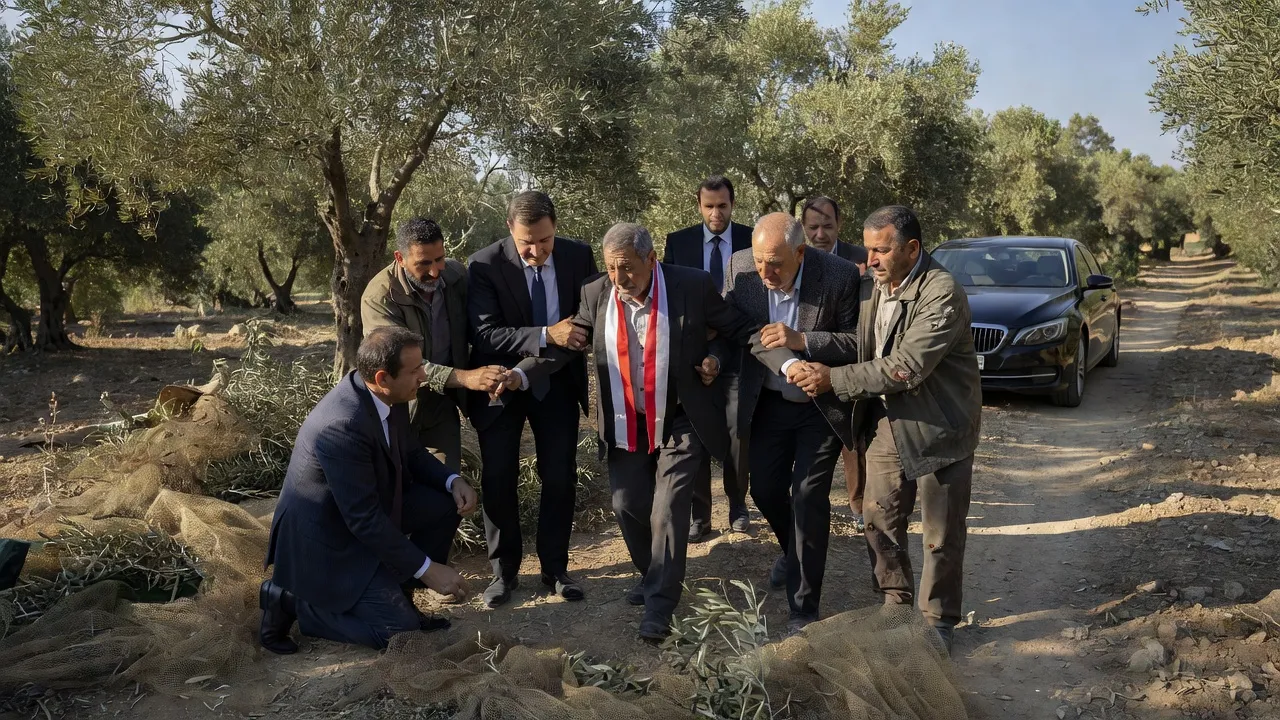
The mayor of Aulnoye-Aymeries, Bernard Baudoux, told Reuters that he was picking olives near Taybeh in solidarity with the local community when masked settlers "violently attacked" him: "I was thrown to the ground." PerthNow relayed the account of Israeli army radio correspondent Doron Kadosh: seven masked men surrounded a diplomatic vehicle, demanded identification papers, and broke a window. Videos show the mayor, wearing a tricolor scarf, sitting on the dusty ground.
Israeli Foreign Minister Gideon Saar condemned the attack and referred to "Israeli rioters," while suggesting that the diplomats should have coordinated their visit with the army, which could have guaranteed their security. Palestinian Vice President Hussein al-Sheikh sees this as a small example of the "daily terrorism" suffered by Palestinians.
PerthNow placed the event in the context of the olive harvest: at least four dead and over 100 injured since its start, according to the Palestinian Ministry of Health. On Friday, a Washington Post photographer was seriously injured. Activists believe that Israeli authorities are doing little to curb these violent incidents. Maxime Prevot linked the attack to Israel's "illegal colonization policy" and promised to advocate for new European Union sanctions.
Belgium
DOMINANT ANGLE
Brussels demands answers from Israel after the attack on its consulate: the Belgian press is treating the episode as an aggression against European diplomats and a call to sanction violent settlers.
KEY POINTS
- A delegation of Belgian, French, and Polish diplomats was participating in the olive harvest in Taybeh when masked, baton-wielding settlers encircled the convoy.
- A window of Belgian Consul General Anick Van Calster's vehicle was smashed; the two Belgian diplomats are unharmed, French Mayor Bernard Baudoux was hit.
- Maxime Prévot condemns the attack and asserts that the country will continue to advocate for European sanctions against those responsible and their supporters.
ANALYSIS
Brussels, 18 October 2026. On Saturday, 17 October 2026, Israeli settlers attacked a convoy of European diplomats near the village of Taybeh, in occupied West Bank. According to the Belgian press, a delegation of Belgian, French, and Polish diplomats was participating in the olive harvest "as a symbolic show of support for the local population," explained Laurens Soenen, spokesperson for the cabinet of Foreign Minister Maxime Prévot.
La Libre Belgique and VRT report that the convoy was surrounded by masked settlers, armed with sticks, who threw stones at the vehicles. "The delegation tried to leave, but a window of the consul general's vehicle was broken," Soenen specified. The Belgian consul general in Jerusalem, Anick Van Calster, and a second Belgian diplomat were present; they are unharmed. The communist mayor of Aulnoye-Aymeries, Bernard Baudoux, was beaten, a video seen by AFP showing him lying on the ground against a car. According to a diplomat, his life is not in danger.
Maxime Prévot reacted on X: "I condemn with the utmost firmness the attack by masked settlers in Taybeh." He noted that a Belgian vehicle had been damaged and that "the team is safe." He calls on the Israeli authorities to bring the perpetrators to justice and affirms that Belgium will continue to advocate for European sanctions against the perpetrators of these violent acts and those who support them.
VRT places the incident in a broader trend: since the start of the olive harvest, late September, violence in the West Bank is on the rise again. The two media outlets primarily address the incident from the angle of consular staff protection and the response of the Belgian government, with little space for the Israeli version or the situation of Palestinian farmers in Taybeh.
The articles consulted do not mention the reaction of the Israeli government or the electoral context. They emphasize the symbolic nature of the mission, described as a gesture of support for the inhabitants, and the fact that the European delegation was composed of three diplomatic missions, Belgian, French, and Polish, some of whose members saw their vehicle targeted in broad daylight.
France
DOMINANT ANGLE
Paris denounces the aggression against its nationals and demands that Israel arrest the perpetrators, making the supposed tolerance of the Israeli government towards settlers the real issue.
KEY POINTS
- On Saturday, October 17, settlers attacked a convoy from the French, Belgian, and Polish missions in Taybeh; Bernard Baudoux, 78, mayor of Aulnoye-Aymeries, was hit without being hospitalized.
- Jean-Noël Barrot called on Israel to "imperatively stop the perpetrators" and to "bring them to justice".
- Gideon Saar condemned the violence while criticizing the consulates for lacking coordination with the army, as Benjamin Netanyahu's office denounces a campaign of "defamation".
ANALYSIS
Paris, October 17, 2026. Israeli settlers attacked a convoy of European diplomats on Saturday, October 17, in Taybeh, a predominantly Christian village in the occupied West Bank, beating Bernard Baudoux, 78, the communist mayor of Aulnoye-Aymeries (Nord). Cars from the French, Belgian, and Polish missions had brought the delegation, including the French consul general in Jerusalem, when the settlers launched a raid to prevent Palestinian farmers from harvesting olives, according to witnesses cited by AFP.
Images seen by AFP show the elected official, wearing a tricolor sash, slumped against a car. He did not require hospitalization and was able to continue his visit, which was intended to sign a cooperation agreement between the two localities. According to RFI, the settlers, masked and armed with clubs, also smashed the window of a Belgian diplomatic car.
The mayor draws a political lesson: "I think that if the settlers act like this, there is tolerance from the Israeli government." He adds: "As for me, I will return to my country, everything will be fine. Those who continue to suffer the most are those who are here."
The reaction from Paris is firm. Foreign Minister Jean-Noël Barrot called on the Israeli authorities to "imperatively stop the perpetrators" and to "bring them to justice," judging these acts "revolting" and demanding that these criminal violent acts cease "with utmost urgency." Belgium, through the voice of Maxime Prévot, condemned the attack by masked settlers "with the greatest firmness."
On the Israeli side, the responses diverge. Gideon Saar firmly condemned acts that he attributes to "Israeli rioters," while also reproaching the consulates for not having coordinated the visit with the army. The army condemned the attack and the police opened an investigation. The office of Benjamin Netanyahu, however, denounces a campaign of "defamation" against the settlers. The HuffPost recalls that this same office, after the aggression of the American photographer from the Washington Post on Friday, had said that those responsible should "be held accountable," without accusing the settlers.
The French press places this episode in a series: an AFP photographer beaten up the previous week, a Washington Post photographer seriously injured on Friday, in a context of intensification of violence against the Palestinian olive harvest.
 Israel
DOMINANT ANGLE
Jerusalem takes a firm stance on security: the Taybeh attack is presented as a failure of the army and police to protect during the olive harvest, rather than a dispute with Europe.
KEY POINTS
- According to Army Radio, as cited by the Jerusalem Post, around seven masked settlers attacked Palestinian olive pickers near Taybeh, in the presence of the French consul and Belgian and Polish diplomats.
- An Israeli witness claims to have alerted the army in real time, which "did not arrive or respond"; the police have opened an investigation.
- Belgian Minister Maxime Prévot is calling for sanctions against those responsible and states that "the impunity of violent settlers must end".
ANALYSIS
Jérusalem, October 17, 2026. In the Israeli press, the attack on Taybeh is first reported as a security failure on the ground, in the heart of the olive harvest. The Jerusalem Post, citing Army Radio, mentions "approximately seven masked settlers" who allegedly attacked, on Saturday, Palestinian olive pickers near the village of Taybeh, in the presence of French diplomats, including the French consul in Jérusalem, as well as Belgian and Polish diplomats. According to Army Radio, the settlers also smashed the windshield of a vehicle from the Belgian consulate.
Haaretz, for its part, reports that a delegation of European diplomats and public figures was attacked by masked settlers in this Christian village near Ramallah. The newspaper quotes Israeli activist Amit Orfali: "Seven masked settlers armed with clubs surrounded our vehicles, hit them, threatened us with death, and demanded to see our identity papers."
The Jerusalem Post also publishes the testimony of an Israeli activist who was present at the scene: the settlers blocked them, surrounded the vehicle, and demanded their identity cards. "We informed the army in real time, but it did not arrive or respond," she writes. The daily recalls that the Israeli army had completed its preparations for the harvest earlier in October, fearing nationalist violence and clashes between Palestinians and settlers.
The Israeli police have opened an investigation and transmitted the details of the incident to the Ministry of Foreign Affairs. The title also emphasizes that the Israeli army condemns the violence of the settlers. On the European side, Belgian Foreign Minister Maxime Prévot condemned the attack and announced that Brussels would continue to advocate for sanctions against "those responsible for this violence and those who support it." He added that "the impunity of violent settlers must end" and that these attacks "cannot be dissociated from Israel's illegal colonization policy."
In these two titles, the common thread remains the ability of the army and police to protect civilians and foreigners during the harvest, rather than the diplomatic quarrel with European capitals.
 Romania
DOMINANT ANGLE
Romania reports the attack on the European diplomatic convoy as an incident between Israel and several Union states, detailing the condemnations from Paris and Brussels and the response from Gideon Saar.
KEY POINTS
- Settlers attacked a convoy of French, Belgian, and Polish diplomats in Taybeh on Saturday; Bernard Baudoux, the 78-year-old mayor of Aulnoye-Aymeries, was thrown to the ground, with no hospitalization required (G4Media, Digi24).
- Gideon Saar strongly condemned the violence while criticizing European consulates for not coordinating the visit with the Israeli army (G4Media).
- Belgian Minister Maxime Prévot announced that Belgium would continue to push the EU to impose sanctions on the settlers involved (Digi24).
ANALYSIS
En Roumanie, October 17. Digi24 and G4Media, the latter according to AFP and Agerpres, report on the attack that occurred on Saturday, October 17, in Taybeh, a majority Christian village in the West Bank, against a convoy of European diplomats. Cars from the French, Belgian, and Polish missions were transporting the delegation, which was participating in the olive harvest with Palestinian farmers and the launch of a twinning agreement between Taybeh and Aulnoye-Aymeries, in northern France.
The account focuses on Bernard Baudoux, a 78-year-old communist mayor. According to Digi24, he was wearing his tricolor scarf and trying to get into a vehicle with diplomatic plates when he was "attacked and thrown to the ground". A witness quoted by the site claims that the masked assailant shouted "Vive la France". G4Media, citing AFP, mentions kicks and a video where the elected official is seen collapsing near a car; two people who spoke to him indicate that hospitalization was not necessary. Digi24 adds that his wife and the Archbishop of Cambrai, Vincent Dollmann, were threatened by seven men, some armed with sticks, and that a window of a Belgian armored vehicle was broken.
Digi24 also describes, according to the account it reproduces, the prior aggression against Palestinians: stolen olives, a woman around 70 years old beaten and insulted, a man injured in the head, requiring six stitches.
Reactions occupy a large place. Belgian Foreign Minister Maxime Prévot condemned the violence against Palestinians, diplomats, and journalists and said that Belgium will continue to push the European Union to sanction the colonists involved. Gideon Saar, the head of Israeli diplomacy, "firmly condemned these serious acts" attributing them to "turbulent Israeli elements", while reproaching the European consulates for not having coordinated the visit with the Israeli army.
The two media outlets present the episode as an escalation of violence against the olive harvest, without placing it in Israeli domestic politics or a Romanian debate. The retained angle is that of a diplomatic incident targeting representatives of EU countries, of which Romania is a member, with particular attention to the religious dimension of the village and the presence of a prelate.
Singapore
DOMINANT ANGLE
Singapore reports, via news agency dispatches, a diplomatic crisis: European diplomats and a French mayor attacked in the West Bank, and European capitals calling for sanctions against settlers.
KEY POINTS
- The mayor of Aulnoye-Aymeries, Bernard Baudoux, 78, says he was kicked and hit with iron bars; he did not need hospital treatment (Channel News Asia).
- Jean-Noël Barrot calls on Israel to "urgently stop the criminal violence" and arrest those responsible; the Israeli Ministry of Foreign Affairs condemns the attack (Channel News Asia).
- Belgian Minister Maxime Prévot announces that Brussels will continue to demand sanctions against the perpetrators of the violence and those who support them (Straits Times).
ANALYSIS
Singapour, 18 October 2026. The two Singaporean media outlets, Channel News Asia and the Straits Times, are treating the episode as a European diplomatic incident in the occupied West Bank, based on news agency dispatches (AFP, Reuters).
Channel News Asia opens with the facts: on Saturday, 17 October, Israeli settlers attacked a convoy of European diplomats and assaulted a visiting French mayor. The newspaper specifies that the violence in the West Bank has "shocked a large part of the world", with the United Kingdom having imposed economic sanctions, which led Israel to close the British consulate in Jerusalem. The mayor of Aulnoye-Aymeries, Bernard Baudoux, 78 years old, recounts that masked settlers hurled defamatory remarks about France, beat him with kicks and iron bars while he was accompanying Palestinian olive pickers with French and Belgian representatives in Jerusalem and Polish diplomats. He was wearing a tricolor scarf, was seen collapsing by a car, without needing hospital care.
The text resumes its political reading: "if there is tolerance on the part of the Israeli government", he says, the settlers behave in this way. He adds that those who suffer the most are still those who live on the spot. The newspaper puts the attack into the electoral season, the day after an American photographer from the Washington Post was beaten, in a moderate condition with broken vertebrae, as violence rises before hotly contested elections.
French Minister Jean-Noël Barrot is asking Israel to "urgently stop the criminal violence" and arrest those responsible; his Belgian counterpart has launched a similar appeal. The Israeli Ministry of Foreign Affairs has condemned the attack on the diplomats, according to the text.
The Straits Times, via Reuters, gives the floor to Belgian Minister Maxime Prévot: masked settlers attacked Palestinians, Catholic representatives, and Western diplomats, including the Belgian consul general, French and Polish diplomats, and a French mayor; a Belgian vehicle was damaged. "Harvesting olives, informing, or exercising diplomatic functions should never expose anyone to an attack", he says, announcing that Brussels will continue to call for sanctions against the perpetrators and their supporters. The Israeli army, the European Commission, and the French and Polish ministries had not responded to requests for comment.
United States
DOMINANT ANGLE
The United States capital links the Taybeh aggression to the Israeli campaign: the American press weighs the reaction of Netanyahu's office, which calls for caution, less than two weeks before a tight election.
KEY POINTS
- The Israeli police have opened an investigation after online images showed diplomats being attacked near Taybeh, according to CBS News.
- Netanyahu's office deems violence against diplomats unacceptable but calls for evidence: "The more serious the accusation, the greater the demand for compelling evidence."
- According to the Palestinian Ministry of Health cited by ABC, at least four people have been killed and more than 100 injured since the start of the harvest.
ANALYSIS
The United States government is closely following the situation in the occupied West Bank, where an attack on Saturday against European diplomats near the village of Taybeh has been reported by CBS News and ABC News as part of a sequence of violence during the olive harvest, rather than an isolated incident.
CBS reports that the Israeli police have launched an investigation after online images showed several diplomats being assaulted. The police say they are working to locate the victims and identify the suspects "with the aim of bringing them to justice." The Israeli army condemned a "severe act of violence" committed by "Israeli rioters," while noting that the visit had not been coordinated with them and that no soldiers were present. Israeli channel Kan, cited by CBS, indicates that the delegation included representatives from France, Belgium, and Poland.
The office of Benjamin Netanyahu plays a central role in CBS's account. It deems any violence against diplomats "unacceptable," but calls for caution before "drawing conclusions": "The more serious the accusation, the greater the demand for compelling evidence." It also raises concerns about a "coordinated campaign to smear Israel." CBS writes that this response attempts to cast doubt on the circumstances of the attack.
ABC News quotes Belgian Foreign Minister Maxime Prévot, who says that masked settlers targeted the Belgian consul general, French and Polish diplomats, and Catholic representatives; "a French mayor was assaulted and a Belgian vehicle damaged," but his team is safe and sound. He links the attack to Israel's "policy of illegal colonization," promises to push for new European sanctions, and asserts that the "impunity" of violent settlers must end. ABC also cites activist Amit Orfali, who says that the masked men "threatened to kill us."
Both media outlets provide the American and health context. The day before, a Washington Post photographer was seriously injured in another attack. According to the Palestinian Ministry of Health, cited by ABC, at least four people have been killed and over a hundred injured since the start of the harvest. Activists estimate that Israeli authorities are doing little to stop these attacks.
ABC notes that these violent incidents occur less than two weeks before highly contested elections, which could put an end to Netanyahu's term. The American framing thus prioritizes the electoral stakes and the Israeli government's response over the fate of the Christian village or Franco-Palestinian cooperation.
Explore every perspective on this subject across 7 countries.
Compare viewpoints and see where they diverge.