
DOMINANT ANGLE
The United States capital links the Taybeh aggression to the Israeli campaign: the American press weighs the reaction of Netanyahu's office, which calls for caution, less than two weeks before a tight election.
Dominant angle identified — does not reflect unanimity of this country’s media
KEY POINTS
- 01
The Israeli police have opened an investigation after online images showed diplomats being attacked near Taybeh, according to CBS News.
- 02
Netanyahu's office deems violence against diplomats unacceptable but calls for evidence: "The more serious the accusation, the greater the demand for compelling evidence."
- 03
According to the Palestinian Ministry of Health cited by ABC, at least four people have been killed and more than 100 injured since the start of the harvest.
ANALYSIS
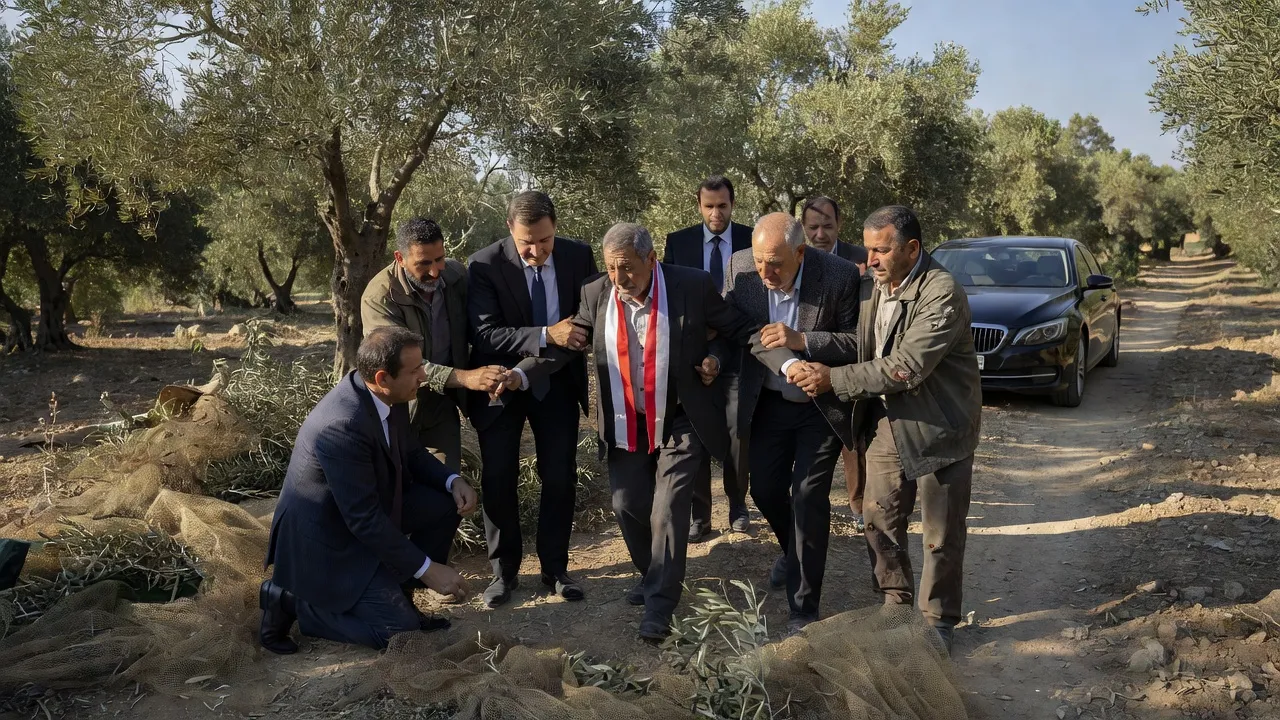
The United States government is closely following the situation in the occupied West Bank, where an attack on Saturday against European diplomats near the village of Taybeh has been reported by CBS News and ABC News as part of a sequence of violence during the olive harvest, rather than an isolated incident.
CBS reports that the Israeli police have launched an investigation after online images showed several diplomats being assaulted. The police say they are working to locate the victims and identify the suspects "with the aim of bringing them to justice." The Israeli army condemned a "severe act of violence" committed by "Israeli rioters," while noting that the visit had not been coordinated with them and that no soldiers were present. Israeli channel Kan, cited by CBS, indicates that the delegation included representatives from France, Belgium, and Poland.
The office of Benjamin Netanyahu plays a central role in CBS's account. It deems any violence against diplomats "unacceptable," but calls for caution before "drawing conclusions": "The more serious the accusation, the greater the demand for compelling evidence." It also raises concerns about a "coordinated campaign to smear Israel." CBS writes that this response attempts to cast doubt on the circumstances of the attack.
ABC News quotes Belgian Foreign Minister Maxime Prévot, who says that masked settlers targeted the Belgian consul general, French and Polish diplomats, and Catholic representatives; "a French mayor was assaulted and a Belgian vehicle damaged," but his team is safe and sound. He links the attack to Israel's "policy of illegal colonization," promises to push for new European sanctions, and asserts that the "impunity" of violent settlers must end. ABC also cites activist Amit Orfali, who says that the masked men "threatened to kill us."
Both media outlets provide the American and health context. The day before, a Washington Post photographer was seriously injured in another attack. According to the Palestinian Ministry of Health, cited by ABC, at least four people have been killed and over a hundred injured since the start of the harvest. Activists estimate that Israeli authorities are doing little to stop these attacks.
ABC notes that these violent incidents occur less than two weeks before highly contested elections, which could put an end to Netanyahu's term. The American framing thus prioritizes the electoral stakes and the Israeli government's response over the fate of the Christian village or Franco-Palestinian cooperation.