
DOMINANT ANGLE
Madrid takes from Katie Zacharia's downfall a portrait of a White House given over to improvisation, where recruitment spins out of control and the woman is made a scapegoat.
Dominant angle identified — does not reflect unanimity of this country’s media
KEY POINTS
- 01
Trump fired Katie Zacharia on Friday, five days after she took office, according to El País ("a week" according to HuffPost España).
- 02
Trump had told her: "Honestly, if I were you, I'd reconsider, Katie," judging that the media were treating her poorly.
- 03
A tough interview by Sean Hannity about her lawyer title, although she never passed the bar exam, and then Fox & Friends hastened her departure.
ANALYSIS
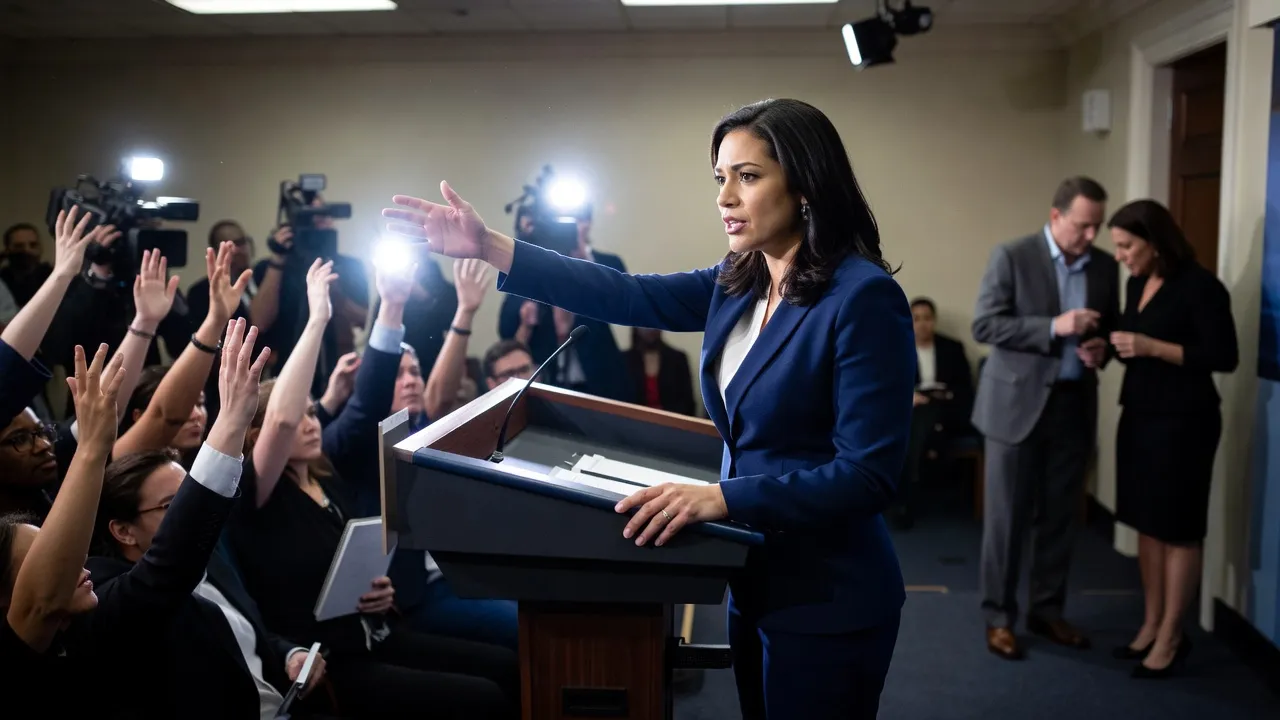
Madrid, October 16, 2026. Spanish media are covering Katie Zacharia's departure, who was appointed White House spokesperson to replace Karoline Leavitt, as a revealing episode of the Trump team's functioning rather than just a minor news item.
El País in English writes that Donald Trump "fired his brand new spokesperson on Friday, after just five days in the post". The account opens with the president's remarks to journalists: "Honestly, if I were you, I would reconsider, Katie, do you need this?" Trump claimed he wanted her to be happy and believed the media were treating her unpleasantly. HuffPost España, citing the president's advisors interviewed by CNN, talks about a dismissal "just a week" after the appointment, and specifies that Trump had mentioned that morning the possibility of reassigning her to another position in the administration.
The newspaper emphasizes one point: this time, Trump could not blame the "fake news". The decisive blow came from Fox News, a channel usually favorable to the president. Sean Hannity's tough interview, a personal friend of Trump, questioned the lawyer title that Zacharia had claimed for years although she had never passed the bar exam; the negative coverage on Fox & Friends followed. A former conservative commentator and spokesperson for the Department of Homeland Security, she had experienced a difficult first press conference.
The Spanish reading is political and internal. According to El País, the episode "has reinforced the impression of improvisation and chaos" in the White House recruitments. The newspaper adds an unwritten rule: when a crisis requires a scapegoat, it is generally a woman, and recalls the cases of former Attorney General Pam Bondi and former intelligence director Tulsi Gabbard.
HuffPost España emphasizes that this passage becomes one of the shortest at the head of presidential communication, without detailing historical comparisons. Both titles stick to the Washingtonian chronology: neither the remarks on China nor the issue of intelligence shared with Ukraine appear in the available excerpts. The attention focuses on the fragility of the teams around the president and on the weight of a conservative media relay capable of undoing a nomination in just a few days.