Colombia — news through its media
Stories followed in this country, with their framing set against the rest of the world.
55 subjects found
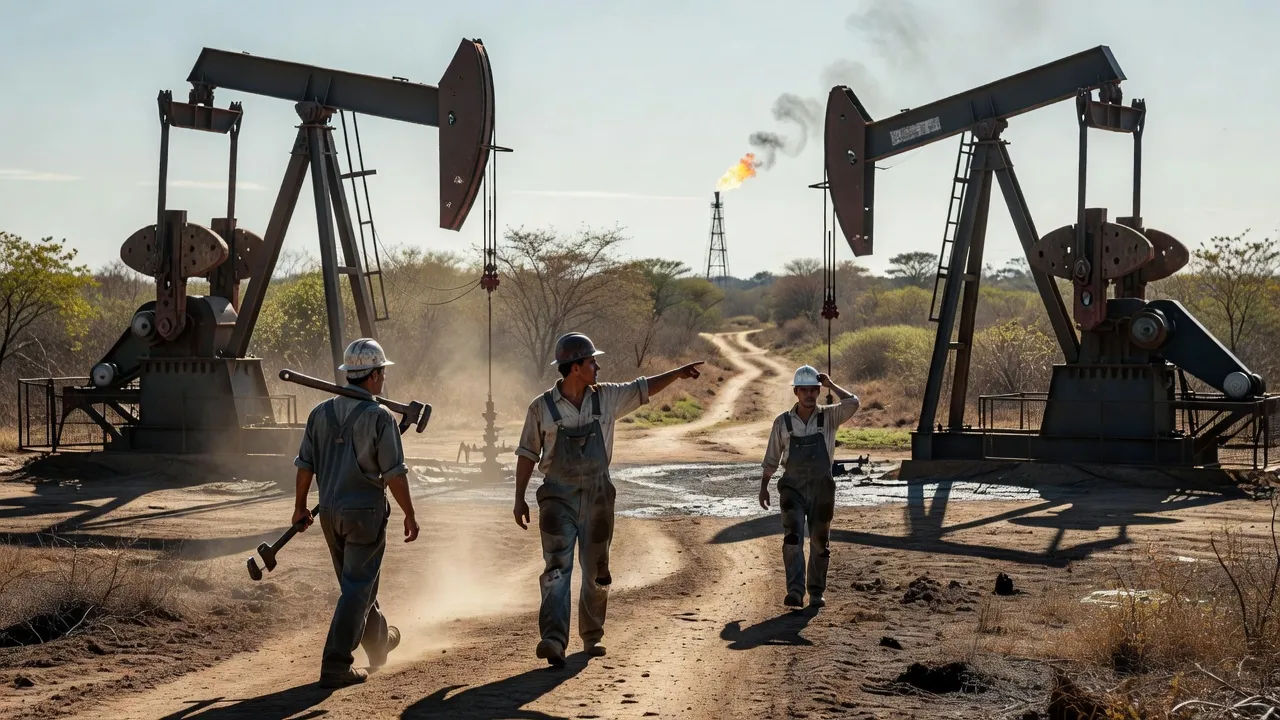
Trump announces a deal giving the United States control of 65 billion Venezuelan barrels
On 28 August 2026 Donald Trump announced a deal with Caracas covering, according to both governments, 17 fields with a proven potential of 65 billion barrels and an expected $100 billion in investment. Axios, which had revealed the talks the day before, puts the figure at 90 billion barrels across a dozen fields. The US strategic reserve is at a forty-year low.


 +9
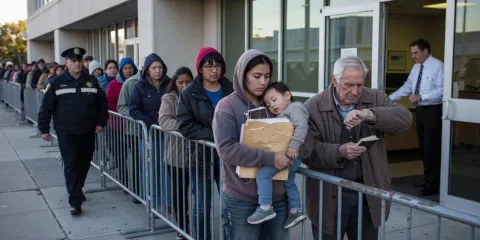
Washington suspends immigrant visa appointments worldwide
The US State Department has suspended immigrant visa interviews at its embassies and consulates worldwide, with no announced resumption date, citing in-depth training for its consular staff. Diplomatic posts say they will contact applicants to reschedule. The measure comes four days after a federal judge struck down the visa freeze targeting nationals of seventy-five countries, and a day after the announced revocation of two hundred thousand tourist and business visas.


 +6
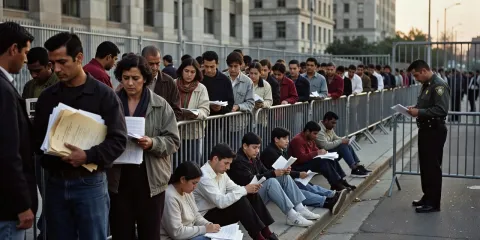
Washington prepares to revoke 200,000 visas held by asylum seekers
The Trump administration is preparing the largest mass visa revocation in American history: up to 200,000 tourist and business visas held by foreigners who have filed for asylum in the United States. The measure targets nationals already on US soil and has drawn reactions from Mexico to Colombia, from Nigeria to India and Thailand.

 +7

TikTok pays $400 million to settle US children's privacy investigation
TikTok and its Chinese parent ByteDance agreed to pay 400 million dollars to the US Justice Department to close an investigation into the collection of minors' data. The settlement is described as one of the largest ever reached in the United States over children's privacy. The figure reported varies from country to country.


 +4
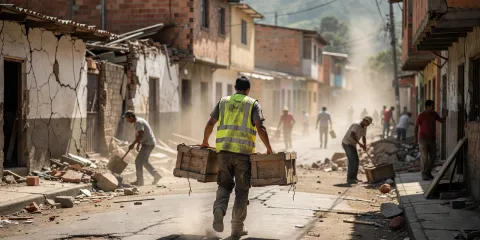
Colombia decrees a second state of emergency, economic and ecological, across 15 departments
On 19 August, Colombian President Abelardo de la Espriella signed decree 1261, establishing a second state of economic, social and ecological emergency for thirty days across 15 of the country's 32 departments. Ten days after the magnitude 7.4 earthquake, the toll stands at 319 dead and reconstruction financing has become the central issue.
+1
Trump Claims '100%' Control of Hormuz as the US Navy Strikes a Cargo Ship with Missiles
"The only one that has control of the Strait of Hormuz is the United States Navy," Donald Trump said from the Oval Office, claiming to have swept it entirely for mines. The next day a CENTCOM helicopter fired two Hellfire missiles at a Panama-flagged cargo ship running the blockade. Tehran is holding to its conditions; Pakistan and Qatar simultaneously report a diplomatic breakthrough. Oil is climbing.


 +5
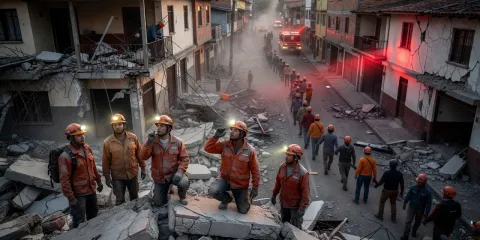
Magnitude 7.4 Earthquake in Colombia: National Disaster Declared Three Days After Espriella's Inauguration
At 7:34 a.m. on Monday, a magnitude 7.4 earthquake struck western Colombia, with its epicentre in Chocó. Felt as far as Quito, Panama and Caracas, it collapsed Pereira's airport and damaged hundreds of buildings. The president, in office for three days, declared a national disaster. Depending on the newsroom, the toll runs from 111 to 138 dead — and more than 2,000 people are registered as missing.
 +16
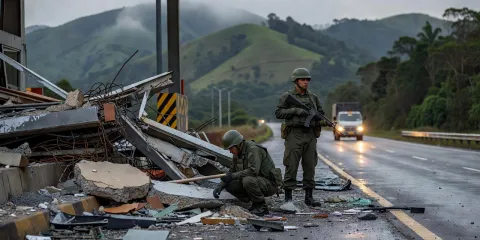
Explosive Attacks Mark Abelardo de la Espriella's First Day Leading Colombia
Sworn in on Friday at an army barracks in Cali, Colombia's new president saw his first day in office marked by two explosive attacks: a police officer killed by drones in Cesar, a toll booth destroyed in Cauca. By Sunday the Defensoría del Pueblo was counting attacks across eleven departments. Washington is pledging a billion dollars; Caracas reads it as a sign of its own turn to come.
+3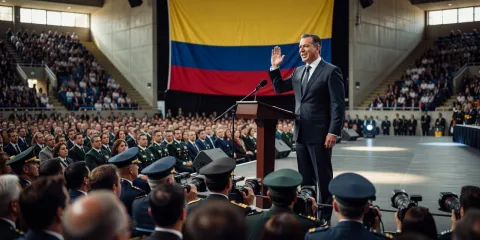
Abelardo de la Espriella sworn in as Colombia's president, in Cali not Bogotá
On 7 August 2026, millionaire lawyer Abelardo de la Espriella was sworn in for 2026-2030 before Milei, Kast, Noboa, Felipe VI and Infantino — but not Gustavo Petro. The ceremony was moved to Cali, the first speech delivered in a barracks, 11,000 personnel deployed. Fifteen countries describe the same man under fifteen different names: Trump ally, far-right president, anti-establishment outsider.

 +11
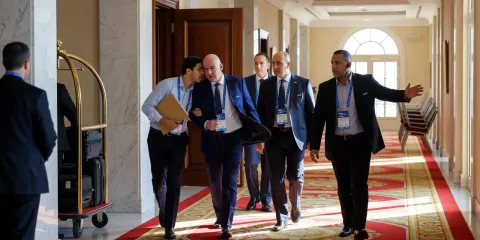
Gianni Infantino Abandoned by European Football, Backed by Africa, Facing UEFA Legal Threats
After pulling his plan to sell World Cup stakes to private investors, Gianni Infantino's re-election has gone from settled to uncertain: Wales, England, Serbia and Jordan have withdrawn their backing, UEFA is threatening FIFA with legal action, and both Arsène Wenger and the secretary general have distanced themselves. Twenty-one countries read the same crisis — Europe a fall, Africa a position to hold.


 +17
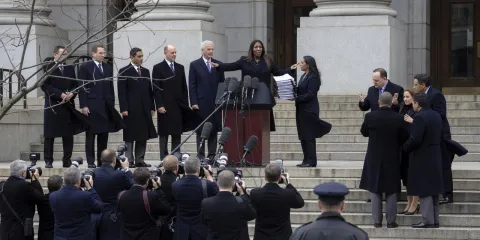
Twenty-Five US States Sue Over Trump's New Tariffs
Led by Letitia James, twenty-five states have petitioned the Court of International Trade to block tariffs of 10% to 12.5% covering nearly 99% of American imports. Nine countries tell their own exposure: the "tarifaço" in Brasília, 87% rejection in Santiago, flowers and copper in Bogotá.
 +5
Understand global stakes from every perspective.
718 subjects · 75 countries · 8174 perspectives