Egypt — news through its media
Stories followed in this country, with their framing set against the rest of the world.
79 subjects found
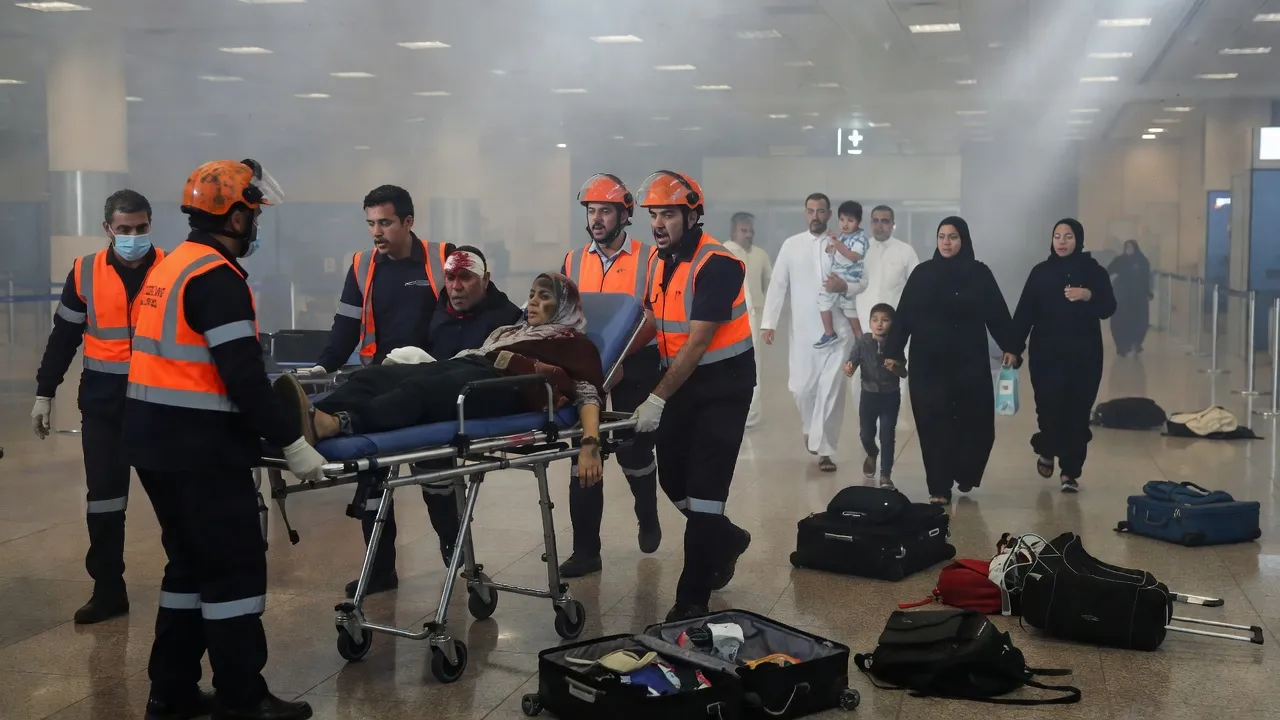
Saudi Arabia: twelve dead and 309 injured in an attack on Riyadh airport blamed on the Houthis
The third strike in a week on King Khalid airport killed people of seven nationalities; the Riyadh-led coalition vows to retaliate and Donald Trump says he is weighing US participation in strikes on the Houthis.


 +22
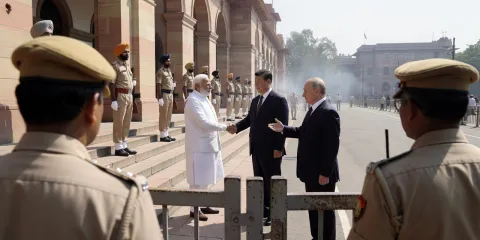
Vladimir Putin and Xi Jinping in New Delhi for a BRICS summit overshadowed by the wars in Ukraine and the Middle East
Vladimir Putin arrived in New Delhi on 11 September for the 18th BRICS summit, hosted by India on 12 and 13 September; Xi Jinping is making his first visit to India in seven years and is due to meet Narendra Modi on the 12th. The enlarged bloc accounts for nearly half the world's population and about 40% of global GDP, but the war in Ukraine and the conflict around Iran divide its members. India has deployed more than 30,000 security personnel.

 +14
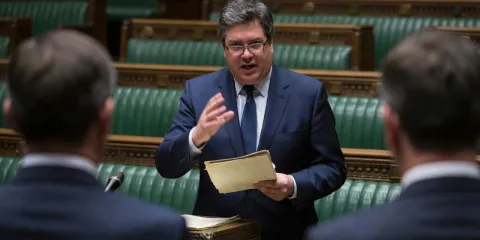
Twelve countries move to ban trade with Israeli settlements; Israel orders the British consulate closed
On Tuesday 8 September, twelve countries — the United Kingdom, France, Canada and nine European states — said they intend to ban trade with Israeli settlements in the occupied West Bank, which British Foreign Secretary Ed Miliband linked to “ethnic cleansing”. Two hours later Israel ordered the British consulate in East Jerusalem to close, told diplomats to leave and barred twelve Britons from entry. Washington said it would not follow.

 +16
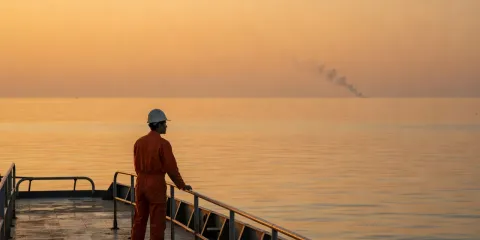
Washington destroys three Iranian tankers, Tehran says it hit three American ships
US Central Command said on Saturday 5 September that it had struck three Iranian oil tankers in response to ballistic missiles which it says the Revolutionary Guard fired at an aircraft carrier and a destroyer. Tehran calls the strikes a war crime under the United Nations Charter, and says it hit three American ships of its own. The two accounts of that night cannot be reconciled.


 +12
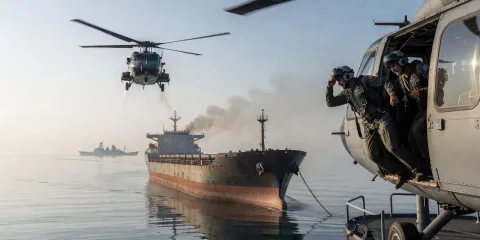
Trump Claims '100%' Control of Hormuz as the US Navy Strikes a Cargo Ship with Missiles
"The only one that has control of the Strait of Hormuz is the United States Navy," Donald Trump said from the Oval Office, claiming to have swept it entirely for mines. The next day a CENTCOM helicopter fired two Hellfire missiles at a Panama-flagged cargo ship running the blockade. Tehran is holding to its conditions; Pakistan and Qatar simultaneously report a diplomatic breakthrough. Oil is climbing.

 +5
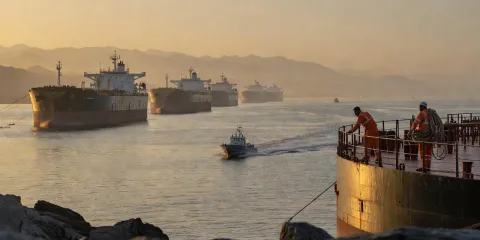
Iran Sets Six Conditions for Reopening Hormuz as the Revolutionary Guards Call the Strait a 'Theatre of War'
On Saturday the secretary of Iran's Supreme National Security Council published six preconditions for reopening the Strait of Hormuz: an end to the war, the lifting of the naval blockade and of sanctions, the withdrawal of US forces, compensation for war damage and the release of frozen assets. On Sunday the Revolutionary Guards hardened the line while Oman negotiated a temporary shipping corridor and Washington spoke of 'some progress'. A fifth of the world's oil is waiting.
 +19
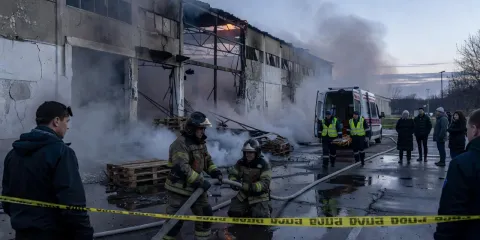
A Night of Mirrored Civilian Deaths: Russian Strikes on the Kyiv Region, a Ukrainian Drone on a Gelendzhik Beach
Russia launched its third mass attack of the week on Kyiv and its region — ballistic missiles and drones, fifteen to seventeen dead depending on the hour of publication, fires across logistics hubs. The same day, a Ukrainian drone struck a crowded beach in Gelendzhik on the Black Sea: seven dead including three children, according to Moscow. Fifteen countries had the same three events in front of them; almost none kept all three.
 +11
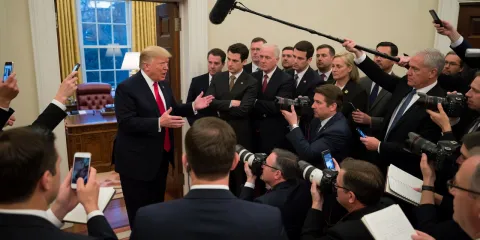
Trump Gives Iran a "Last Chance" as Tehran Denies Any Talks Are Under Way
Donald Trump says he called off a strike and opened talks with Iran, calling them a "last chance before decapitation". Tehran denies it: its only acknowledged channel is Omani mediation over the Strait of Hormuz, where a cargo vessel was struck. Twenty-one countries read the same ultimatum, between taking it seriously and weariness at a familiar cycle.

 +17
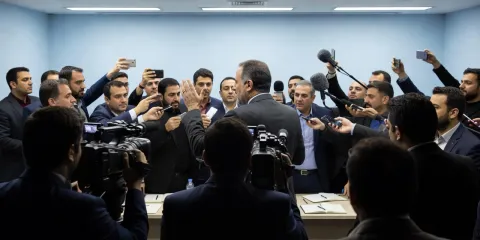
Tehran Denies the Deal Trump Announced: "A Sheer Lie"
Donald Trump says he called off a strike on Iran — "the biggest attack since World War II" — because the parameters of a deal on Hormuz and the nuclear file had been reached. Tehran denies it: "a sheer lie." Crude fell more than 5 percent. One question divides thirteen capitals: whom do you believe when two states narrate the same day differently?
 +9
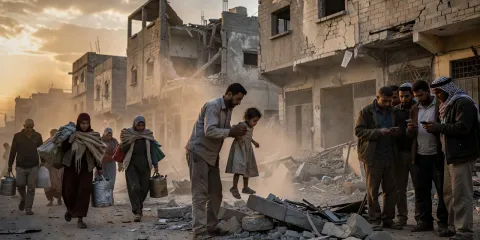
Hamas Ties Disarmament to an Israeli Withdrawal, Testing Trump's Deal
A day after Donald Trump announced a disarmament deal, Hamas has made it conditional on a prior withdrawal of the Israeli military and says Israel must first approve the text. Trump speaks of an "understanding" with Israel while conceding implementation will be complex. Riyadh welcomed the deal and Doha was thanked for mediating, but the Israeli military struck Gaza again. Ten countries measure the gap between the announcement and the ground differently.
 +6
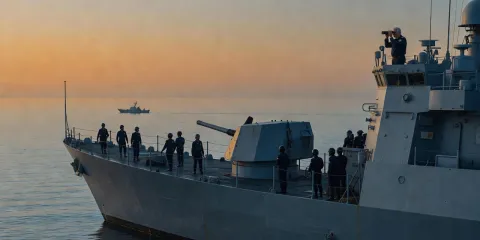
The United States and Iran halt their strikes: a pause for talks
After thirteen nights of U.S. bombing, Donald Trump orders a pause that Iran says it reciprocates by halting its reprisals. Tehran denies any direct negotiation despite Qatari and Pakistani mediation, while oil prices retreat and the Strait of Hormuz stays tense.
 +11
Understand global stakes from every perspective.
718 subjects · 75 countries · 8174 perspectives