Philippines — news through its media
Stories followed in this country, with their framing set against the rest of the world.
82 subjects found
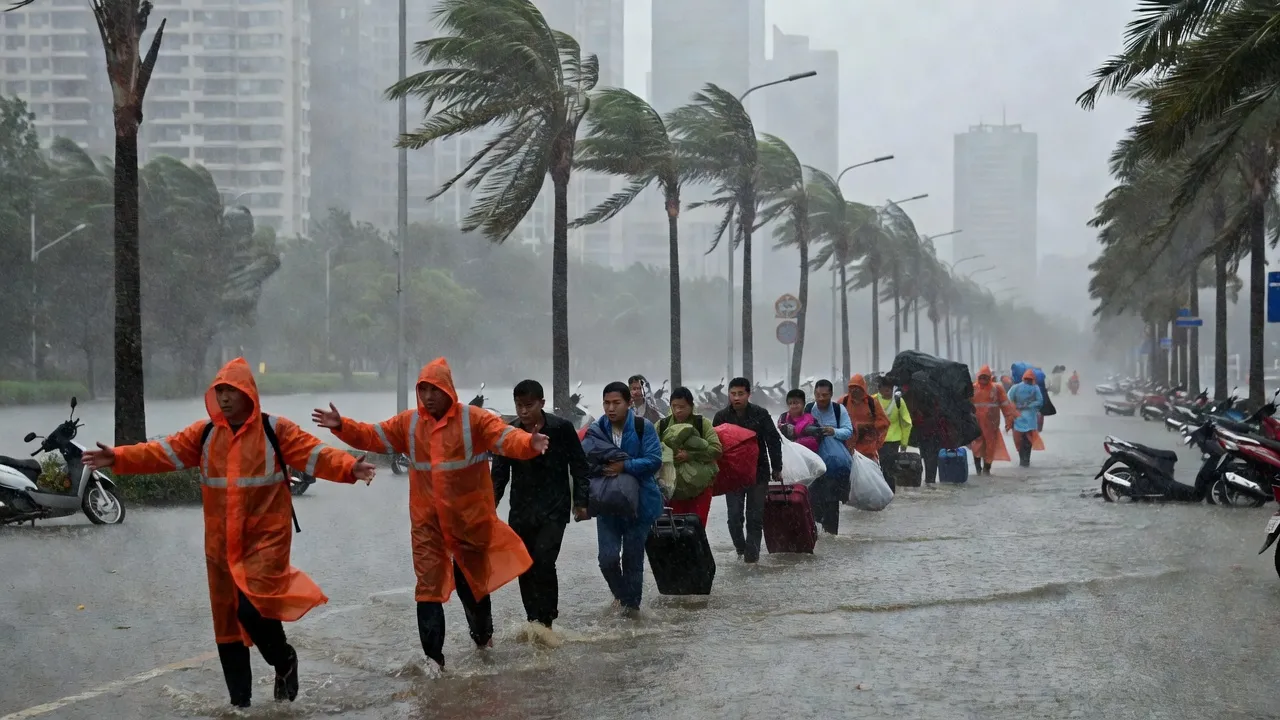
Typhoon Noul slams China's Guangdong, forcing mass evacuations
Typhoon Noul, described as the most powerful of 2026, made landfall on 26-27 July in China's Guangdong province, forcing the evacuation of several hundred thousand people (up to 710,000 by some accounts), grounding flights and halting trains in Shenzhen, Guangzhou and Hong Kong, and bringing torrential rain and flooding. Authorities raised the alert to its highest level.


 +7
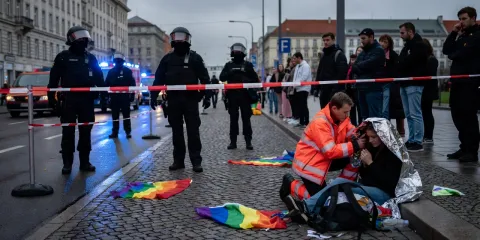
Car-ramming attack on Berlin Pride march: one dead, manhunt underway
A vehicle rammed into the crowd at Berlin's Pride march on 26 July 2026, killing one person and injuring sixteen. German police are hunting a 21-year-old suspect described as tied to the Islamist scene, reviving debate over the security of large gatherings and the protection of the LGBT community.


 +5
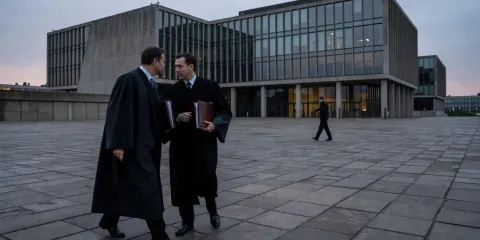
International Criminal Court Removes Chief Prosecutor Karim Khan Amid Misconduct Allegations
Member states of the International Criminal Court voted to remove chief prosecutor Karim Khan, who faces sexual misconduct allegations, plunging the institution into an internal crisis. The move comes as the Court handles sensitive cases, including arrest warrants against Israeli leaders, and reignites debate over its credibility, independence and the future of international justice.

 +4

Andrew and Tristan Tate arrested in the US over UK rape and sex-trafficking charges
The divisive misogynist influencers Andrew and Tristan Tate have been arrested in the US over UK rape and sex-trafficking charges and face extradition. The case reignites global debate over online misogyny, justice and influencer culture.
 +5

More than 500 Rohingya refugees feared dead as two boats capsize off Myanmar
More than 500 Rohingya refugees are missing after two boats capsized off Myanmar. The UN calls it one of the deadliest such disasters, reviving international concern over the fate of the stateless minority fleeing Myanmar and Bangladesh's camps.

 +3

China tests long-range missile in the Pacific
China conducted a long-range ballistic missile test in the South Pacific, alarming its neighbours. Australia, New Zealand, Japan and South Korea condemned the launch while Washington voiced deep concern and Beijing defended it as a routine drill.
 +4

China test-fires a ballistic missile into the Pacific, rattling US allies
Beijing test-fired a long-range ballistic missile into the South Pacific, reviving tensions with Washington and its Asia-Pacific allies. Ten countries — from the US to China, Japan, South Korea, the Philippines and Russia — read the event between a show of force and a routine test.
+6
Pope Leo XIV at Lampedusa: An Appeal to Europe and America on Migrants
On July 4, 2026, Pope Leo XIV traveled to Lampedusa, the epicenter of the Mediterranean migration crisis, to honor migrants who died at sea and to call on Europe to shoulder an 'epochal responsibility.' The same day, in a letter for the United States' 250th anniversary, he urged America to 'welcome' immigrants. A dual message that resonates differently across capitals.
 +9

Trump-Putin Call: Washington Offers to Help Broker a Ukraine Deal
On July 4, 2026, Donald Trump and Vladimir Putin spoke by phone for about 90 minutes. According to the Kremlin, the U.S. president offered to help Moscow reach a deal on Ukraine, while Putin reaffirmed his claim to all of Donbas. Trump also spoke with Volodymyr Zelensky. From Kyiv to Beijing, readings of the call diverge sharply.

 +13

Venezuela Earthquakes: Over 2,600 Dead as Anger Grows at Crisis Response
A week after earthquakes killed more than 2,600 people in Venezuela, hopes of finding survivors fade. Citizens and the opposition decry a failing response while the government blames 'propaganda'.
+9
Taylor Swift Marries Travis Kelce: The Whole World Watches Madison Square Garden
Taylor Swift marries Travis Kelce at Madison Square Garden under presidential-level security. From the United States to India, eight countries cover the celebrity event of the year — global fairy tale, two-billion-dollar business machine, and mirror of American culture.
+4Understand global stakes from every perspective.
718 subjects · 75 countries · 8174 perspectives