Poland — news through its media
Stories followed in this country, with their framing set against the rest of the world.
69 subjects found

Air France and Airbus held guilty over deadly 2009 Atlantic flight disaster
Air France and Airbus were found guilty of involuntary manslaughter for the June 2009 Rio-Paris flight 447 crash that killed 228 people, ending a legal process spanning more than fifteen years.


 +8
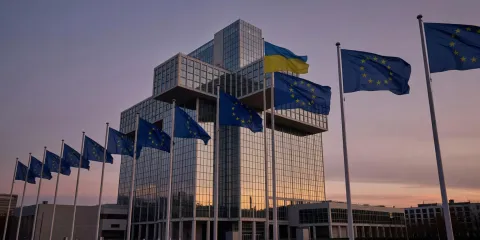
Germany's Merz pitches making Ukraine EU 'associate member'
German Chancellor Friedrich Merz proposed an 'associate member' EU status for Ukraine, a middle path between full membership and the current partnership that could accelerate European integration without triggering a veto.


 +9
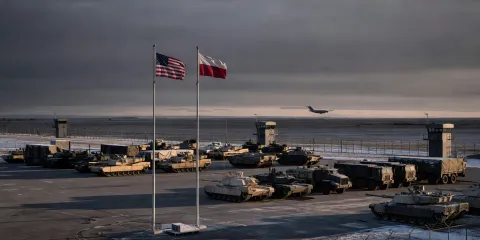
Trump says US will send additional 5,000 troops to Poland
Donald Trump announced the deployment of an additional 5,000 US troops to Poland, reinforcing NATO's eastern flank against Russia and confirming a major military commitment in Eastern Europe.

 +15

Peter Magyar sworn in as Hungary's Prime Minister — ending 16 years of Orbán rule
Peter Magyar, leader of the conservative pro-European Tisza party, was sworn in as Hungary's Prime Minister on Saturday May 9th, ending sixteen years of Orbán's governance. Before tens of thousands of supporters on Budapest's Parliament Square, Magyar pledged to restore democracy, fight corruption, and reanchor Hungary in the European Union. The EU flag, absent from the Parliament facade for twelve years, was immediately re-raised.


 +4

Russia's Economic Stagnation: The Price of Militarization
Russia's economy slides toward stagnation with growth forecast around 1% in 2026, after two years of 4%+ expansion. The Central Bank cut its key rate to 15% but inflation remains sticky around 6.5-7%. With 38% of the federal budget devoted to defense and security, an acute labor shortage, and oil revenues down 50%, the war economy model shows its structural limits.


 +6

Moscow Internet Blackout: Russia Accelerates Digital Lockdown Under Cover of Security
Since early March, Moscow has suffered massive mobile internet outages affecting all four major carriers. The Kremlin justifies the blackouts with the Ukrainian drone threat, but analysts see an acceleration of digital control. Economic losses exceed $38-63 million in five days, while a February 2026 law gives the FSB power to cut communications nationwide.
+6
Trump and Iran Tensions: A Head of State Isolated on the International Stage
The Trump administration is at the center of international debates concerning the crisis with Iran, where its approach is criticized by its European allies. This tension highlights divisions between the United States and its partners over how to manage regional crises.
 +17

Diplomatic Tensions: Cuba-USA, Ukraine-France and Middle East Conflicts
World leaders are intensifying negotiations amid crises: Cuba-United States dialogues, Zelensky-Macron meeting on Ukraine, and Iran-Trump escalation. These discussions reveal major geopolitical stakes in 2026.
+14
Global Political Leaders Face Crises: Scandals and Geopolitical Tensions
Ministers and leaders across the world are simultaneously managing internal scandals and major international crises, notably the Iran-Israel conflict and various national controversies.

 +10

Strait of Hormuz tensions: Trump threatens Iran with military response
The United States destroys Iranian mine-laying vessels near the Strait of Hormuz. Trump threatens Tehran with severe retaliation if the blockade continues, escalating regional tensions.

 +15

Iran-US-Israel Conflict: The Strait of Hormuz at the Center of Global Tensions
The conflict involving Iran, the United States, and Israel is intensifying tensions around the Strait of Hormuz, vital to global oil supply. The economic and geopolitical repercussions are dividing the international community.
+20Understand global stakes from every perspective.
718 subjects · 75 countries · 8174 perspectives