Singapore — news through its media
Stories followed in this country, with their framing set against the rest of the world.
326 subjects found

Twenty-nine US states take Meta to court over hooking children on social media
The trial pitting twenty-nine US states against Meta opened on 18 August 2026 in Oakland, California. State attorneys general accuse the company of designing Facebook and Instagram to hold minors' attention and of misleading the public about the effects on their mental health; Meta rejects the claims. Ten countries cover the sequence, and the damages figure reported varies sevenfold from one newsroom to another.


 +6
Trump threatens to bomb Oman, a US ally, as the Iran agreement expires
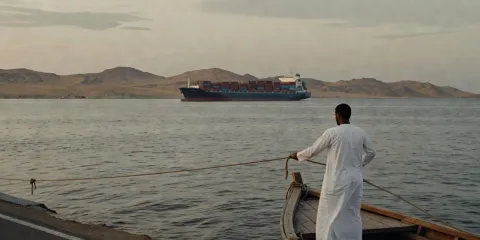
Donald Trump threatened to bomb Oman, a US ally, just as the memorandum framing the confrontation with Iran expired and Tehran announced an escalation around Hormuz. Muscat has served for fifteen years as a channel between Washington and Tehran. Twelve countries cover the sequence: the Gulf reads it as a warning about what allied status is worth, while Nigeria and Singapore read it through the price of crude.

 +8
Trump says he will declare the Strait of Hormuz "US territory"; Tehran hits back
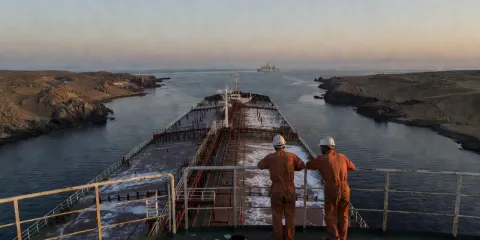
Donald Trump said on 14 August that he would "very soon" make the Strait of Hormuz US territory. A White House official later described the remark as a joke, a nuance some countries report and others omit. Iranian deputy minister Kazem Gharibabadi hit back. About a fifth of the world's oil and gas passes through the channel between Iran and Oman, where traffic has collapsed since February.

 +11

Settlers besiege three Palestinian homes in Qusra — and the US ambassador to Israel calls them "terrorists"
Since 9 August, Israeli settlers have besieged three homes in Qusra, in the occupied West Bank, cutting water and electricity and trapping around fifteen people. US Ambassador Mike Huckabee, an avowed supporter of the settlements, called them "Israeli terrorists". France demands prosecutions; the UN calls it criminal.
 +5

Karoline Leavitt leaves the White House: a family decision for some, an electoral calendar for others
Donald Trump announced on 12 August that his press secretary would leave at the end of the month to become an outside adviser. At 28, she was the youngest in history. She cites her family; part of the press notes she is leaving two months before the midterm elections. No successor has been named.
+14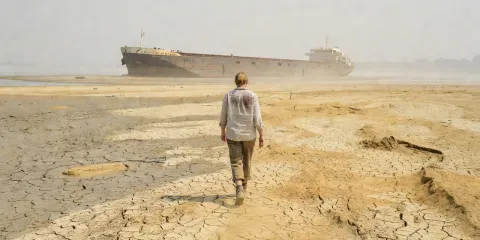
July, the hottest month ever recorded in the United States: Europe under its fifth heatwave, South Korea parched
Copernicus recorded the hottest June-July ever measured in Western Europe (21.62 °C) and NOAA confirmed the hottest July in the contiguous United States. A fifth heatwave hits Europe: rivers at record lows, nuclear reactors under strain, 70% of France under water restrictions. At the same time, South Korea is mobilising its army against drought — with no narrative link to Europe.
+10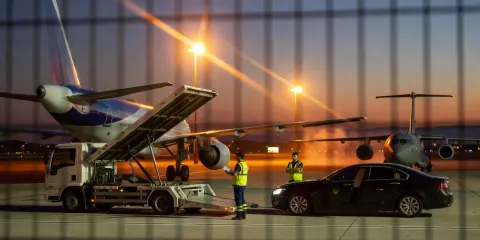
Trump Left Turkey in a Catering Truck, on a Secret Plane, Facing an Iranian Threat
The Washington Post revealed that after the NATO summit in Ankara on 8 July, Donald Trump boarded an Air Force One in front of the cameras, then immediately left it via a catering truck to board a military aircraft. The press pool landed in Britain without him. Trump confirmed it on Tuesday evening: "I do what they tell me." Three questions remain: his security, the credibility of the threat, and the White House's communication.


 +6
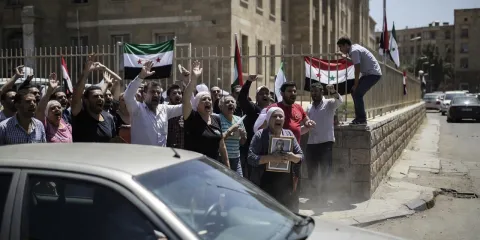
Bashar al-Assad Sentenced to Death in Absentia in Damascus, the First Verdict Against Syria's Former Regime
On Tuesday, Damascus's Fourth Criminal Chamber sentenced Bashar al-Assad to death in absentia for war crimes and crimes against humanity — the killing of children, torture leading to death. His brother Maher and seven other officials were sentenced alongside him; only his cousin Atef Najib appeared in person. The verdict was read live on state television. Assad, living near Moscow since December 2024, has not been extradited.

 +14
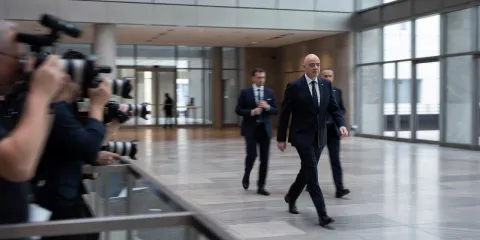
Infantino Faces Favouritism Allegations from His UEFA Years as FIFA Denounces a 'Concerted Effort' to Weaken Him
The Telegraph reports that UEFA paid a six-figure settlement to a former employee with whom Gianni Infantino is said to have had a relationship while he was its general secretary. UEFA confirms the payment, Infantino denies the claims 'categorically', and FIFA denounces a 'concerted and ongoing effort'. Northern Europe wants him gone; Africa and South America back him.

 +13
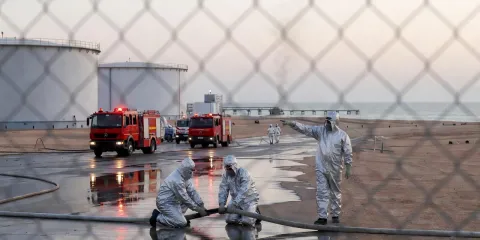
Houthis Strike an Aramco Refinery in Saudi Arabia as the UN Condemns and Yemen's War Reignites
On Sunday, Houthi forces claimed a drone strike on the Aramco refinery at Jazan on the Red Sea; Riyadh said the fire was out with no casualties. The same day, shelling of the port of Mokha killed at least seven people. Two days earlier the UN Security Council had condemned Houthi fire on the kingdom since 13 July. A conflict frozen since the 2022 truce is reigniting, two days after the Riyadh-Ankara-Islamabad defence pact.
+10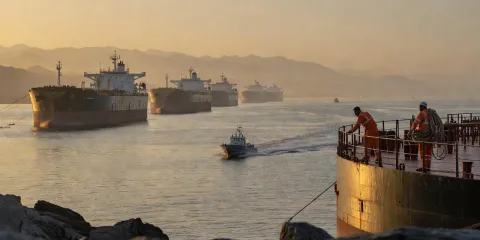
Iran Sets Six Conditions for Reopening Hormuz as the Revolutionary Guards Call the Strait a 'Theatre of War'
On Saturday the secretary of Iran's Supreme National Security Council published six preconditions for reopening the Strait of Hormuz: an end to the war, the lifting of the naval blockade and of sanctions, the withdrawal of US forces, compensation for war damage and the release of frozen assets. On Sunday the Revolutionary Guards hardened the line while Oman negotiated a temporary shipping corridor and Washington spoke of 'some progress'. A fifth of the world's oil is waiting.
 +19
Understand global stakes from every perspective.
722 subjects · 75 countries · 8238 perspectives