
DOMINANT ANGLE
Kuala Lumpur is first assessing the extent of the air disruption in Riyadh, where King Khaled Airport was classified at the maximum level of disruption by FlightRadar24, leaving the military cause of the intercepted shot out of the framework retained by the Malaysian press.
Dominant angle identified — does not reflect unanimity of this country’s media
KEY POINTS
- 01
FlightRadar24 has rated King Khaled Airport at its maximum disruption index (5.0), reporting long delays and several cancelled flights.
- 02
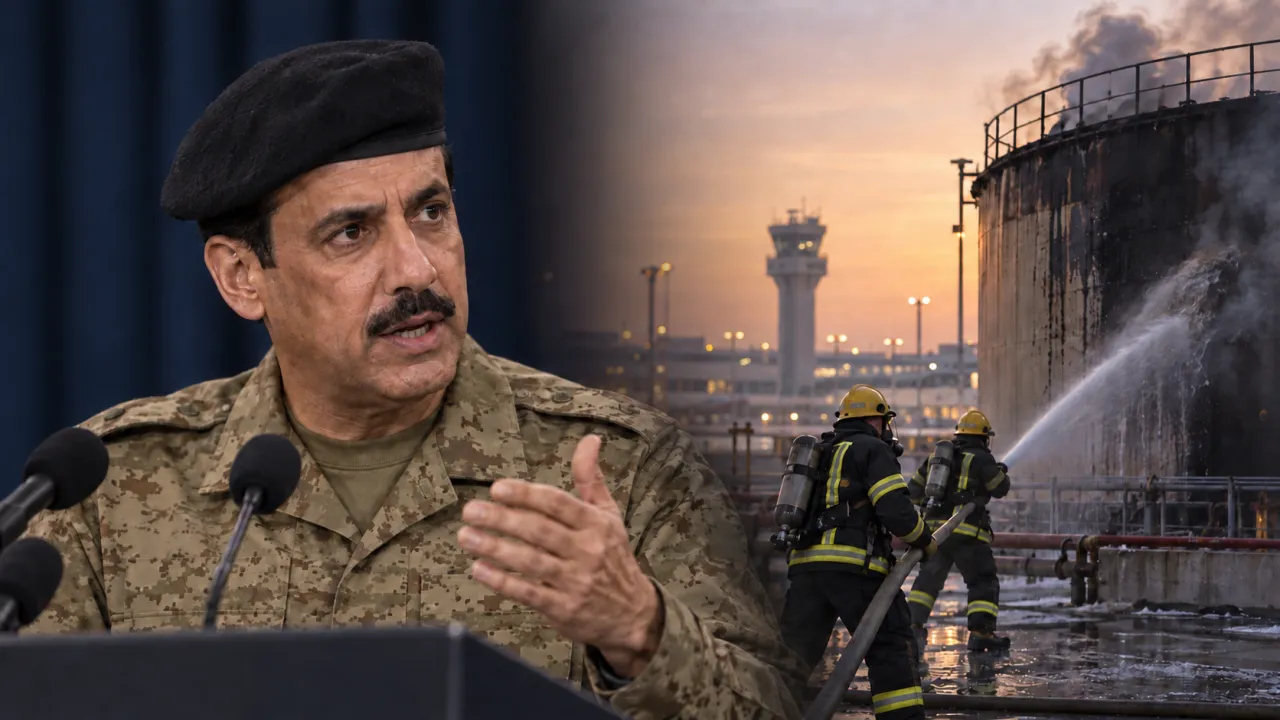
Residents of Riyadh saw black smoke and flames near the airport and reported hearing explosions on Saturday, September 19.
- 03
The disruption follows a nighttime air alert issued by Saudi authorities, the first since the escalation of fighting in Yemen this month.
ANALYSIS
Kuala Lumpur, September 20, 2026. The Malaysian press, which reproduces here the AFP dispatch, focuses its account on the immediate consequences of the air alert that occurred overnight in Riyadh: a major disruption to traffic at King Khaled International Airport, rather than a detailed count of the intercepted device. The Sun Malaysia and Malay Mail, both citing AFP, report that residents of the Saudi capital saw black smoke and flames rising near the airport on Saturday, while others testified to hearing explosions in several neighborhoods of the city. "Heading towards the airport, we saw black smoke and fire," a resident told AFP.
The FlightRadar24 air traffic tracking site ranked King Khaled at its maximum disruption index of 5.0, indicating "major problems with long delays and several flights cancelled". According to the two Malaysian titles, this airport chaos follows a nighttime air alert issued by Saudi authorities — the first of its kind since the intensification of fighting in neighboring Yemen this month. Several hours after the morning alert, residents again reported to AFP, anonymously, hearing what sounded like a new series of explosions resonating in certain neighborhoods of the Saudi capital.
For a Malaysian readership linked to the Gulf by migrant work and transit flights, it is the airport disruption index, quantified and verifiable through a public tool, that structures the information rather than a military reading of the incident: the two articles, almost identical, emphasize "cancellations" and "long delays" as a tangible measure of the crisis.
The Malaysian press, dependent on AFP dispatches for this file, thus sticks to the concrete impact on civil aviation — cancellations, delays, visible smoke — rather than a military or diplomatic analysis of the origin of the shot. No human toll, no precise identification of the infrastructure hit near the airport, nor any mention of a claim are included in these reports reproduced in Kuala Lumpur: the Malaysian reader receives a snapshot of the disruption, without the complete causal link between the incident and the ongoing fighting in Yemen or the broader tensions in the Gulf region.