
DOMINANT ANGLE
The United States is scrutinizing Riyadh's attack through the prism of the larger war against Iran, between the sale of F-35s to the kingdom and conditions transmitted by Tehran via Qatar.
Dominant angle identified — does not reflect unanimity of this country’s media
KEY POINTS
- 01
Saudi Arabia claims to have intercepted a Houthi ballistic missile targeting Riyadh on Saturday, a first since the opening of this front in the war with Iran (NPR).
- 02
The Trump administration approved the potential sale of nearly 50 F-35s to Saudi Arabia for $24.3 billion last week (CNBC).
- 03
Iranian official Mohsen Rezaei claims that Tehran has transmitted its conditions for ending the war via Qatar and is awaiting a response from Donald Trump (NPR).
ANALYSIS
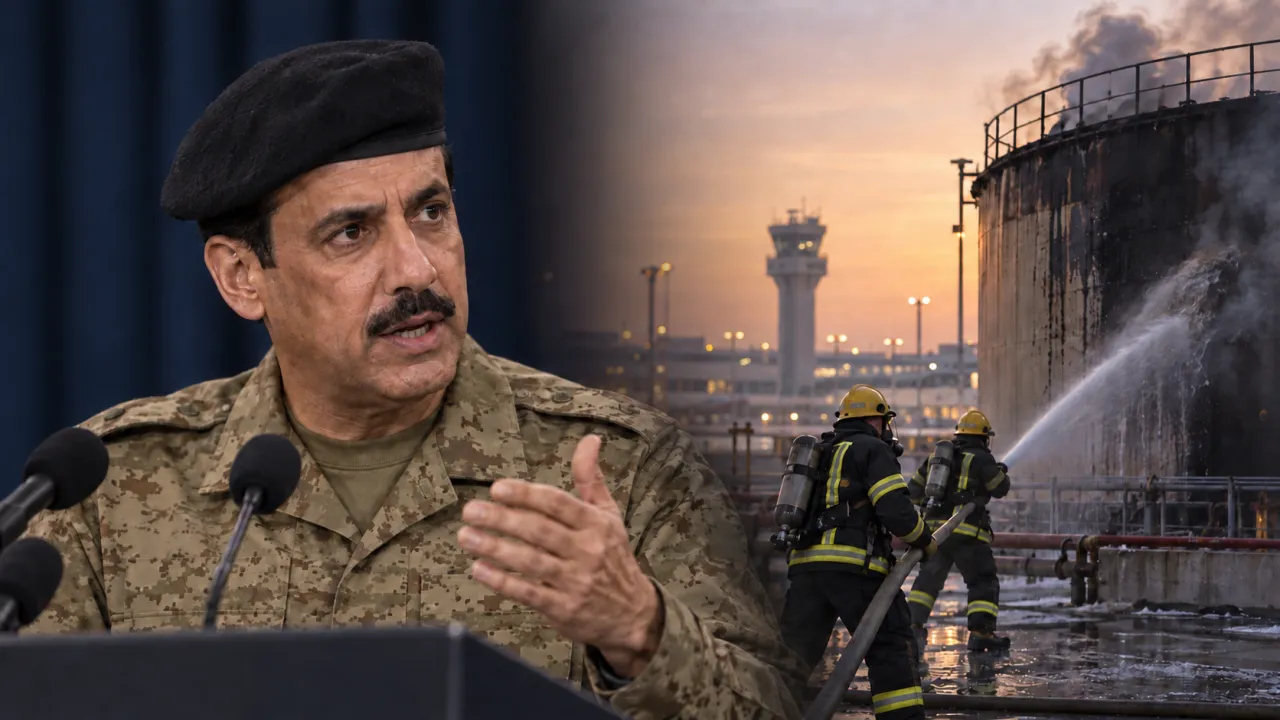
The United States, September 20, 2026. In the US capital, the failed attack on Riyadh is seen as a new episode in a much broader regional war, one that now pits the United States against Iran on several fronts. According to NPR, Saudi Arabia announced on Saturday that it had intercepted a Houthi ballistic missile targeting its capital, a first since the opening of this Yemeni front in the conflict with Tehran. Residents of Riyadh heard an explosion and saw a plume of smoke near the airport; no casualties or damage were reported. The Saudi Directorate of Civil Defense had issued preventive alerts; Reuters, cited by CNBC, reported two detonations before giving the "all clear", and then reported a plume of smoke and flames visible near King Khalid Airport. Riyadh also claims to have foiled attempts targeting civilian infrastructure in Yanbu, where a key Saudi oil pipeline ends, as well as in Taif, Bisha, and Farasan. The Houthis claimed to have struck "sensitive sites" in Riyadh and Aramco facilities in Yanbu, causing "massive fires", according to them; the oil giant did not respond to requests.
The US press links this episode to two files being followed in Washington. First, diplomacy with Tehran: according to Al Jazeera, cited by NPR, the head of Iran's Supreme National Security Council, Mohsen Rezaei, says that Iran has transmitted its conditions for ending the war via Qatar, and is awaiting a response from President Donald Trump, including a cessation of hostilities on all fronts, the return of seized assets, and the lifting of the US naval blockade of Iranian ports. Rezaei also says he wants an end to the fighting between the Houthis and the Saudis. The US Central Command also indicates that it has supported the transit of one billion barrels of oil through the Strait of Hormuz.
Next, the alliance with Riyadh: CNBC recalls that the Trump administration approved the potential sale of nearly 50 F-35 aircraft to Saudi Arabia last week, for $24.3 billion, 48 Lockheed Martin aircraft and 49 Pratt & Whitney engines. CNBC also reports on the Houthi land offensive around the Bab-el-Mandeb Strait, with the capture of Moka and neighboring islands, and Pakistani diplomatic pressure: the head of Islamabad's diplomacy, Ishaq Dar, insisted to his Iranian counterpart on the need for uninterrupted energy supplies and safe passage for ships.