
DOMINANT ANGLE
Berlin is deciphering New Delhi's questioning as a test for Indian democracy, between challenging the electoral referee and pressure on Narendra Modi.
Dominant angle identified — does not reflect unanimity of this country’s media
KEY POINTS
- 01
The founder of the CJP, Abhijeet Dipke, and two other leaders were arrested upon landing in New Delhi (Tagesschau, DW).
- 02
The revision of voter lists is said to have removed around 130 million names; the commission cites duplicates and ineligible voters (DW).
- 03
The CJP was born in May, after a high-ranking judge referred to unemployed youth as "cockroaches" (DW).
ANALYSIS
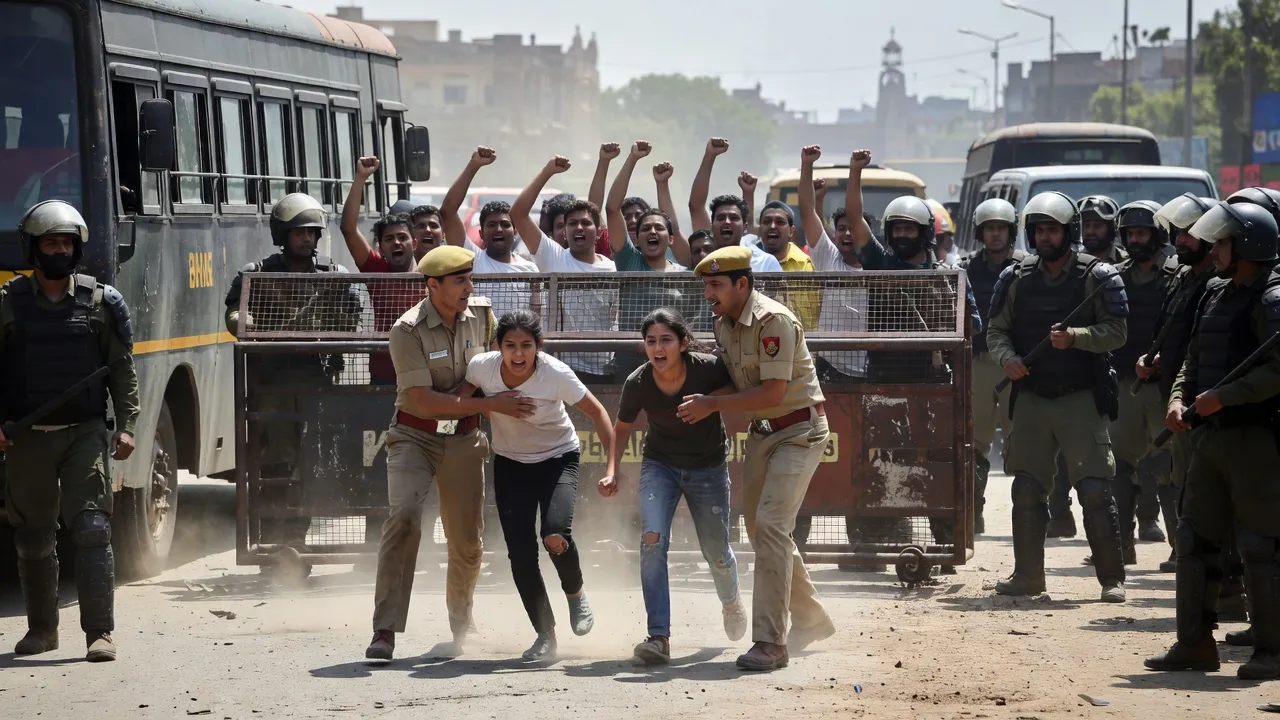
Berlin, October 11, 2026. The German press, led by Tagesschau and Deutsche Welle, describes the events of Saturday, October 10, in New Delhi as a test for Indian democracy. The police arrested the founder of the "Cockroach Janta Party" (CJP) movement, Abhijeet Dipke, and two other leaders upon their arrival in the capital. According to Tagesschau, citing the CJP, the police had asked them to cancel the demonstration, as the authorities had banned it.
The described deployment is massive: metro stations closed, major axes blocked, mobile internet cut off, and thousands of security forces mobilized, Deutsche Welle reports. For the arrest tally, both media outlets rely on the Indian press. Tagesschau writes that "media are now reporting the arrest of thousands of people," citing The Hindu. Deutsche Welle, in an initial headline, mentions "hundreds" of arrests.
The background of the case is carefully explained. The CJP demands the resignation of the chairman of the electoral commission, Gyanesh Kumar, due to the revision of electoral rolls, which allegedly removed around 130 million names. Critics, as reported by Deutsche Welle, believe that these changes could deprive citizens of their right to vote and favor the BJP, the nationalist Hindu party of Prime Minister Narendra Modi. The commission and the BJP reject these accusations, with the commission claiming it wants to eliminate duplicates and ineligible voters. Tagesschau adds that a media outlet reported the reservations of the commission's number two regarding the removal of around 130 million voters.
The portrait of the movement also occupies a significant place: Deutsche Welle recalls that the CJP was born in May, after a high-ranking judge in the country called young unemployed people "cockroaches." Tagesschau emphasizes that those arrested are mostly young people, and demonstrations have taken place across the country.
Deutsche Welle's headline, "Modi unter Druck," puts the head of government at the center of the story, while the commission is presented as "independent." The overall tone remains sober and factual: few adjectives, systematic attributions, and a mention that both sides contest each other's interpretation.