
DOMINANT ANGLE
Australia views this sinking as a structural signal rather than an isolated incident: the press in Sydney, Melbourne, and Perth soberly reports the human toll, but immediately emphasizes that the Indonesian archipelago operates under unevenly applied safety standards.
Dominant angle identified — does not reflect unanimity of this country’s media
KEY POINTS
- 01
The Virgo Transport 8, which departed from Surabaya on Saturday at 10:13 for Banjarmasin, was carrying around 243 people and lost contact around 2 am Sunday in bad weather.
- 02
103 people were evacuated by various ships, one of whom died; 140 people were still being searched for on Sunday, according to I Putu Sudayana, local head of the search and rescue agency.
- 03
The archipelago of 17,000 islands relies heavily on ferries because sea links are more affordable and available than air travel, but safety standards are not always strictly enforced, according to cited reports.
ANALYSIS
Canberra, September 13, 2026. The Australian press reported on Sunday the sinking of an Indonesian ferry in the Java Sea, in a subdued manner, without much editorial commentary of its own — closely following the Reuters/AP wire picked up by several local titles. The Virgo Transport 8, which departed from Surabaya at 10:13 a.m. on Saturday and was headed to Banjarmasin, on the island of Borneo, was carrying around 243 people when it lost contact with its operator, PT Virgo Yoel Rihi, at around 2 a.m. on Sunday, in the midst of bad weather. The search and rescue office in Banjarmasin did not receive the report until two hours later. A rescue ship and a helicopter were dispatched to the last known position of the boat, about 148 kilometers from a dock in Banjarmasin.
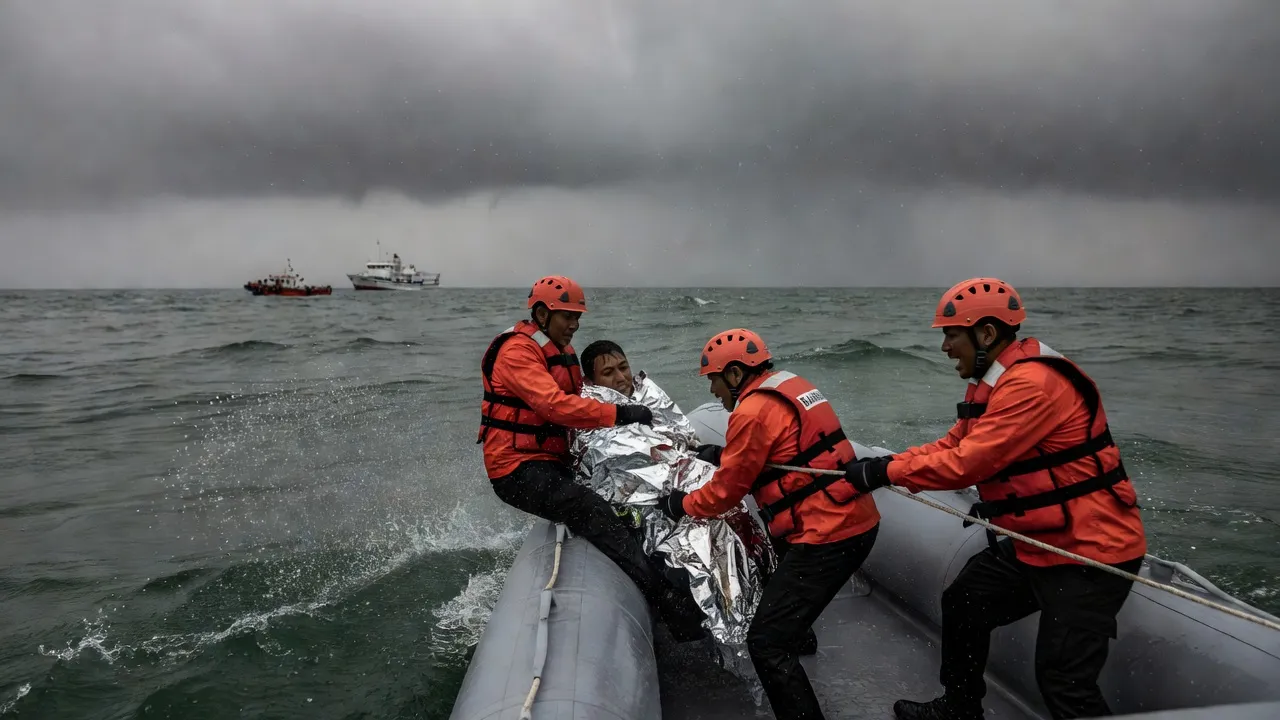
According to I Putu Sudayana, head of the local branch of the search and rescue agency, cited by Australian titles, "the ship's operator reported the incident to the authorities after receiving information that the vessel had encountered bad weather." 103 people were evacuated by different ships — some of whom were taken to a port in East Java — and one person died. 140 people were still missing on Sunday.
The titles in Sydney, Melbourne, and Perth all emphasize the same contextual point, almost word for word from a common dispatch: Indonesia, an archipelago of 17,000 islands, is structurally dependent on ferries as a mode of transportation, with maritime links remaining more affordable and available than air travel. However, they add, safety standards are not always rigorously applied, which explains the relatively high accident rate. No commentary is added on the responsibility of the shipowner or the Indonesian state: the Australian coverage remains descriptive, driven by the agency, without local investigation or official reaction from Canberra. The exact fate of the ship itself is not specified in the relayed versions.