
DOMINANT ANGLE
Paris draws from the sinking of the Virgo Transport 8 a reminder of the chronic flaws in Indonesia's maritime security, between a still uncertain human toll and tribute to local rescue efforts.
Dominant angle identified — does not reflect unanimity of this country’s media
KEY POINTS
- 01
The Virgo Transport 8, which departed from Surabaya on Saturday for Banjarmasin, was carrying 243 people (213 passengers, 30 crew members), according to the Basarnas agency.
- 02
Indonesian Transport Minister Dudy Purwagandhi stated that the ship had turned over but had not sunk by 15:00, according to helicopter surveillance.
- 03
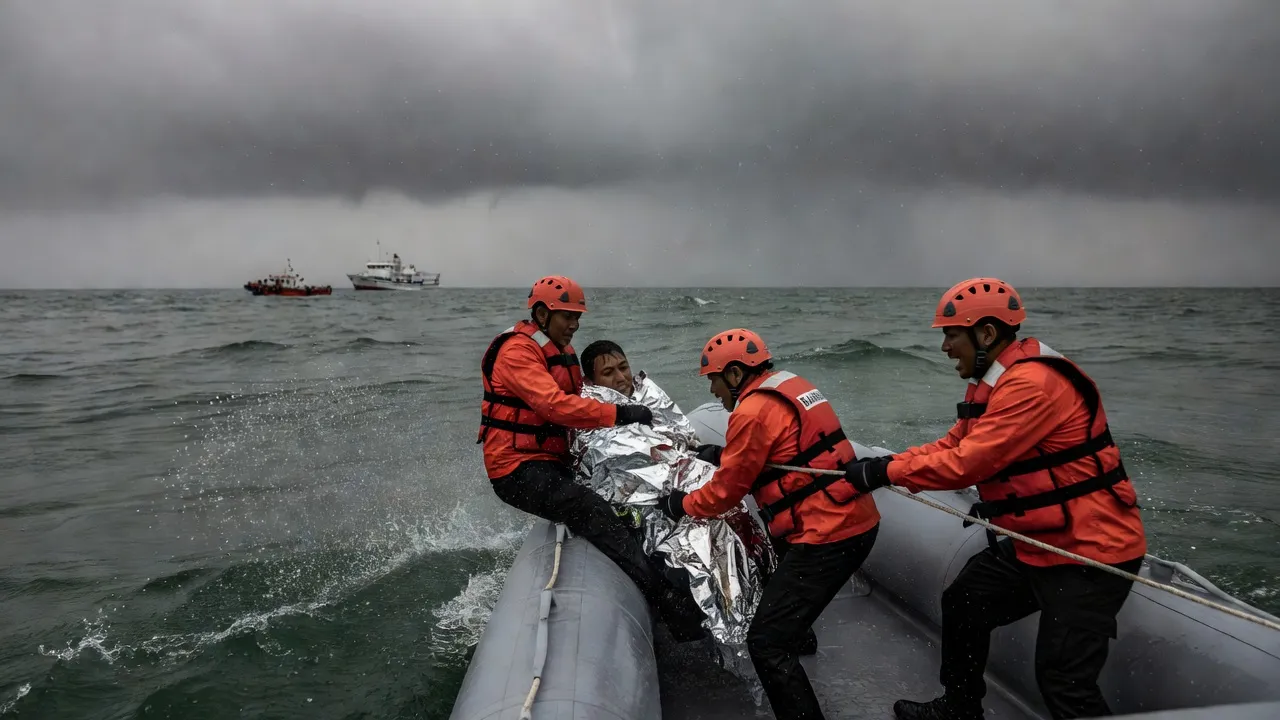
Rescue operations are being slowed down by waves reaching 2.5 metres, deemed "extremely risky for boats" by I Putu Sudayana, local rescue chief.
ANALYSIS
Paris, September 13, 2026. The French press is reporting hour by hour on the sinking of the Virgo Transport 8, a ferry that departed from Surabaya on the island of Java on Saturday to reach Banjarmasin on the island of Borneo, with 243 people on board — 213 passengers and 30 crew members, according to the national search and rescue agency, Basarnas. Contact was lost early Sunday morning in the Java Sea, about 150 kilometers from the port of destination.
Editorial offices are emphasizing the rapid deterioration of the situation. The captain of the ship had reported to the company, before losing contact, that the vessel was "tilting," according to I Putu Sudayana, local head of rescue operations. The Indonesian Minister of Transportation, Dudy Purwagandhi, later confirmed that the ship had capsized but had "not yet sunk" at 3 pm, according to helicopter surveillance.
The human toll is evolving with the news updates. Initial reports indicate one death and 102 to 103 people rescued out of the 243 on board. Later reports put the number of deaths at six and the number of missing at 129, with around 108 survivors. This ongoing update reflects the difficulty of the rescue efforts in establishing a stable count at sea.
French articles systematically link the accident to the structural vulnerabilities of Indonesian maritime transport. They recall that the archipelago, with more than 17,000 islands, is heavily dependent on its ferry connections, and that shipwrecks remain frequent "due in particular to insufficient safety standards and unpredictable weather conditions." Rescue operations are being hindered by waves reaching 2.5 meters: "It's extremely risky for the boats. Even our 40-meter Basarnas ship is in great danger," warned I Putu Sudayana.
At the port of Banjarmasin, relatives of the passengers are scanning the lists of survivors. Jenah, 26, who came to seek news of her brother who was traveling alone, sums up the wait: "I'm saddened and very shocked [...] I hope he survived."