
DOMINANT ANGLE
New Delhi is gauging the scope of the search operation underway in the Java Sea, where more than 240 passengers of the Virgo Transport 8 remain unaccounted for after contact was lost during a severe storm.
Dominant angle identified — does not reflect unanimity of this country’s media
KEY POINTS
- 01
The Virgo Transport 8 left Surabaya on Saturday, September 12, at 10:13 a.m., headed for Banjarmasin, with more than 240 people on board.
- 02
Contact with the ship was lost around 2 a.m. Sunday after encountering bad weather; its last known position was 148 km from a Banjarmasin dock.
- 03
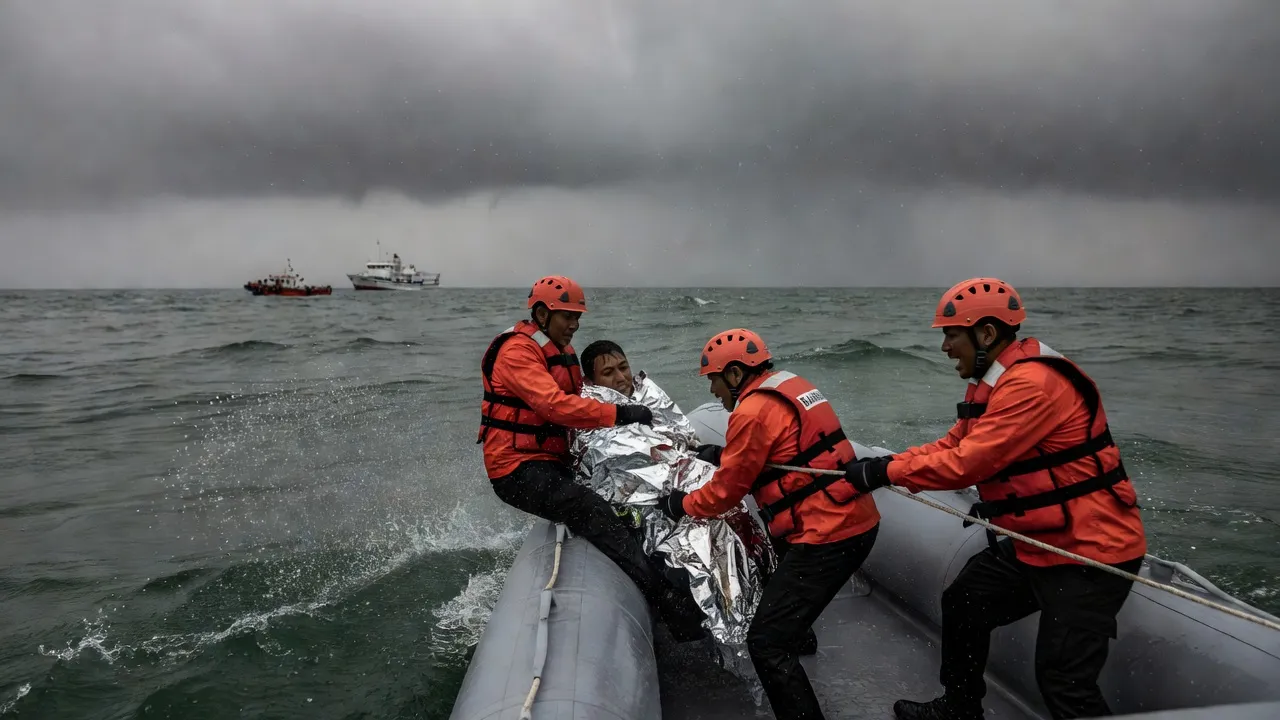
The Banjarmasin Search and Rescue Bureau, led by I Putu Sudayana and Arianto Ardi, deployed an operations post and a search vessel despite difficult weather conditions.
ANALYSIS
New Delhi, September 13, 2026. The Indian press is relaying without hesitation the alert issued by the Indonesian authorities on Sunday: the Virgo Transport 8, a passenger ship that left Surabaya on Saturday at 10:13 am bound for Banjarmasin, in South Kalimantan, lost all contact with land around 2 am after encountering bad weather in the Java Sea. More than 240 people were on board, according to information reported by the Free Press Journal and the Deccan Chronicle, citing respectively Reuters and AFP.
The Search and Rescue Office of Banjarmasin, the capital of the province of South Kalimantan, received the report about two hours after the loss of contact. The last known position of the ship was 148 kilometers from a Banjarmasin dock, specify the two Indian titles, which describe a device deployed "despite difficult weather conditions": an operations post was established and a search ship sent to the last known location of the Virgo Transport 8.
Indian media name the local officials in charge, the head of SAR Banjarmasin, I Putu Sudayana, and the head of operations, Arianto Ardi, a sign of coverage that prioritizes the rescue command chain over the profile of passengers or the responsibilities of the shipowner. No victim toll was available at the time of these initial reports, the two articles insist, which present the situation as an ongoing development, with the promise of new updates from the Indonesian authorities.
This factual sobriety, based on dispatches from Western agencies almost identical to those reproduced by the two titles, situates the shipwreck in the usual register of maritime dramas in the Indonesian archipelago, without establishing a parallel with other regional accidents or questioning the safety regulations of local ferries. The emphasis is on the search effort engaged at sea rather than on the causes of the loss of contact or its potential political consequences, an entry point that reflects the geographical distance of the Indian reader from this event, treated as international news to follow rather than as a subject directly involving Indian nationals.