
DOMINANT ANGLE
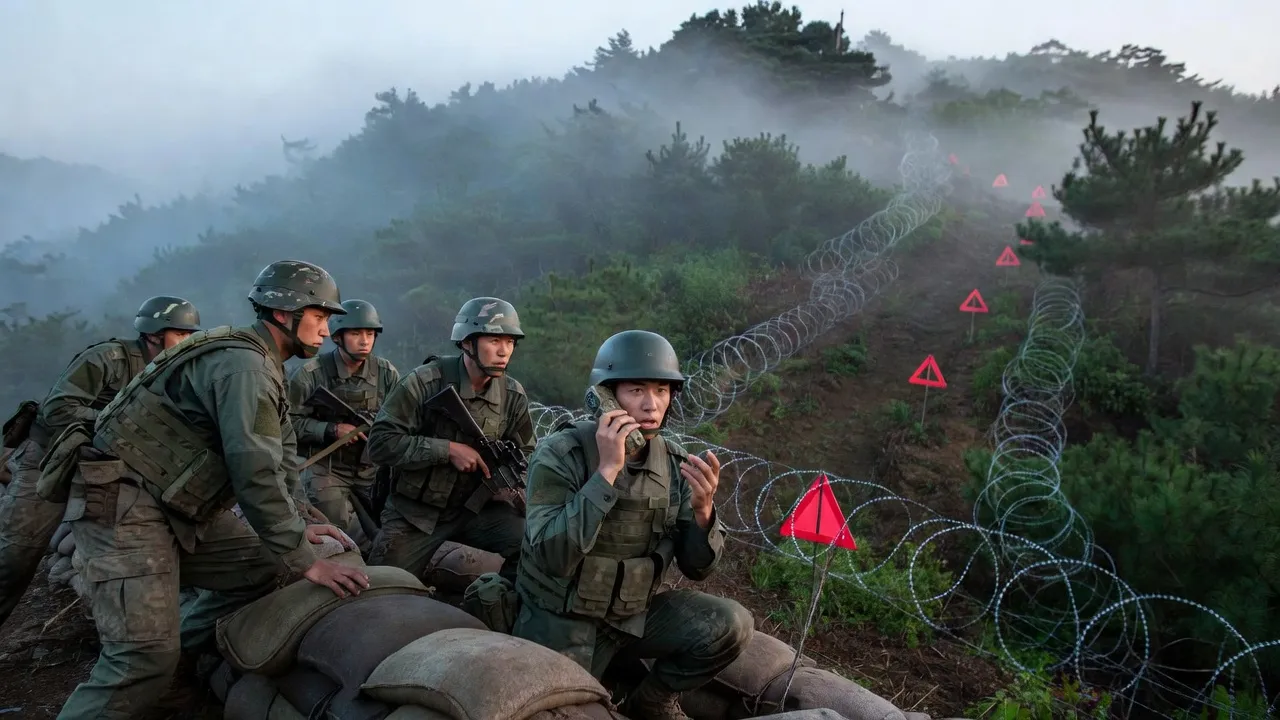
Brasília sees the North Korean shot as a new episode of military tension, linking it to the mine explosion in the DMZ and the hardening of Pyongyang's stance towards the South.
Dominant angle identified — does not reflect unanimity of this country’s media
KEY POINTS
- 01
According to the South Korean military cited by G1, the missile launched from the Wonsan region traveled over 700 kilometers.
- 02
The launch took place a day after Kim Yo-jong called Seoul "desprezível" and rejected the apology request over the mine explosion in the DMZ.
- 03
The South Korean National Security Council held an emergency meeting and Seoul will share its intelligence with the United States and Japan.
ANALYSIS
Brasília, October 3, 2026. For the Brazilian press, the news broke on the night of Friday, October 2, Brazilian time, or Saturday morning, October 3, in Korea. G1 and Estadão report that North Korea launched "at least one ballistic missile" from the Wonsan region, towards the East Sea, the Korean name for the Sea of Japan, according to the South Korean Joint Chiefs of Staff. G1 specifies that, according to South Korean military officials, the device traveled more than 700 kilometers. The Japanese coast guard indicated that it could be a ballistic missile, which has already fallen into the sea, and asked ships in the area to take precautions.
The Brazilian account places the launch in the context of the previous day's events. On Friday, October 2, Kim Yo-jong, sister of leader Kim Jong-un, called Seoul "desprezível" (despicable) while rejecting South Korea's demand for apologies for the explosion of mines in the demilitarized zone. Seoul and the United Nations Command, led by the United States, attribute the explosion to North Korean mines laid on the south side of the border; Pyongyang denies it. The two articles do not give the same toll: Estadão reports three soldiers injured, G1 reports two soldiers seriously injured during a reconnaissance mission.
The reaction from Seoul is described in institutional terms: the National Security Council of the presidency held an emergency meeting, the armed forces strengthened surveillance in anticipation of possible new tests, and will share their intelligence with the United States and Japan. Estadão notes that President Lee Jae-myung, with a conciliatory stance, had invited Pyongyang to resume dialogue the day before Kim Yo-jong's statement, and that the South Korean army had demanded official apologies from the North earlier in the week.
G1 places the episode in a longer evolution: in recent years, North Korea has hardened its position towards the South, abandoned reunification as a national goal, and designated South Korea as its "main enemy". An archive photo of the Hwasong-18 missile illustrates the article. Estadão, citing AFP, emphasizes that this is the second launch of this type in a week and recalls that the DMZ, 250 km long, has divided the peninsula since the 1953 armistice.
Both media outlets stick to the statements from South Korean and Japanese authorities. They do not report any reaction from Washington, Beijing, or Moscow, nor the position of the Brazilian government.





