
DOMINANT ANGLE
Paris is first focusing on the military escalation: a ballistic missile of over 700 km launched from Wonsan, on the heels of Pyongyang's rejection of the apologies demanded over the mines in the DMZ.
Dominant angle identified — does not reflect unanimity of this country’s media
KEY POINTS
- 01
A ballistic missile was fired from the Wonsan region on Saturday, October 3, over more than 700 km according to the South Korean Joint Chiefs of Staff.
- 02
The September 21 explosion in the DMZ injured three South Korean soldiers; Seoul and the United Nations Command attribute it to North Korean mines, which Pyongyang denies.
- 03
Kim Yo Jong deemed Seoul's apology request "pathetic", while Lee Jae Myung had called on Pyongyang to reestablish contact.
ANALYSIS
Paris, October 3, 2026. France is closely following the situation as North Korea fired a ballistic missile on Saturday, October 3, from the Wonsan region on its east coast, towards the East Sea, also known as the Sea of Japan. According to reports, the missile traveled over 700 kilometers before falling into the sea. The Japanese coast guard, citing the Ministry of Defense, indicated that it could be a ballistic missile.
The French press emphasizes the coordination between allies. Seoul asserts that it is maintaining "a robust defense posture" thanks to close information sharing with the United States and Japan, and has raised its surveillance level. This launch comes "amid a resurgence of tension" between the two Koreas.
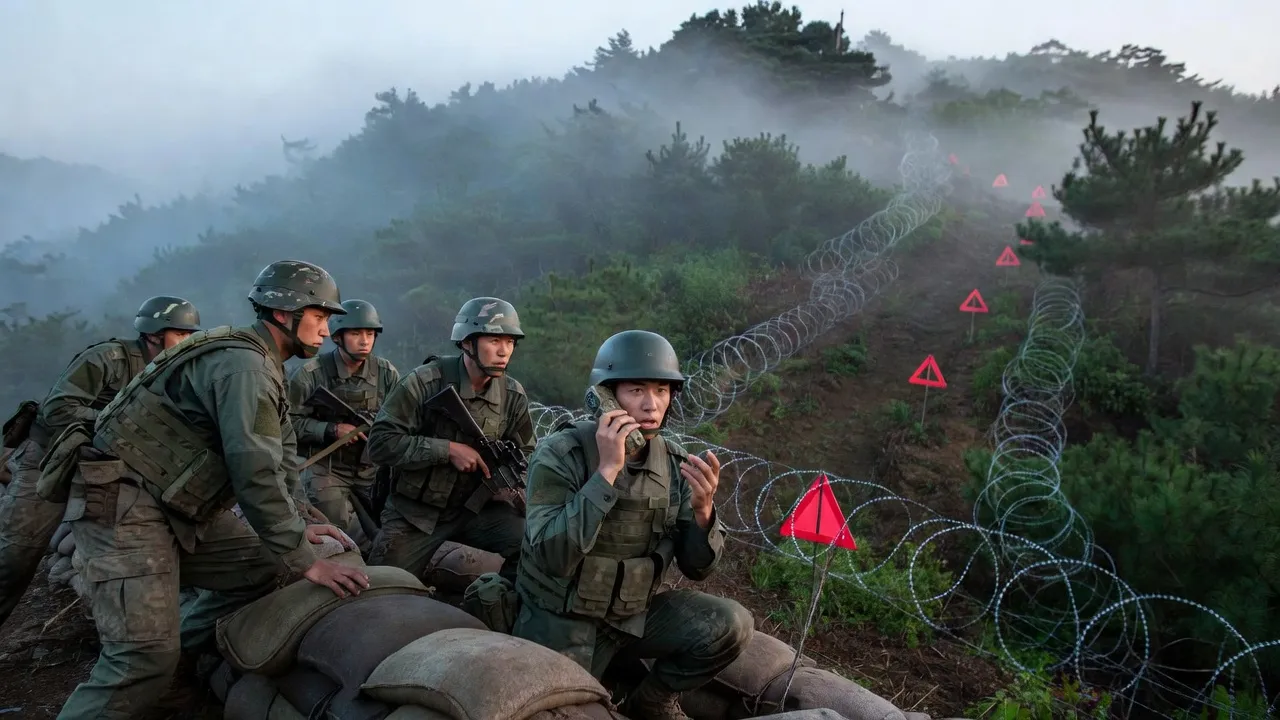
The context is presented in detail. On September 21, the explosion of two mines in the demilitarized zone injured three South Korean soldiers, one of whom lost a foot, as reported by BFMTV. Seoul and the United Nations Command, led by the United States, attribute the explosion to North Korean mines laid on the southern side. Pyongyang denied this earlier in the week. The South Korean army then demanded official apologies, denouncing a "flagrant violation of the armistice agreement".
BFMTV reports the response of Kim Yo Jong, sister of leader Kim Jong Un, who deemed "pathetic" the "sort of apologies" demanded by Seoul. France 24 in English uses the term "despicable" and specifies that Pyongyang is laying mines and erecting anti-tank barriers along the border to seal it permanently.
The articles also highlight the political paradox for Seoul. President Lee Jae Myung, "considered favorable to dialogue", had called on Pyongyang to reestablish contact the day after the army's demand for apologies. The launch contradicts this overture, notes France 24, which speaks of an outstretched hand being undermined.
BFMTV finally recalls that the two Koreas are still technically at war, the 1950-1953 conflict having ended with an armistice, and that the DMZ, four kilometers wide and nearly 250 kilometers long, is estimated to contain over 800,000 mines. After the détente born from the 2018 inter-Korean military agreement, relations have significantly deteriorated.





