
DOMINANT ANGLE
Tokyo is measuring the North Korean launch by the yardstick of law and its exclusive economic zone: a ballistic missile that fell outside of it, a formal protest, and a violation of UN resolutions.
Dominant angle identified — does not reflect unanimity of this country’s media
KEY POINTS
- 01
The missile, fired around 6:30 am from the Wonsan region, traveled approximately 680 km according to the Ministry of Defense and fell outside Japan's exclusive economic zone (The Mainichi).
- 02
A protest was lodged with North Korea, deeming the launch a violation of UN Security Council resolutions (Kyodo News, The Mainichi).
- 03
The launch follows a mine explosion in the DMZ on September 21, which injured three South Korean soldiers, and two short-range missile launches on September 20 (The Mainichi).
ANALYSIS
Tokyo, October 3, 2026. At 06:49, the Japanese Ministry of Defense announced that North Korea had launched "what could be a ballistic missile," according to Kyodo News. A second report at 07:08 repeated the South Korean information of a projectile fired towards the Sea of Japan, and at 08:00, Seoul confirmed that it was indeed a ballistic missile.
The Japanese account initially focuses on the consequences for the territory and the law. The Mainichi, quoting a Kyodo dispatch from Seoul, reported that the device was fired around 6:30 from the Wonsan area in Kangwon Province and traveled "about 680 kilometers" before falling outside Japan's exclusive economic zone, according to the Ministry of Defense. No damage or injuries were immediately reported. The Japanese figures differ from the distance of over 700 kilometers cited by the South Korean military.
At 08:59, Kyodo announced that Japan had lodged a protest with Pyongyang. According to The Mainichi, the government described the launch as a violation of UN Security Council resolutions that prohibit North Korea from launching missiles using ballistic technology.
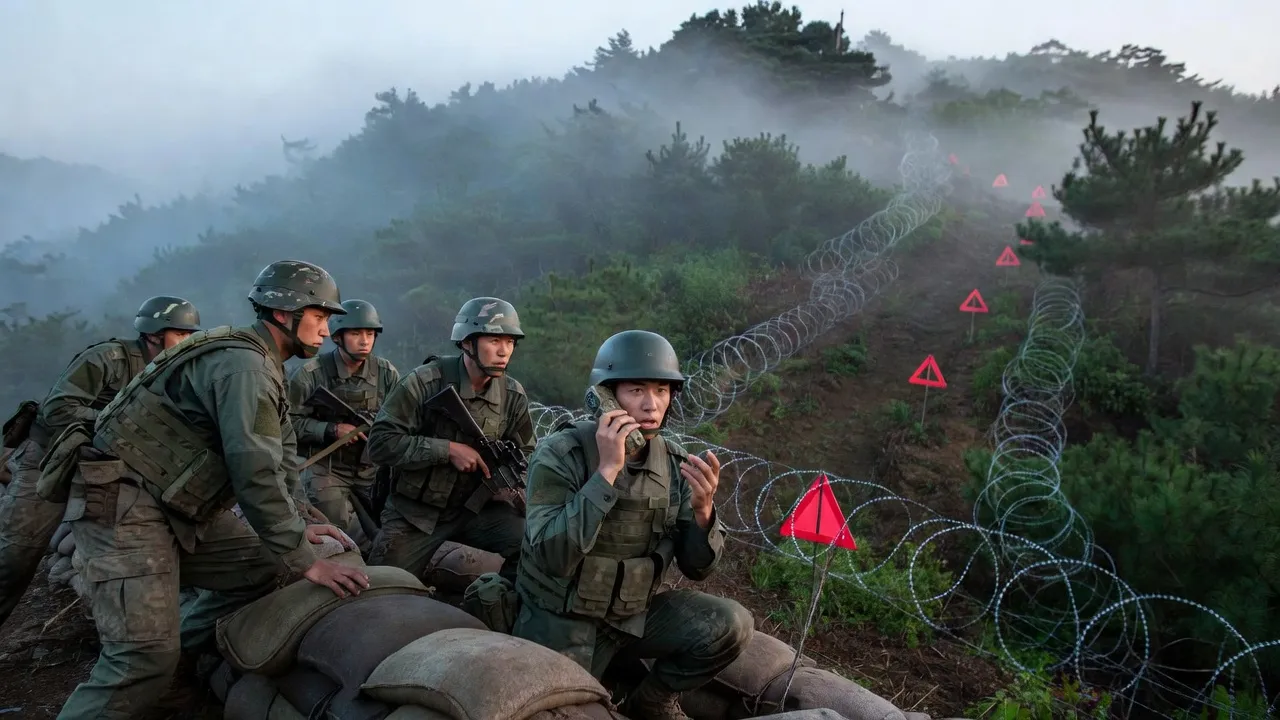
The context is presented as a dispute between the two Koreas. The South Korean military estimated on Monday, in a preliminary assessment, that Pyongyang had likely laid mines on the southern side of the demilitarized zone; they exploded on September 21 and injured three South Korean soldiers. North Korea denies any involvement and, according to its state media, claims that Seoul "should pay the price" for a "farce of their own making."
The Mainichi also recalled that North Korea had fired two short-range ballistic missiles on September 20, the second launch of this type in the month. The Saturday launch is thus part of a series, seen from Tokyo as a repetition of acts contrary to UN resolutions rather than as an isolated episode.
In the selected articles, the Japanese reaction is limited to the official protest. Neither Kim Yo-jong's statement nor President Lee Jae-myung's position is mentioned, and the coordination with Washington and Seoul is not detailed from the Japanese side.
SOURCES (2)
- Kyodo NewsMEDIUM
- The MainichiMEDIUM





