
DOMINANT ANGLE
Stockholm soberly relays the South Korean military alert, without taking a national stance, primarily retaining the North Korean claim of a missile equipped with artificial intelligence.
Dominant angle identified — does not reflect unanimity of this country’s media
KEY POINTS
- 01
The missiles were detected in the morning, local time, and launched near Pyongyang (Aftonbladet, SvD).
- 02
The South Korean army claims its defense has "increased surveillance and vigilance" in the face of potential new launches.
- 03
The North Korean regime claims that the missile fired earlier this month was equipped with AI technology and could change trajectory at low altitude.
ANALYSIS
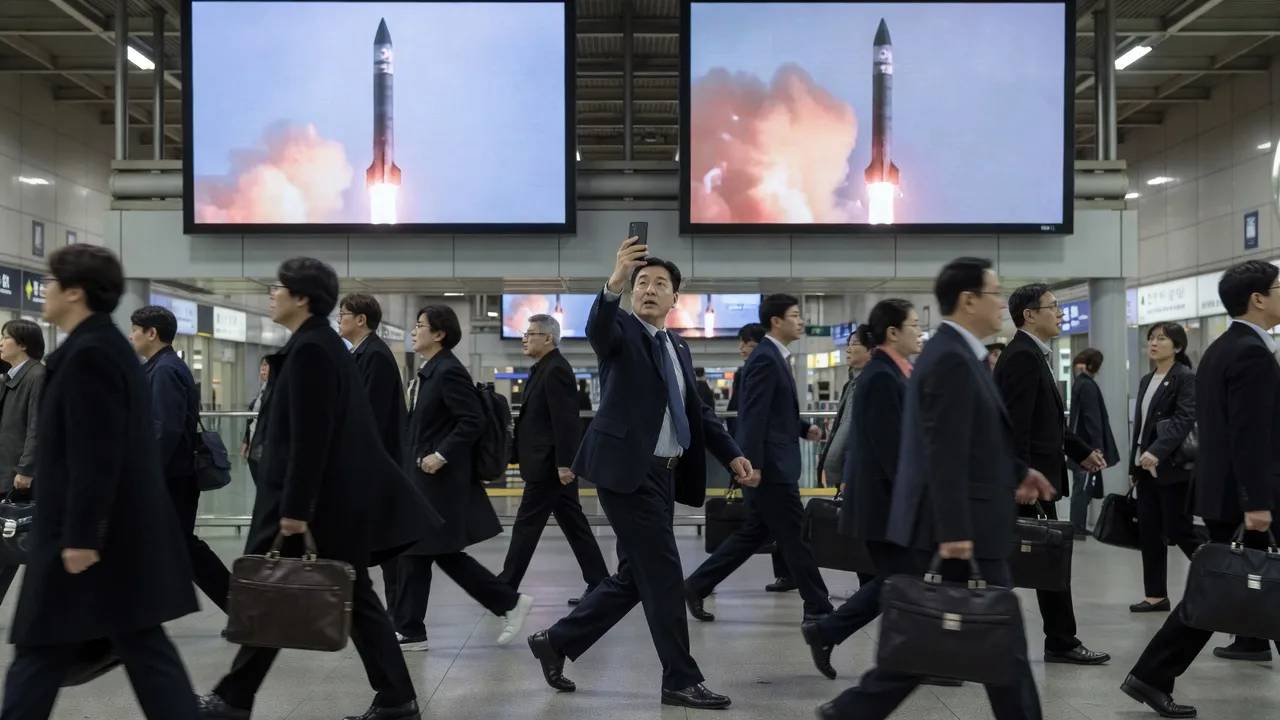
Stockholm, October 12, 2026. The Swedish press is reporting the news in a brief dispatch, published identically by Aftonbladet and Svenska Dagbladet under the title "Nordkorea avfyrat flera robotar" (North Korea has fired several missiles). The text reports that the devices were detected in the morning, local time, and launched near Pyongyang, the North Korean capital.
The sole source is the South Korean army. In a statement, it indicates that "our defense has strengthened surveillance and vigilance in the face of potential additional firings". The dispatch does not specify the number of missiles or their range, and does not indicate where they fell; these elements, including the firing of over 900 kilometers reported by Seoul and Tokyo, are part of the broader context of the event and are not included in the Swedish articles collected.
The reminder concerns the previous firing: earlier this month, North Korea conducted a ballistic missile test. The Swedish media add a precision attributed to the North Korean power, which claims that this device was equipped with artificial intelligence technology and can change its trajectory at low altitude. The Swedish verb "påstår" (claims) marks the distance of the editorial staff from this claim, which nothing in the text comes to verify.
The framing is therefore that of a military alert in the peninsula, seen from afar: no Swedish reaction, no position from Stockholm, no diplomatic reading or call for a resumption of dialogue. Sweden relays the fact as one episode in a series of firings, relying solely on the South Korean account and leaving aside the political dimensions of the escalation between Seoul and Pyongyang. The short format, without analyst or correspondent cited, limits the reading to what the South Korean general staff chooses to communicate.
For the Swedish reader, the essential information is threefold: missiles have been launched from the Pyongyang region, Seoul is in a state of heightened vigilance, and Pyongyang claims technological advances in its ballistic weapons. The tone remains factual and sober, without dramatic qualifiers, in line with the agency format.