
DOMINANT ANGLE
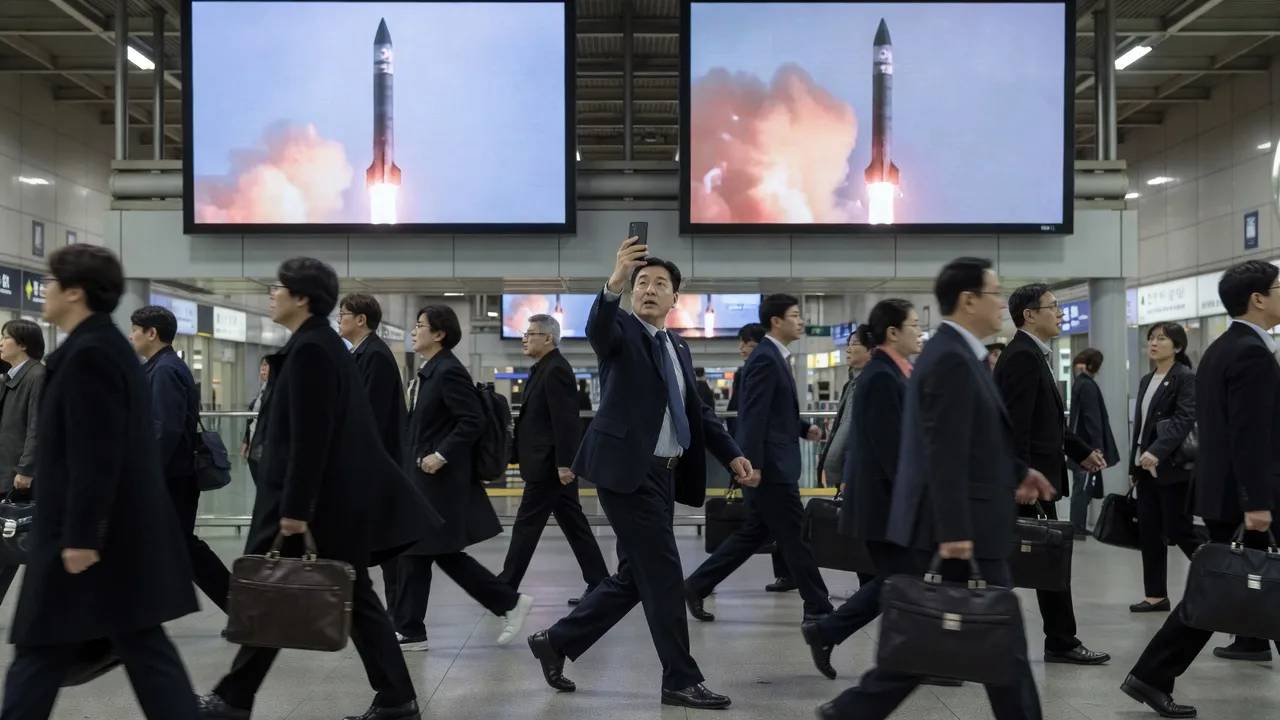
Berlin is recording the latest North Korean salvo as another link in a series of ballistic tests, according to South Korean and Japanese sources.
Dominant angle identified — does not reflect unanimity of this country’s media
KEY POINTS
- 01
According to Yonhap, citing the South Korean military, the missiles fired from the Pyongyang region traveled approximately 900 kilometers towards the Sea of Japan.
- 02
NHK reports, based on government sources, that the projectiles fell outside Japan's exclusive economic zone.
- 03
The South had tested its first hypersonic glider last Thursday; a mine at the border injured three South Korean soldiers, which Pyongyang disputes.
ANALYSIS
Berlin, October 12, 2026. The German press is reporting on the event in a news agency dispatch, without extended commentary. Tagesschau and Handelsblatt report that North Korea has launched "again several ballistic missiles" from the Pyongyang region, towards the Sea of Japan, which the South Koreans call the East Sea. According to the Yonhap agency, citing the South Korean Joint Chiefs of Staff, the devices traveled approximately 900 kilometers. The Japanese channel NHK, relying on government sources, indicates that they fell outside Japan's exclusive economic zone.
The two titles emphasize what they do not know: the types of missiles are unknown and Pyongyang has made no statement. Tagesschau writes that "the background remains unclear", the background thus remaining uncertain.
The context is given in a few lines. Last Thursday, the South tested its first hypersonic glider, a system that allows for precision strikes by surprise, according to its government. Tensions had already risen before this test: a mine laid at the heavily fortified border injured three South Korean soldiers. Seoul sees this as a North Korean mine; Pyongyang disputes this version.
The series is placed in the calendar: a launch from the Wonsan port region on October 3, then at least one ballistic missile on September 20, which fell into the Sea of Japan. Handelsblatt, whose dispatch is dated from Beijing, adds that, according to experts, Pyongyang is thus seeking to develop its military capabilities and demonstrate its strength, with North Korea regularly testing ballistic missiles.
The German account therefore remains factual and focused on the sequence of tests and regional security. It does not mention any reaction from Berlin or diplomatic initiative, and does not provide technical details about the launched devices.