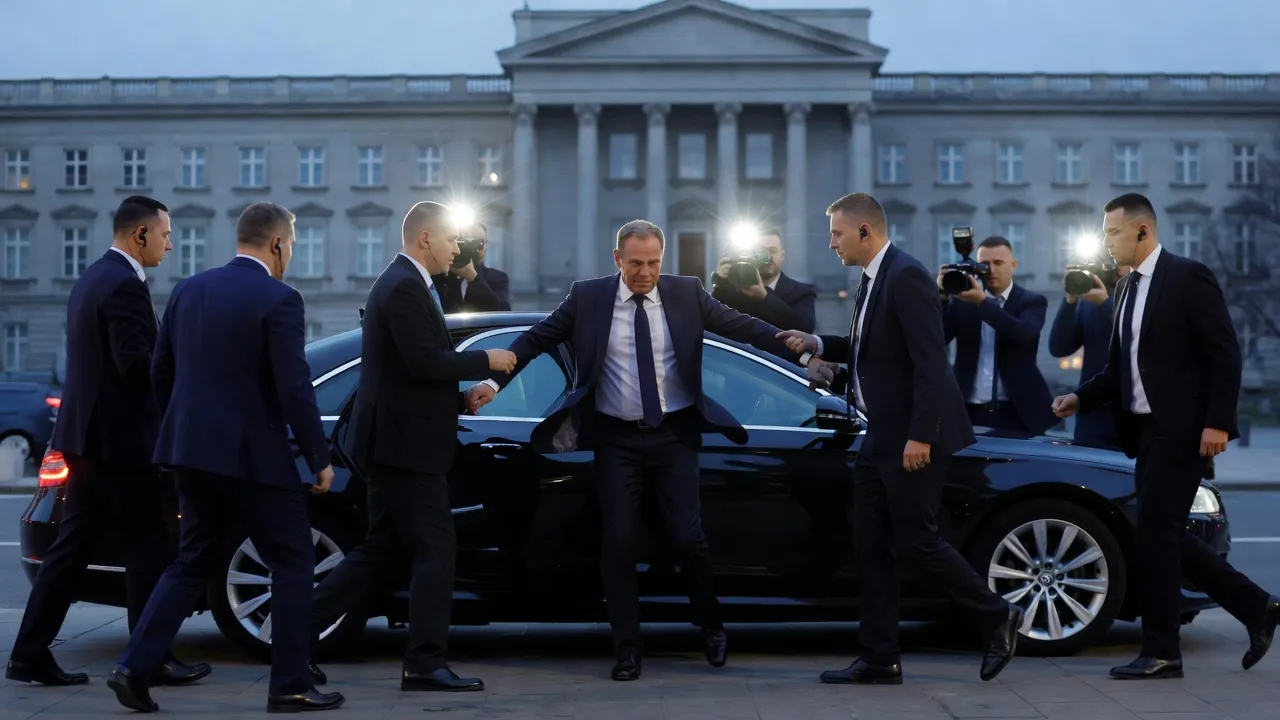

DOMINANT ANGLE
Moscow is primarily relaying the suspicion of the Polish opposition, which describes the alert against Tusk as a "political show", rather than the government's security narrative.
Dominant angle identified — does not reflect unanimity of this country’s media
KEY POINTS
- 01
On October 11, Interior Ministry spokesperson Karolina Gałecka announced on X that the police had received information about a possible attack on Tusk and Kosiniak-Kamysz (Vedomosti).
- 02
Spokesperson Jacek Dobrzyński did not provide any details about the author of the threats or the progress of the investigation; according to Gazeta Wyborcza, the threat was neutralized (Meduza).
- 03
Law and Justice and the Confederation accuse the majority of "sowing panic" and making a "political show" of security (Vedomosti, citing Onet).
ANALYSIS
Moscow, October 12, 2026. Russian media are covering the Polish announcement on two levels: the facts of the alert, and the controversy it is sparking in Warsaw.
On Sunday, October 11, as reported by Vedomosti, the Polish police received information about a possible attack on Prime Minister Donald Tusk and Deputy Prime Minister and Minister of Defense Władysław Kosiniak-Kamysz. The Interior Ministry spokesperson, Karolina Gałecka, wrote about it on X. Interior Minister Marcin Kierwiński and Minister-Coordinator of Special Services Tomasz Siemoniak ordered measures to be taken. An emergency meeting of the ABW, police, and SOP was scheduled for 11 am at the Counter-Terrorism Center. According to Interia.pl, cited by the newspaper, two men, aged 56 and 52, had already been detained in September for making threats against Tusk.
Meduza emphasizes the opacity of the communication. Spokesman Jacek Dobrzyński provided "no details" about the author of the threats or the state of the investigation. He responded to "pseudo-experts" who doubted the usefulness of discussing it, saying it was a threat of "mortal gravity." According to Gazeta Wyborcza, the threat had already been neutralized. Tusk thanked the police for their "rapid and decisive" action.
On October 12, Vedomosti, citing Onet, gave the floor to the opposition. Law and Justice and Confederation lawmakers accuse the ruling camp of "sowing panic," turning security into a "political show," and trying to divert attention from embarrassing issues for the government. Sławomir Mentzen claims to have received several death threats by email, which were classified by the police due to the lack of an identified sender; he hopes that "the services will handle it" for Tusk. Senator Stanisław Karczewski predicts that such announcements will multiply "until it is declared in 2027 that the legislative elections are impossible for security reasons."
The two publications use the conditional tense when referring to the man who "allegedly threatened" the head of government, and they stick to official statements and the Polish press, without referencing the context of the attacks in Mazovian schools or Tusk's accusation against Moscow in September.
SOURCES (2)
- VedomostiMEDIUM