
DOMINANT ANGLE
Lisbon is sticking to the medical record: the Portuguese press details the adenocarcinoma, the lobe removed and the week-long convalescence, without involving the Church's government.
Dominant angle identified — does not reflect unanimity of this country’s media
KEY POINTS
- 01
The Vatican confirmed a pulmonary adenocarcinoma after the removal of the lower lobe of Leo XIV's right lung, at 71 years old.
- 02
The operation at Gemelli lasted about 90 minutes and took place "successfully, without complications" according to the Vatican.
- 03
No details on potential treatments were disclosed; a week-long hospitalization is planned.
ANALYSIS
Lisbon, October 14, 2026. The Portuguese press first reports the medical verdict. On Tuesday, October 13, the Vatican confirmed in a bulletin that Pope Leo XIV, 71, has lung cancer. The 10 pm news on Rádio Observador focuses on this point: the examination performed during the operation confirmed the presence of pulmonary adenocarcinoma, which it describes as one of the most common types of cancer.
SAPO Notícias quotes the bulletin: "The perioperative histological examination confirmed the diagnosis of pulmonary adenocarcinoma, as suspected by the preoperative examinations." The same media specifies that the removed nodule "was, as suspected, cancerous" and required the removal of the lower lobe of the right lung. Jornal Económico reiterates the phrase from the statement: "To make the intervention radical, the lower lobe of the right lung was removed."
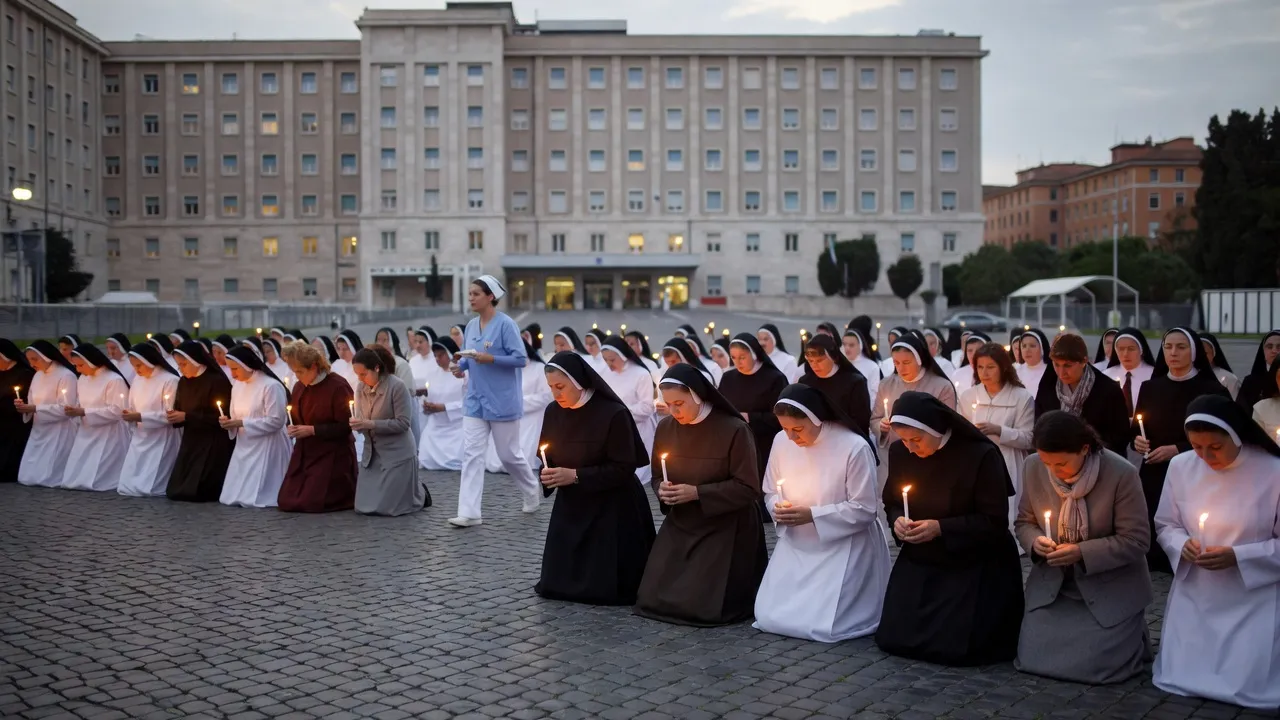
The procedure is reported with precision. The operation, at Rome's Gemelli hospital, lasted approximately 90 minutes and took place "with success, without complications" according to the Vatican. The pope woke up normally and then returned to his room, on the tenth floor, according to Observador. The hospitalization is planned for about a week of convalescence.
The headlines also emphasize what remains unknown. SAPO notes that no additional details have been released, particularly regarding potential treatments, and Observador points out that the Holy See has not added anything to the bulletin. The coverage therefore remains strictly clinical: type of tumor, surgical procedure, duration, immediate aftermath.
Earlier, SAPO had recalled that the pope himself had revealed on Sunday, after routine examinations, a nodule detected at an early stage and well localized, and that he had thanked the faithful for their prayers. The tone of the articles is sober, without commentary on the governance of the Church or the pontiff's agenda: Portuguese sources stick to the chronology of the diagnosis and the Vatican's statement. Nothing is said, at this stage, about the possible extension of the disease: the articles do not mention the results of complementary examinations, and the next expected information remains a new bulletin from the Holy See on the patient's condition.