Common ground and differences in coverage across the media analysed.
The Houthi forces, backed by Iran, are waging a campaign of attacks - missiles, drones, strikes on oil facilities and on maritime transport - against Saudi Arabia, in a context of regional escalation.
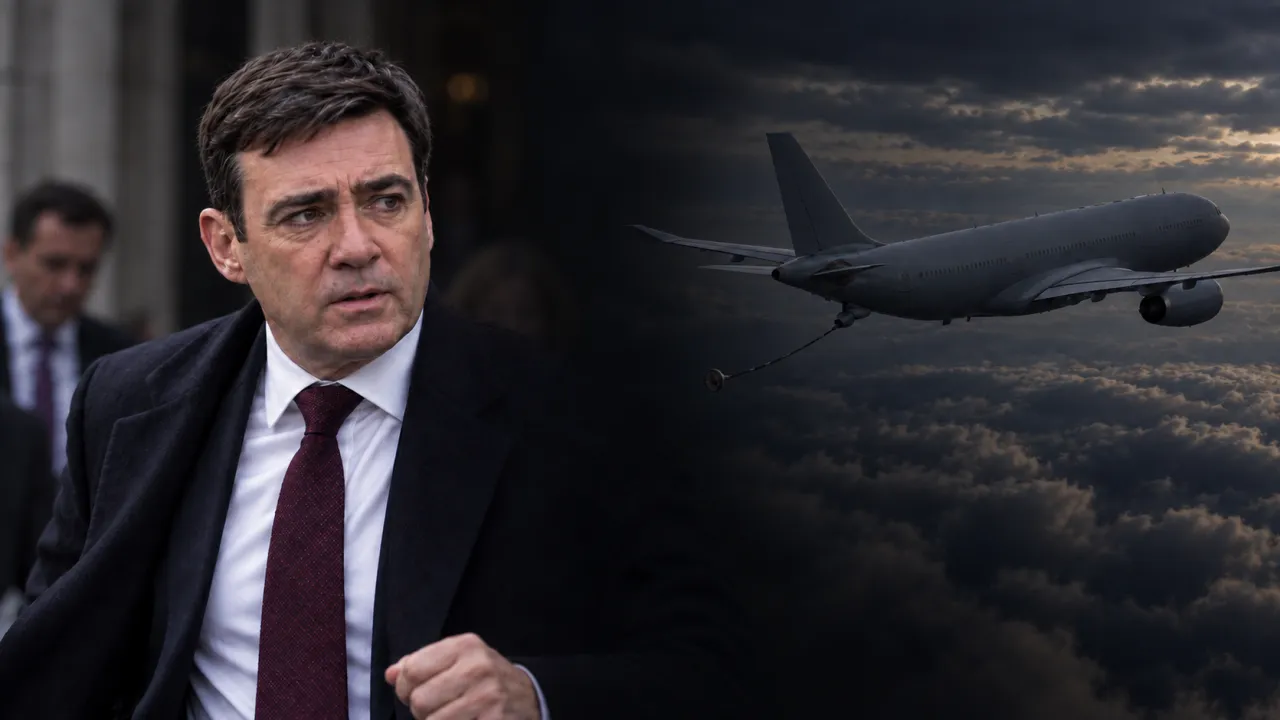
British Prime Minister Andy Burnham has accepted a Saudi request for military support, in the form of in-flight refueling of Saudi combat aircraft by Royal Air Force Voyager planes, presented as defensive and limited in time.
In response to Saudi Arabia's request for military support against the Houthis, the United Kingdom has agreed to provide in-flight refuelling for its fighter jets, while the United States, approached several times by Crown Prince Mohammed bin Salman, has limited its contribution to intelligence and sharing of targeting data without engaging in strikes.
Coverage aligned with this reading
Coverage that diverges
The narrative, attributed to the New York Times, that Donald Trump had cancelled at the last minute strikes against the Houthis when bombs were already loaded onto the planes, is taken up as an established fact by some editorial offices, while others explicitly state that Reuters was unable to verify it independently.
Coverage aligned with this reading
Coverage that diverges
This grouping describes the publications analysed, not the position of these countries’ populations or of their governments.
What the coverage of each country leaves aside, while others put it forward.
Sweden
Pakistan
Singapore
Preview: 3 of 19 media perspectives. Syntheses of the media analysed — not direct quotations. Method & limitations
Canberra is gauging the Houthi crisis at the pump: the surge in Australian fuel prices is becoming the immediate barometer of a distant war, more so than London's or the G7's diplomatic maneuvers.
3 sources · View sources
Brazil is measuring the Gulf crisis by the barrel: the drop in Brent below $100 carries more weight in Brasília than the military maneuvers undertaken by London.
2 sources · View sources
Ottawa is reopening its own debate on arms sales to Riyadh, in light of British support and the US withdrawal in the face of the Houthis.
3 sources · View sources
DOMINANT ANGLE
Canberra is gauging the Houthi crisis at the pump: the surge in Australian fuel prices is becoming the immediate barometer of a distant war, more so than London's or the G7's diplomatic maneuvers.
ANALYSIS
Canberra, 22 September 2026.
DOMINANT ANGLE
Brazil is measuring the Gulf crisis by the barrel: the drop in Brent below $100 carries more weight in Brasília than the military maneuvers undertaken by London.
ANALYSIS
Brasília, September 22, 2026.
DOMINANT ANGLE
Ottawa is reopening its own debate on arms sales to Riyadh, in light of British support and the US withdrawal in the face of the Houthis.
ANALYSIS
Ottawa, Tuesday, September 22, 2026.
DOMINANT ANGLE
Copenhagen first takes note of the oil pipeline: British support for the Saudis and the G7 warning are seen as measures to ensure that oil continues to flow through the Persian Gulf and Hormuz.
ANALYSIS
Copenhagen, September 22, 2026.
DOMINANT ANGLE
Ethiopia is gauging the Houthi crisis based on its own nationals repatriated from Saudi Arabia and the Yemeni refugees flocking to Djibouti, rather than the military calculations of London and Riyadh.
ANALYSIS
Addis-Abeba, Monday, September 21, 2026.
DOMINANT ANGLE
Paris is first focusing on the economic stakes of the Bab el-Mandeb strait, placing the G7 statement and the strikes on Moka behind the issue of global maritime trade, without mentioning London's military support for Riyadh.
ANALYSIS
Paris, September 22, 2026.
DOMINANT ANGLE
Jakarta weighs the human cost of an expanding war, between the six civilians killed in Moka and Washington's persistent refusal to engage militarily alongside Riyadh.
ANALYSIS
Jakarta, September 22, 2026.
DOMINANT ANGLE
Israel fears that the escalation between Saudi Arabia and the Houthis may cause the Yemeni movement to directly target its own territory once again, as was the case during the previous wave of attacks.
ANALYSIS
Jérusalem, September 22, 2026.
DOMINANT ANGLE
Rome is particularly focused on the transatlantic contrast: the American withdrawal in the face of Saudi appeals, more than the G7's collective statement on Iran.
ANALYSIS
Rome, September 22, 2026.
DOMINANT ANGLE
Kuala Lumpur is showing solidarity with Riyadh and calling for de-escalation, while London is engaging militarily and Washington is wavering.
ANALYSIS
Kuala Lumpur, September 22, 2026.
DOMINANT ANGLE
Kathmandu gauges the Yemen war by its displaced people rather than Western military maneuvers, as London arms the Saudi supply and Washington abstains.
ANALYSIS
Katmandou, 22 septembre 2026.
DOMINANT ANGLE
Islamabad is relying on its shuttle diplomacy between Tehran and Riyadh, as the G7 urges Iran to stop arming the Houthis and Washington refrains from direct military engagement.
ANALYSIS
Islamabad, September 22, 2026.
DOMINANT ANGLE
Doha is measuring the void left by Washington in the face of Riyadh, as the Gulf region's diplomacy attempts to contain the escalation with the Houthis
ANALYSIS
Doha, September 22, 2026.
DOMINANT ANGLE
Riyadhh welcomes the G7 statement as diplomatic validation, but is particularly aware of the US military silence and the test that Bab al-Mandeb poses to its reconciliation with Tehran.
ANALYSIS
Riyadh, September 22, 2026.
DOMINANT ANGLE
Stockholm first notes the firm stance taken by the G7, which demands that the Houthis cease their attacks and requires Iran to stop arming the movement, while reports from the field remind us of the human cost of the escalation in Yemen.
ANALYSIS
Stockholm, September 22, 2026.
DOMINANT ANGLE
Singapore gauges the Yemen escalation in terms of its own trade routes: the threat to Bab al-Mandeb and the Strait of Hormuz serves as a direct warning for a city-state that thrives on maritime freight and imported energy.
ANALYSIS
Singapour, Tuesday, September 22, 2026.
DOMINANT ANGLE
London is opting for a calibrated commitment: refuelling Saudi fighter jets in mid-air without crossing the line into a combat role, a choice that Downing Street justifies as much by the security of Riyadh as by the energy bill of the British.
ANALYSIS
London, 22 September 2026.
DOMINANT ANGLE
The United States is calculating its withdrawal: Trump has ruled out strikes against the Houthis despite repeated calls from the Saudi crown prince, preferring to limit its military engagement while London provides in-flight refueling for Riyadh's fighters.
ANALYSIS
The United States government, facing the Houthi campaign against Saudi Arabia, has chosen restraint over direct intervention, a position that leaves the field open to London to refuel Saudi fighter jets in flight.
DOMINANT ANGLE
Pretoria is measuring its historical solidarity with Riyadh in light of the US military silence in the face of the Houthi advance
ANALYSIS
Pretoria, Tuesday, September 22, 2026.
Explore every perspective on this subject across 19 countries.
Compare viewpoints and see where they diverge.
published on
countries
sources
articles
gap
Beyond the British announcement and the G7 statement, the crisis is mobilizing Washington behind the scenes, reshaping alliances from Malaysia to Pakistan, displacing civilians to Djibouti and Ethiopia, and already affecting oil prices and the schedule of international events in Saudi Arabia.
The British operation has not yet started: operations are due to begin in the coming days and last several weeks, without direct American military engagement.
According to Axios, Admiral Brad Cooper, commander of US Central Command (CENTCOM), prepared strike options against the Houthis on Saturday, September 19, 2026, and presented them to Defense Secretary Pete Hegseth. Donald Trump ultimately chose to hold back, citing, according to a source quoted by Axios, the desire not to open a Pandora's box.
« neither the United States nor any other nation is targeted in the Bab el-Mandeb Strait, with the sole exception of the Saudi enemy »
This caution is also based on indirect contacts established through Oman, a mediator of a ceasefire signed in 2025 that had ended a previous campaign of US bombings against the rebels, Axios reports. A Houthi official, Mohamed al-Bukhaiti, gave the Associated Press, cited by HuffPost World, the assurance that Washington is not among the targets of the movement.
The Malaysian Ministry of Foreign Affairs stated on Monday, September 21, 2026, that it condemns "in the strongest terms" the Houthi attacks against Saudi Arabia and expressed its solidarity with Riyadh, according to Bernama, cited by Malay Mail. Kuala Lumpur, a member of the Organisation of Islamic Cooperation, called for de-escalation and reaffirmed its partnership with the Kingdom.
In Pakistan, Interior Minister Mohsin Naqvi made his sixth visit to Tehran since February, alongside Chief of Army Staff Asim Munir, to discuss the Houthi strikes against Saudi infrastructure and the stalled US-Iran talks, reports The Express Tribune. Iranian spokesperson Esmail Baghaei presented this meeting as part of "bilateral relations", without any announced mediation message. On the same day, Pakistani Foreign Minister Ishaq Dar signed an agreement in New York with his Saudi counterpart, Prince Faisal bin Farhan, for the mutual exemption of diplomatic visas, according to Geo News.
In Doha, the press notes that Saudi Minister Faisal bin Farhan held separate talks with his Kuwaiti, Egyptian, and Turkish counterparts to "contain regional tensions", according to Gulf Times.
The Saudi daily Asharq Al-Awsat reports that Houthi military sources, cited by AFP, claim that experts from the Iranian Revolutionary Guard Corps supervised the digging of tunnels near Moka and discussed the installation of radars on the island of Zuqar, in the Red Sea. This raises questions, according to Gulf Research Center President Abdulaziz bin Sager, about the solidity of the reconciliation agreement concluded in Beijing between Riyadh and Tehran in 2023.
The Ethiopian Ministry of Women and Social Affairs announced the repatriation of 1,592 nationals from Saudi Arabia, who arrived on nine flights last week, including 34 minors. Launched on September 15, 2025, this operation has now brought back more than 103,000 Ethiopians, according to the ministry, cited by Fana Broadcasting Corporate.
In Djibouti, the International Organization for Migration reports that thousands of Yemenis have been fleeing for ten days by boat across the Bab el-Mandeb Strait to the Obock camp, on overcrowded boats with little food, according to a BBC report. On Sunday evening, 3,106 people had already crossed the Red Sea, the Nepalese press specified, citing the IOM; local authorities are preparing for the possible arrival of up to 10,000 refugees.
On the ground, Al Jazeera counts at least 674 dead and more than 158,000 displaced since the resurgence of fighting. Yemeni government forces recaptured Mount Numan, west of Taiz, on Sunday, September 20, after clashes with the Houthis, who had conquered Hays, al-Khokha, and Moka about ten days earlier, according to Asharq Al-Awsat.
Brent crude fell for the fourth consecutive session on Monday, September 21, 2026, dropping 3.09% to $100.66 a barrel; WTI, meanwhile, lost 3.27% to $92.94, according to the Estadão. The decline is attributed, by the Brazilian daily, to anticipation of a partial resumption of Saudi oil flows and diplomatic progress on the sidelines of the United Nations General Assembly.
Regional tension has also resulted in concrete cancellations: the Red Sea International Film Festival, Saudi Arabia's main audiovisual event, has been postponed to 2027 due to the escalation in the Middle East and uncertainty over the reopening of the Strait of Hormuz, reports Veja. The Brazilian magazine sees this as an echo of the earlier cancellation this year of the Formula 1 Grand Prix in Jeddah, already penalized by the fallout from the war in Iran.
The Red Sea terminal absorbs the bulk of Saudi oil exports that have been redirected.
The crown prince called Trump twice on Sunday to demand strikes; Washington only provided intelligence.
Washington limits the travel of its personnel to Taif and Yanbu, two Saudi cities targeted.
Officials cite a risk of renewed direct Houthi fire against Israel.