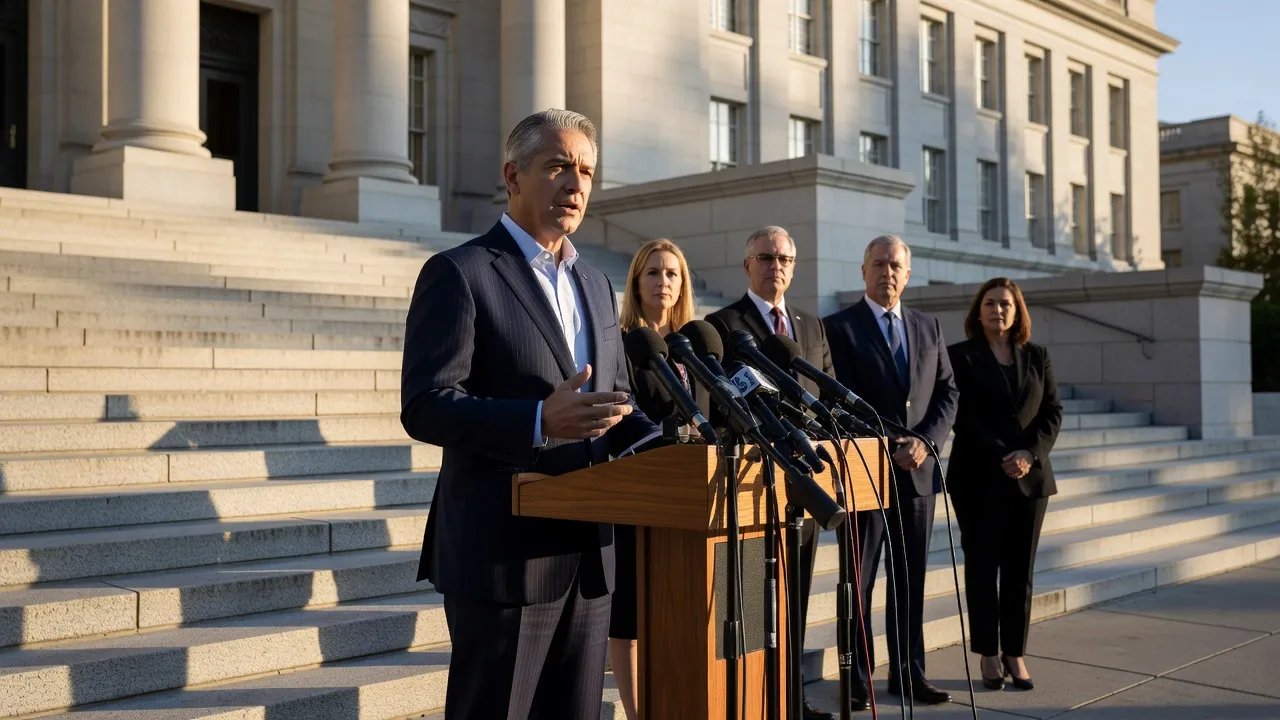
Common ground and differences in coverage across the media analysed.
What the media report in common
1
The US Supreme Court rejected the Trump administration's emergency request on Monday, September 14, in the United States Postal Service case against California, leaving in place the judicial block on new postal rules for mail-in voting seven weeks before the November 3 midterm elections.
2
Only judges Samuel Alito and Clarence Thomas publicly opposed the majority decision.
3
Judge Brett Kavanaugh joined a concurring opinion estimating that the application of the new rules would be premature before the 2026 election, without excluding their validity for a future election.
Where media coverage diverges
Political cost for Trump
When asked if this rejection represents a real political cost for Donald Trump, some of the press responds that the president's public anger and the vote of judges he himself appointed make it a real setback, while the German press responds that the judicial defeat does not compromise the targeted political goal.
On the question of the number of judges who voted against the Trump administration, most perspectives that give a figure report 7 votes against 2, while the Spanish press reports a conservative majority of 6 votes against 3.
When asked what the decision reveals above all, some of the press reads it as proof that the judicial counter-powers resist the executive, while another part focuses its story on the personal episode of Donald Trump's reaction rather than the institutional dimension.
Berlin distinguishes Trump's legal defeat from his broader political victory: the Supreme Court blocks his new rules on mail-in voting, but the German press sees this as a costless setback for a president whose real goal would be to cast doubt on the reliability of the November election.
KEY POINTS
The Supreme Court has ruled, in a brief opinion, that it was unlikely the government would prevail in challenging the lower court's injunction
Primaries are taking place in all 50 states since March 3 (Arkansas, North Carolina, Texas) and end on September 15 in Delaware; 36 states are also renewing their governor
Two of the nine judges expressed a detailed dissent in favor of the new rules wanted by the Trump administration, according to the FAZ
ANALYSIS
Berlin, September 16, 2026. The US Supreme Court rejected the Trump administration's emergency request on Monday evening to immediately apply new federal rules for mail-in voting, just seven weeks before the November 3 midterm elections. According to Tagesschau, the judges estimated, in a brief statement, that it was "unlikely that the government would prevail" in challenging a lower court's injunction. The practical consequence is that states will continue to send out mail-in ballots according to current standards, as has already begun in some places, while primaries continue in all 50 states, which started on March 3 in Arkansas, North Carolina, and Texas, and ended on September 15 in Delaware - with 36 states also renewing their governors.
The FAZ takes a closer look at the political implications of the episode. The White House plan, the newspaper writes, aimed to transform the postal service into a kind of federal oversight authority over a decentralized electoral system, as intended by the Constitution, a plan described as "authoritarian" by the newspaper, which recalls that two of the nine judges expressed detailed dissent in its favor. But for the FAZ, the legal defeat costs Trump nothing: his real goal was not the security of the election, but the uncertainty it installs in public opinion. The narrative of massive mail-in voting fraud, according to the newspaper, remains unfounded in serious studies - but its political effect is already achieved among voters who now doubt the outcome of the November election.
The newspaper also notes the relief, even in states run by Republicans, where election officials will not have to urgently reorganize an already ongoing election. The Justice Department, the FAZ notes, continues to pursue lawsuits against states, a sign that the executive branch does not give up on influencing the organization of the vote despite this setback before the highest court.
Argentina
DOMINANT ANGLE
Buenos Aires is particularly focused on the internal reckoning sparked by the setback: three judges appointed by Trump himself voted against his own administration, triggering unprecedented presidential fury against his own nominees.
KEY POINTS
The Supreme Court rejected the Trump administration's attempt to have the postal service play a central role in mail-in voting on Monday evening, seven weeks before the November 3 midterms (Clarín).
Only Justices Clarence Thomas and Samuel Alito opposed the majority decision; three judges appointed by Trump during his first term — Amy Coney Barrett, Brett Kavanaugh, and Neil Gorsuch — voted to block his request (Perfil).
A whistleblower report cited by Clarín warned that the postal service's new requirements could prevent millions of mail-in ballots from being sent.
ANALYSIS
Buenos Aires, September 16, 2026. The Argentine press is primarily focusing on the domestic political implications of the setback inflicted on Donald Trump by the Supreme Court on Monday evening, rather than just the legal debate. Clarín emphasizes that the high court has "dispelled much of the uncertainty" that weighed on the preparations for the midterm elections, by rejecting the presidential attempt to have the postal service play a central role in determining who could receive an absentee ballot. The plan, resulting from a decree signed in March, required states to adopt a uniform envelope model and transmit the lists of eligible voters to an online portal still under construction; the postal service could have refused to deliver ballots to non-compliant states. A whistleblower report cited by Clarín warned that these requirements risked preventing the sending of millions of ballots, effectively depriving many voters of their right to vote in the middle of the election.
The decision is presented as "a victory for the status quo": the thousands of electoral offices in the country will be able to send ballots as planned, without submitting to new postal rules imposed at the last minute. California's Democratic Secretary of State, Shirley Weber, whose state sends an absentee ballot to every voter, welcomed the decision: "we can finally move forward and return to what we do best: running our elections without a dark cloud above us."
Australia
DOMINANT ANGLE
Canberra is particularly taking note of Donald Trump's unprecedented attack on his own Supreme Court, more so than the legal details of the ruling that blocks his restrictions on mail-in voting.
KEY POINTS
The Supreme Court left in place the order blocking the new USPS rules for mail-in voting ahead of the November 3 midterms, ruling the implementation was too late.
The rejected measure required states to submit lists of registered mail-in voters and use approved, barcode-traceable envelopes.
Only Samuel Alito and Clarence Thomas publicly expressed their disagreement; Donald Trump called them "legends, both" on Truth Social.
ANALYSIS
Canberra, September 16, 2026. The Australian press is devoting most of its coverage not to the content of the US Supreme Court ruling, but to the reaction, deemed unprecedented, of President Donald Trump against the judges he himself appointed. ABC News and SBS News are reporting in detail on the attack published on Truth Social, where Mr. Trump describes his own nominees as a "shell of their original selves" and accuses the Court of having given in to the "Radical Left". For Australian media, the episode illustrates the fragility of the American judicial system's checks and balances in the face of presidential pressure, even when it has been shaped by the president in office himself.
The ruling, unsigned and brief, as is customary for emergency requests, maintains the blockage of new rules imposed on the US postal service (USPS) for mail-in voting ahead of the midterms on November 3. ABC details the rejected mechanism: states would have had to transmit lists of registered voters for mail-in voting and use envelopes approved by the agency, trackable by barcodes. Only two conservative judges, Samuel Alito and Clarence Thomas, publicly expressed their disagreement — whom Mr. Trump hailed as "legends, both". The conservative majority he himself built (Gorsuch, Kavanaugh, Barrett, 6-3 since 2020) does not appear to be unanimous, but none of the Australian articles detail the motives of the two dissenters or the separate opinion filed. The administration has also indicated that it can present similar rules for the 2028 election, which, according to the Australian press, limits the practical scope of this Democratic victory to the November election alone.
Belgium
DOMINANT ANGLE
Brussels is first taking note of the political setback inflicted on Donald Trump, seven weeks before the midterms where his majority is already fragile, more than the strict issue of electoral law.
KEY POINTS
The Supreme Court rejected the Trump administration's emergency request on Monday evening, leaving in place the blocks imposed by courts in Massachusetts and the District of Columbia.
Four of the six conservative judges, including Chief Justice John Roberts, voted with the three progressive judges; Clarence Thomas and Samuel Alito demanded the immediate implementation of the reform.
According to the organization States United, cited by DH, nearly a third of American voters cast their ballots by mail in 2024.
ANALYSIS
Brussels, September 16, 2026. The Belgian press first retains a word: "reversal". On Monday evening, the US Supreme Court rejected the Trump administration's emergency request to impose new rules on the postal service for mail-in voting, leaving in place the decisions of lower courts in Massachusetts and the District of Columbia that blocked this plan for the November 3 midterm elections. According to DH, four of the six conservative judges on the Court, "including its president, John Roberts", as well as the three progressive judges, rejected the request, estimating that "the government has little chance of winning" on the merits and that it has "not demonstrated the necessity" of suspending the initial decision. La Libre Belgique recalls that this vote now concerns "between one-third and half of American voters" and that the Court, in ruling thus, seeks above all to avoid "confusion, if not chaos" by November 3, without settling the substance of the dispute — which, the newspaper notes, does not dispel "all concerns" about the smooth conduct of the election, "far from it".
La Libre Belgique emphasizes that the majority ruled for practical reasons: it is impossible to apply the requested changes within the deadlines, as states have already begun sending out ballots, and "voters have even already voted". Clarence Thomas and Samuel Alito, on the other hand, demanded "the immediate application of the reform" despite this risk of confusion.
Canada
DOMINANT ANGLE
Ottawa sees in this rejection a new episode in the showdown between Donald Trump and the Supreme Court, just a few weeks before an election that will decide control of Congress.
KEY POINTS
The Court ruled that "the government is unlikely to succeed on the merits," leaving in place Judge Indira Talwani's injunction in Boston.
Judge Samuel Alito, joined by Clarence Thomas, dissented, comparing the plaintiffs' arguments to a "Hail Mary pass" and recalling the postal service's broad power over mail.
Restricting mail-in voting, used by nearly a third of the country, would favor Republicans, as Democratic voters use it disproportionately according to polls.
ANALYSIS
Ottawa, September 16, 2026. The US Supreme Court refused on Monday, September 14, 2026, in the late evening, to allow the postal service to apply the new rules of the Trump administration on mail-in voting, less than seven weeks before the November 3 midterm elections that will decide control of Congress. The judges left in place the order of federal judge Indira Talwani, in Boston, which blocks the measure as long as the appeals of states and voting rights advocacy groups are ongoing. In a brief one-paragraph order, the majority ruled that "the government has little chance of winning on the merits." The Court, with a 6-3 conservative majority, gave no other justification, as is customary on its emergency docket.
Judge Brett Kavanaugh, in a concurring opinion, estimated that the restrictions should not come into effect for this election, but could rule in favor of the administration if the case came back before the Court. Samuel Alito, joined by Clarence Thomas, dissented: comparing some of the plaintiffs' arguments to a "Hail Mary pass" unlikely to succeed, he recalled that "the postal service has broad power to regulate mail."
The administration's plan would have required states to transmit to the postal service the list of their registered voters for mail-in voting, adopt a uniform envelope format, and submit these lists to an online portal; the postal service could have refused to deliver ballots from non-compliant states. Election officials had deemed any overhaul unrealistic in the remaining weeks: Alabama, North Carolina, and Wisconsin were already sending out ballots before the decision.
Switzerland
DOMINANT ANGLE
Switzerland is measuring this judicial setback for Trump in light of its own practice of voting by mail, presented by an expert cited beyond the Sarine as being as secure as any other voting method.
KEY POINTS
The Supreme Court rejected on Monday, September 14, in the evening, by a majority of 7 votes to 2 according to the expert cited by SRF, the emergency request from the Trump administration in the USPS case against California.
Judge Brett Kavanaugh joined a concurring opinion judging an application of the new rules before November 3 as "arbitrary", while Samuel Alito and Clarence Thomas expressed their disagreement.
The Trump decree, signed at the end of March, required states to transmit to the Post Office the list of voters registered for mail-in voting and the use of barcode envelopes, in the name of fighting fraud - for which evidence remains rare according to SRF.
ANALYSIS
Berne, September 16, 2026. The US Supreme Court rejected on Monday, September 14, the Trump administration's emergency request to impose new rules on the postal service for mail-in voting in the case of USPS vs. California. An unusual majority, reported by SRF to be 7 votes to 2, left in place the suspension issued by a federal judge for the midterm election on November 3. Conservative Judge Brett Kavanaugh joined a concurring opinion, estimating that the new rules, even if valid in principle, would be "arbitrary" to apply so close to the vote. Samuel Alito and Clarence Thomas expressed their disagreement.
The presidential decree, signed at the end of March, required states to transmit to the Post Office the list of their registered voters for mail-in voting, to install specific printers, and to apply a system of bar-coded envelopes. Washington justified the measure by citing the fight against electoral fraud - a phenomenon for which, notes SRF, evidence of widespread fraud remains rare. The appeal was brought by California Attorney General Rob Bonta and twenty-two other Democratic states; the administration claims it can submit new rules for 2028.
Spain
DOMINANT ANGLE
Madrid takes from this new judicial setback inflicted on Trump the proof that American checks and balances are holding up, seven weeks from an election where nearly a third of the country votes by mail.
KEY POINTS
The Supreme Court, with a 6-3 conservative majority, rejected the Trump administration's emergency request on Monday, September 14 (ElDiario.es).
The White House plan required states to provide voter registration lists for mail-in voting, specific printers, and a new barcode system (Expansión).
Nearly a third of the country votes by mail, and Alabama, North Carolina, and Wisconsin had already begun mailing out their ballots last week (El País English).
ANALYSIS
Madrid, September 16, 2026. The Spanish press notes that the US Supreme Court's decision is a new judicial setback for Donald Trump, just seven weeks before the November 3 midterm elections. The conservative-majority court, with 6 votes to 3, rejected the Republican administration's emergency request on Monday, September 14, which aimed to impose new rules on the US Postal Service (USPS) for mail-in voting. ElDiario.es mentions a "new reversal by the Supreme Court for Trump" that, according to the newspaper, puts an end to a series of intertwined judicial actions and election preparations, already underway in several states just 50 days before the vote.
The White House plan required states to transmit the list of registered voters for remote voting to the postal service, acquire specific printers, and apply a new barcode verification system, which, according to Expansión, could jeopardize entire batches of ballots due to a single identification error. The decision confirms the blockages previously pronounced by Boston federal judge Indira Talwani and a Washington judge over the weekend.
The Spanish press details the divergent opinions. Judge Brett Kavanaugh, in a concurring opinion cited by El País, estimates that "local election officials do not have enough time to reasonably apply the rule before the elections," while hinting that he could rule in favor of the government in the future. Samuel Alito and Clarence Thomas, on the other hand, expressed their disagreement: according to ElDiario.es, Alito believes that the Postal Service "has broad authority to regulate mail" and probably has the power to apply the restrictions proposed by Trump.
France
DOMINANT ANGLE
Paris sees this judicial setback as proof that a cross-party coalition of judges, both conservatives and progressives, is limiting the executive power of Donald Trump as the midterms approach.
KEY POINTS
Four of the six conservative judges, including President John Roberts, joined the three progressive judges to reject the Trump administration's request, totaling seven votes out of nine according to 20 Minutes.
Only Samuel Alito and Clarence Thomas expressed their disagreement; Alito believes the postal service "has broad authority to regulate mail", according to France 24.
Nearly a third of American voters cast their ballots by mail in 2024, according to the organization States United, cited by Le Monde and Sud Ouest.
ANALYSIS
Paris, September 16, 2026. The US Supreme Court rejected, on Monday, September 14, 2026, the emergency request from the Trump administration to impose new rules on the postal service for mail-in voting, ahead of the November 3 midterm elections. The French press emphasizes the composition of the majority that sealed this setback: four of the six conservative judges on the Court, including its president John Roberts, joined the three progressive judges to reject the request, according to Le Monde, RFI, and France 24. The judges estimate, in a brief decision, that "the government has little chance of winning when the case is tried on the merits" and that it has not demonstrated the need to suspend the lower court's decision. This result, seven votes to nine according to 20 Minutes, is presented as proof that the disagreement goes beyond the usual partisan divide of the high court. Only Samuel Alito and Clarence Thomas expressed their dissent; Alito estimating that the postal service "has broad authority to regulate mail" and probably has the power to apply the restrictions, according to France 24. Brett Kavanaugh joined a concurring opinion, while leaving the door open to a return of the case to the Court after the midterms.
The French media are reporting the anger of the American president, who called the decision "horrible" and "highly political" on Truth Social on Tuesday, accusing certain judges of being "intimidated" by the Democrats and unable to "save our America", according to BFMTV. However, Justice Minister Todd Blanche has assured that the executive "will comply with the Supreme Court's decision". The headlines emphasize the practical scope: the 50 states can keep their current procedures, which concerned nearly a third of voters in 2024 according to States United, while the mailing of the first ballots had already begun in some states. The appeal came from California Attorney General Rob Bonta and twenty-two other Democratic states. For the French press, the episode illustrates less an immediate electoral issue than an institutional limit set for the executive: the Court reminds that the rules of the game cannot be changed at the last minute, without settling the merits of the law, which the administration has already announced it wants to reopen before 2028.
United Kingdom
DOMINANT ANGLE
London takes from this judicial setback a confirmation of the American institutional checks, seven weeks before a tense election.
KEY POINTS
The Supreme Court left in place a federal judge's order blocking Trump's new postal rules for the November 3 election.
Judge Brett Kavanaugh ruled that applying the rule in 2026 would be "arbitrary and capricious", without excluding its validity for the future.
About 30% of voters, mostly Democrats, had voted by mail in the previous general election, according to the BBC.
ANALYSIS
London, 16 September 2026. The US Supreme Court rejected on Monday evening the Trump administration's emergency request to impose new rules on the postal service for mail-in voting, in the case of United States Postal Service against California. For the British press, this setback, which occurred seven weeks before the November 3 midterm elections, illustrates the resistance of judicial counter-powers to an executive seeking to centralize control over the organization of the election.
The judges left in place the order of a federal judge blocking, for this election, a plan that required states to transmit to the postal service the list of their registered voters for mail-in voting, to acquire specific printers and to apply a new barcode system. Trump justified this reform by the fight against electoral fraud, claiming that mail-in voting would be prone to abuse and would allow non-citizens to vote; the appeals filed estimated, on the contrary, that the measure encroached on the constitutional right of states to organize their own elections. Conservative Judge Brett Kavanaugh, appointed by Trump, joined the majority while leaving the door open for the future: he estimates that there is "at least one reasonable perspective that the final rule falls within the legal authority of the postal service", but that "applying the rule in the 2026 elections would be arbitrary and capricious".
Judges Samuel Alito and Clarence Thomas, also conservatives, expressed their disagreement, describing the appeal as a "Hail Mary pass" unlikely to succeed on the merits and recalling that "the postal service has broad authority to regulate mail".
United States
DOMINANT ANGLE
The United States government suffers a stinging political setback for the White House: seven weeks from the midterms, the Supreme Court, by a 7-2 vote, refuses to enforce Trump's new restrictions on mail-in voting, and Donald Trump denounces a "great defeat for Republicans".
KEY POINTS
The Supreme Court rejected the Trump administration's emergency request by a 7-2 vote, ruling the government is "unlikely to succeed on the merits".
Judge Brett Kavanaugh wrote a concurring opinion stating that the rule may be within the legal authority of the USPS, but applying it as of 2026 would be "arbitrary and capricious"; Samuel Alito and Clarence Thomas expressed their dissent.
The appeal was brought by California Attorney General Rob Bonta and twenty-two Democratic counterparts; the Trump administration indicates it can introduce new rules for the 2028 election.
ANALYSIS
The United States government saw the Supreme Court reject, on Monday evening, by a 7-2 vote, the Trump administration's emergency request to enforce new restrictions on mail-in voting before the November 3 midterms. In the case of United States Postal Service vs. California, the nine judges left in place the order of a federal judge that blocks the plan, deemed "unlikely to succeed on the merits".
The White House's project required states to transmit to the USPS the list of their registered voters for mail-in voting, to adopt bar-coded envelopes and to have their models validated by the postal service before sending them. Carried by a presidential decree from March, this mechanism had already been suspended by federal judge Indira Talwani in Boston, a decision upheld by the 1st Circuit Court of Appeals on Thursday, September 10, and then by a second federal judge, Carl Nichols, in Washington, appointed by Trump himself.
Judge Brett Kavanaugh, appointed by Trump, wrote a nuanced concurring opinion, co-signed by Judge Ketanji Brown Jackson: he estimates that there is "a reasonable prospect" that the rule does indeed fall within the legal authority of the USPS, but that applying it as of 2026 would be "arbitrary and capricious", as local election officials would not have "enough time" to comply. Judges Samuel Alito and Clarence Thomas expressed their disagreement, judging that Congress has indeed empowered the postal agency to set these rules and describing as "sibylline" the arguments of harm put forward by the plaintiffs.
Explore every perspective on this subject across 10 countries.
Seven weeks from the midterms, the Supreme Court rejects Trump's mail-in voting restrictions
published on
September 16, 2026
10
countries
30
sources
37
articles
93%
gap
The US Supreme Court rejected on Monday, September 14, 2026, in the evening, the emergency request from the Trump administration in the United States Postal Service case against California, seven weeks before the November 3 midterm elections. The nine judges left in place the order of a federal judge that blocks a device requiring states to transmit to the postal service the list of voters registered for mail-in voting and to apply a new system of barcodes. The contested decree had been signed at the end of March by the president. The appeal had been brought by California Attorney General Rob Bonta and twenty-two other states led by Democrats. The administration indicates it can present new rules for the 2028 election.
The decision only concerns the emergency: the Court has not ruled on the merits of the dispute, which the administration has announced it wants to reopen before the 2028 election.
The composition of the majority
Four conservative judges, including John Roberts, have joined the three progressive judges.
The initial blockage
The order of federal judge Indira Talwani, in Boston, remained in effect before the Court's ruling.
A precedent
A week earlier, the Court had already ruled against the administration on Missouri's electoral maps.
The Ministry of Justice
The Ministry of Justice continues to multiply the lawsuits against states over the organization of the vote, according to the FAZ.
Understand the context
SEP 10, 2026
The 1st Circuit Court of Appeals maintains the blocking of the new rules.
SEP 14, 2026
The Supreme Court rejects the Trump administration's emergency request.
SEP 15, 2026
Donald Trump denounces the decision on Truth Social, described as a "great defeat".
Key figures
7 against 2
Distribution of judges' votes on the administration's emergency request
But it is above all the political fracture revealed by the vote that is holding Perfil's attention. The media reports that the defeat triggered "the president's fury" against three of the judges he himself appointed during his first term — Amy Coney Barrett, Brett Kavanaugh, and Neil Gorsuch — who supported the blocking of his request, while only Clarence Thomas and Samuel Alito opposed it. On his network, Trump wrote that these judges "are no more than the shadow of what they once were." Journalist Norman Powell, cited by Perfil, summarizes: "the Court estimated that it would be too late now for any change concerning absentee voting, since the elections are on November 3."
Australian coverage also highlights the executive's political management: Attorney General Todd Blanche, a former personal lawyer for Mr. Trump, defended the president's outburst in front of the press, explaining that he was "very frustrated", while confirming that the administration would comply with the decision for this election. The Age, in its news feed for the day, lists the episode among the international news to follow in one line, without its own analysis — unlike domestic topics covered at greater length the same day, from interest rates to the anti-corruption commission of New South Wales.
For DH, the stakes go beyond procedure: "nearly one-third of American voters voted by mail in 2024", according to the organization States United, while "the American right could lose its slim majority in the House, or even in the Senate, to the benefit of the Democrats". The ACLU sees this as "a major victory for the right to vote, the integrity of elections, and democracy".
Donald Trump, for his part, on Tuesday qualified the decision as "horrible" and "highly political", denouncing "these deranged and depraved Democrats" and judges he says are "frozen", unable according to him to "save our America". He sees this as "a heavy defeat for the Republicans and for America". Belgian newspapers are relaying this presidential anger while recalling that the Court has only ruled on the emergency, not on the substance of the case, which could resurface before 2028.
Canadian media note the partisan stakes: restricting mail-in voting, used by nearly a third of the country, would favor Republicans, as Democratic voters use it disproportionately. On Tuesday, September 15, 2026, Donald Trump publicly attacked the Court, calling the unfavorable judges - including three of his own nominees - people who are "not the ones I interviewed," and hailing Alito and Thomas as "legends." He framed this episode within a broader list of judicial setbacks, also citing birth citizenship and tariff cases. The administration indicates it can come back with new rules for 2028.
For the expert interviewed by the German-language public radio, Stephan Bierling, the maneuver is primarily a political calculation: since Democrats use mail-in voting more, particularly among black and Hispanic minorities, Donald Trump would seek to weaken their camp ahead of midterm elections that promise to be difficult. Bierling recalls a point that resonates in Switzerland, where mail-in voting has been a common practice for decades: in his view, this voting method is just as secure as any other in the United States, just like in Germany or Switzerland. In his eyes, the president is primarily seeking to construct a scapegoat on which to project his frustrations after his clear defeat in 2020.
The Swiss press reports the relief of the American press, quoting the New Yorker: "With three dull and technocratic sentences, the Supreme Court saved the midterm elections." For Swiss editorial offices, a fundamental question remains: the judicial battle is only suspended, with the administration reserving the possibility of returning to the charge by the 2028 presidential election.
Spanish media highlights the demographic stakes of the case: nearly a third of the country votes by mail, and the decision allows states to continue sending ballots according to procedures used for years. Alabama, North Carolina, and Wisconsin had already begun sending their ballots last week, even before the contested system came into effect. Since his 2020 defeat against Joe Biden, recalls Expansión, Trump has been stirring up the specter of electoral fraud without providing evidence. The administration has indicated that it can present new rules for the 2028 election.
The White House did not immediately react to the decision itself, but the President exploded on his Truth Social network: "This Supreme Court is intimidated and manipulated by the radical left in decisions that have set America back by at least a century", he wrote, describing the judges he himself appointed as "a hollow shell of what they originally were".
London notes that around 30% of voters, mostly Democrats, had voted by mail in the previous general election, and that the battle over these rules is far from over: the administration has already announced that it may present new provisions for the 2028 election.
The appeal had been filed by California Attorney General Rob Bonta, joined by twenty-two Democratic counterparts, who feared "chaos and confusion" if the mechanism came into effect so close to the election. Bonta hailed a "victory for our democracy". The decision comes a week after another setback for Republicans before the same Court, on Missouri's electoral maps.
Donald Trump reacted on Tuesday on Truth Social, describing the decision as a "big loss for Republicans" and targeting his own appointees to the Court, describing them as "a mere shell of what they were". The administration indicates that it can submit new rules for the 2028 election.