Common ground and differences in coverage across the media analysed.
What the media report in common
1
Pedro Sánchez announced on Monday, October 5, the dissolution of the Cortes and early legislative elections on Sunday, November 29, instead of 2027.
2
The trigger cited by nearly all perspectives is the rejection by Congress, on Friday, October 2, of the government's housing decrees, with the votes of the PP, Vox, and Junts.
3
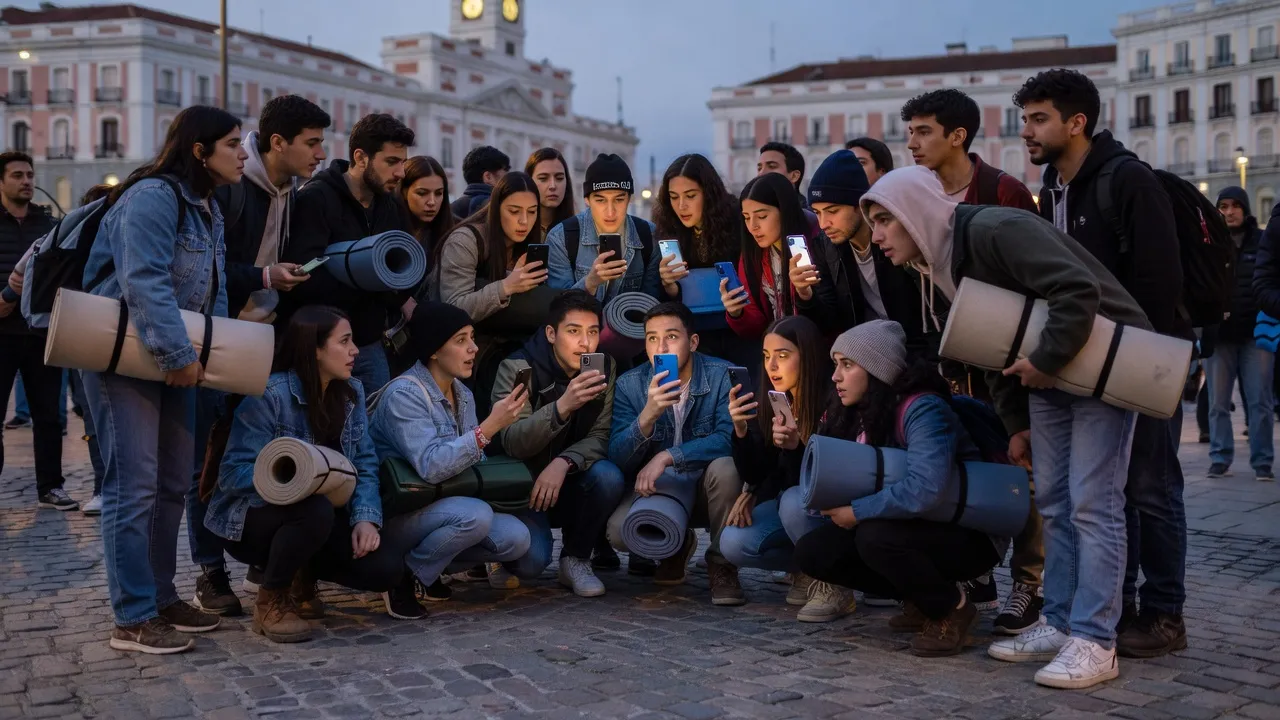
The housing crisis, relaunched by the eviction of an 87-year-old tenant in Madrid, forms the backdrop for the call to vote.
Where media coverage diverges
Role of investigations into the entourage
Question: are investigations targeting Sánchez's entourage part of the narrative of the summons? FAZ, BBC and SAPO link them to the legislature and the prime minister's calculation; DN writes that the election is about housing, 'not corruption'.
Question: is the summons a risky bet or a thoughtful move? G1, CBC and Le Temps talk about a risky bet or a poker move; the BBC writes that it is a 'carefully thought-out' move and the Jornal Económico reports analysts' views seeing it as 'a masterstroke'.
Buenos Aires sees Pedro Sánchez's move as a last-minute gamble, where the housing crisis becomes the weapon of a leader weakened by corruption and a lack of majority.
Canberra takes away from Pedro Sánchez's announcement a housing crisis that has become political: rents almost doubled in ten years, 700,000 missing homes and an eviction that sparked street protests.
La Paz views Pedro Sánchez's announcement as a personal gamble: the Bolivian press sees a head of government who is betting on his re-election after a setback on housing, facing a PP leading in the polls and a Vox that has become a kingmaker.
Buenos Aires sees Pedro Sánchez's move as a last-minute gamble, where the housing crisis becomes the weapon of a leader weakened by corruption and a lack of majority.
KEY POINTS
Sánchez has called for early elections on Sunday, November 29, instead of 2027, after his housing decrees were rejected by Congress (La Nación).
The BOE published the decree dissolving the Cortes on Tuesday, October 6: 350 deputies and 209 senators to be elected, a 15-day campaign, and chambers to convene on December 23 (Infobae/EFE).
Political scientist Oriol Bartomeus forecasts "left against right in its purest form"; Begoña Gómez will go on trial for embezzlement of public funds (El Cronista/FT).
ANALYSIS
Buenos Aires, October 6, 2026. The Argentine press approaches Pedro Sánchez's announcement first and foremost as a political gamble. In an analysis by the Financial Times, reprinted by El Cronista, the Spanish head of government is described as a "standard-bearer of the global left" and one of the few European leaders willing to confront Donald Trump, whose confidence abroad contrasts with his weakness at home: without a parliamentary majority, he struggles to set the agenda and pass laws, while corruption cases draw closer to him. The text cites his wife, Begoña Gómez, who will go on trial for embezzlement of public funds.
The daily presents the election as "a last attempt to rescue his mandate": Sánchez would turn the housing crisis into a weapon against the right. On Friday, October 2, the center-right parties blocked his package of housing reforms, and the Prime Minister sought to turn this parliamentary defeat into an advantage. Politologist Oriol Bartomeus, from the Autonomous University of Barcelona, predicts a confrontation between "representatives of the people" and "representatives of the rich": "It's left against right in its purest form."
La Nación takes on a more educational tone. It explains that the institutional announcement on Monday, October 5, sets the vote for Sunday, November 29, 54 days after the publication of the decree, according to Article 42 of the electoral law. It attributes the advancement of the calendar, "in large part", to the housing crisis, the camps at the Puerta del Sol, and the rejection of the government's decrees by Congress, then details the dissolution of the Cortes and the role of the Diputaciones Permanentes to avoid any institutional vacuum.
Infobae, via an EFE dispatch, puts the episode into perspective: a legislature born from the elections of July 23, 2023, without an absolute majority, and marked by "strong political tension fueled by corruption cases". Sánchez had been invested with 179 votes against 171 thanks to a pact with Junts, including the amnesty of the leaders of the procés, which became the main factor of confrontation between the government and the opposition. On Tuesday, October 6, a second dispatch indicates that the BOE published the decree of dissolution: 350 deputies and 209 senators will be elected, the campaign will last fifteen days, and the chambers will meet on December 23, the eve of Nochebuena.
Australia
DOMINANT ANGLE
Canberra takes away from Pedro Sánchez's announcement a housing crisis that has become political: rents almost doubled in ten years, 700,000 missing homes and an eviction that sparked street protests.
KEY POINTS
Pedro Sánchez called for early elections on Monday, October 5, to be held on November 29, after Parliament rejected housing measures on Friday, October 2.
According to Idealista, cited by ABC, the average Spanish rent has almost doubled in ten years, to 15.10 euros per m² in August; the Bank of Spain estimates a deficit of 700,000 homes.
The eviction of Maricarmen Abascal, 87, from a Madrid apartment she had occupied for over 70 years triggered protests and encampments in several cities.
ANALYSIS
Canberra, October 6, 2026. Australia's public media outlets, ABC News and SBS News, are treating Pedro Sánchez's announcement as the culmination of a housing crisis rather than a domestic political maneuver. On Monday, October 5, in a televised address, the head of the Spanish government set legislative elections for November 29. "We must renew the support of citizens," he said, according to ABC, adding that he wants to "win a much broader progressive majority" to "overcome established interests."
The sequence of events is presented in a causal manner. The Parliament rejected the executive's proposed housing relief measures on Friday, October 2. SBS details the content: automatic renewal of leases and restrictions on the eviction of vulnerable tenants, rejected by opposition parties. The defeat, writes the agency quoted by SBS, "has enraged" protesters and highlights the difficulties of a minority coalition in legislating; Spain has been living on the 2023 budget, the last one adopted, for several years.
The Australian narrative relies on data. According to the Idealista portal cited by ABC, the average rent has almost doubled in ten years, to 15.10 euros per square meter in August. The Bank of Spain estimates that there are 700,000 missing homes in a country of approximately 50 million inhabitants.
Bolivia
DOMINANT ANGLE
La Paz views Pedro Sánchez's announcement as a personal gamble: the Bolivian press sees a head of government who is betting on his re-election after a setback on housing, facing a PP leading in the polls and a Vox that has become a kingmaker.
KEY POINTS
Pedro Sánchez announced on Monday, October 5, the dissolution of the Cortes and general elections on November 29, after his housing measures were defeated in Congress (La Razón).
The most recent polls place the PP ahead of the socialists without an absolute majority, with Vox, the third force, as a key player (La Razón).
Alberto Núñez Feijóo reacted with "Por fin decidirán los españoles", promising to leave behind "esta negra etapa" (La Razón).
ANALYSIS
La Paz, October 6, 2026. The Bolivian press is treating the call for early elections in Spain as a domestic political event, centered on the figure of Pedro Sánchez. La Razón headlines the advancement of the election to November 29 and talks about a "bet" by which the socialist leader "seeks to revalidate his mandate" after the defeat in Congress of his measures against the housing crisis.
The daily recalls that Sánchez, 54, has been in power since 2018 and that his legislature has been marked by the parliamentary fragility of a minority coalition government, with "increasing difficulties" in passing its initiatives. The announcement was made on Monday, October 5, from the Moncloa Palace: he convened an extraordinary Council of Ministers that morning to dissolve the Cortes. He justified the call to the polls by a need for support: "To do more, we need to renew and expand the support of the people." He demands "a much broader, progressive majority" to carry out pending reforms and reduce inequalities. La Razón notes that he had always said he would run again.
The article then describes the balance of power. The most recent polls place the People's Party (PP), the main opposition force, ahead of the socialists, but without an absolute majority, which would force it to seek support. The far-right Vox, the third force, "emerges as one of the key players." The leader of the PP, Alberto Núñez Feijóo, reacted immediately: "Finally, the Spanish people will decide," and then promised to "leave behind this dark stage," he who had been demanding elections for months.
Brazil
DOMINANT ANGLE
Brasília views Pedro Sánchez's gamble as a high-risk maneuver: a left-wing government, lagging in the polls, is counting on housing anger in the face of a conservative opposition that could be backed by Vox.
KEY POINTS
Pedro Sánchez announced on Monday, October 5, early legislative elections on November 29, instead of late 2027, after his housing decrees were rejected by Parliament.
G1 describes the election as a "risky bet": the PSOE is behind in the polls and a defeat would put an end to one of the last left-wing governments in Europe.
According to the Jornal de Brasília, Feijóo's PP is ahead without an absolute majority and Vox, the third force, appears as a key player in any coalition.
ANALYSIS
Brasília, October 6, 2026. Brazilian media outlets are reporting on the announcement made on Monday, October 5, by Pedro Sánchez: the dissolution of the Cortes and early legislative elections on November 29, although the current term was set to run until the end of 2027. G1 views this as a "risky bet": the PSOE is behind in the polls, and a defeat would mean the end of one of the last left-wing governments in Europe, "at a time when the far right is gaining ground on the continent." The site notes, however, that Sánchez was re-elected in 2019 after having already called for early elections.
The trigger, according to G1, is the housing crisis that has "paralyzed Congress" and brought crowds into the streets. The eviction of an 87-year-old woman in Madrid sparked a wave of protests, followed by the government's package of decrees to combat rising rents, which was rejected by a fragmented Parliament the previous week. Folha reports "tens of thousands" of protesters and one of the most serious crises in European capitals, writing that Sánchez is "counting on popular discontent" to overcome a hostile Congress.
The Jornal de Brasília, which reprints a news agency dispatch, emphasizes the fragility of the leader, who has been in power since 2018: parliamentary defeat and "several scandals" affecting his inner circle. Recent polls put the People's Party in the lead, but without an absolute majority, which would force it to seek support; Vox, the third force, "appears as one of the key players." Folha adds, based on analysts, that the left is weakened by these scandals and by the management of the migration crisis in Ceuta.
Canada
DOMINANT ANGLE
Ottawa is tempering Sánchez's audacity: the Canadian press presents this dissolution as a risky bet, a left-wing prime minister lagging in the polls who is playing for survival in the face of the rise of the far right.
KEY POINTS
Sánchez called snap elections for November 29 on Monday, October 5, after his housing decrees were rejected by a fragmented Parliament.
He stated: "We must renew the support of citizens" and acknowledged errors and unfulfilled promises (CBC).
The Socialist Party is trailing in the polls, and a defeat would bring an end to one of the last left-wing governments in Europe (CBC).
ANALYSIS
Ottawa, October 6, 2026. The Canadian press, led by CBC News and the Globe and Mail, is portraying Pedro Sánchez's announcement as a risky bet. The 54-year-old Spanish Prime Minister called a snap election for November 29 on Monday, October 5, although the vote was initially scheduled to take place next year. He made the announcement in a televised address after the fragmented Parliament rejected his housing decrees on Friday, October 2, which included measures to combat evictions and real estate speculation.
CBC quotes his justification: "We need to renew the support of citizens," and the call to "win a much broader progressive majority" to overcome "special interests." The public broadcaster also notes that the leader acknowledged mistakes and unfulfilled promises, and that part of his social majority is now dissatisfied. It recalls that the Socialist Party is trailing in the polls, making this decision a gamble.
The Globe and Mail, following Reuters' lead, emphasizes the social origin of the crisis: protests in several cities, fueled by outrage after the televised eviction of an 87-year-old woman in Madrid last month. Right-wing parties joined forces to block the two emergency decrees, which fueled speculation about a snap election that the head of government could use to mobilize his base.
The ideological dimension takes center stage. According to the Globe, Sánchez presented the choice in stark terms: joining "this extreme right wave" or making Spain a "bastion of openness, social justice, and environmental responsibility." Both media outlets describe him as one of the leading international progressive leaders, at the forefront on Palestine, multilateralism, and criticism of "tech oligarchs," in power since 2018.
Switzerland
DOMINANT ANGLE
Bern is gauging the electoral gamble of a Pedro Sánchez in a position of weakness: the Swiss press sees it as an all-or-nothing bet backed by the housing crisis, with a possible PP-Vox coalition in the background.
KEY POINTS
Pedro Sánchez has called for early legislative elections on Sunday, November 29, instead of mid-2027.
The housing decrees failed on Friday, October 2, against the PP, Vox, and Junts, according to SRF.
According to SRF, almost all polls give the PP and Vox around 200 of the 350 seats.
ANALYSIS
Berne, October 6, 2026. On Monday, October 5, Pedro Sánchez announced from the Moncloa Palace the dissolution of the chambers and legislative elections on Sunday, November 29, which were expected in mid-2027. The Times reports his admission: "I know we have made mistakes," and his call for "a much broader progressive majority."
The trigger is the failure, on Friday, October 2, of decrees on housing. SRF emphasizes that they were rejected by the People's Party, Vox, and Junts, "not by the left-wing parties," and that Sánchez intends to make it a campaign argument. The Times highlights the eviction of Maricarmen Abascal, 87 years old, from an apartment occupied for seven decades and bought by an investment company that wanted to raise the rent by 275%. Dozens of thousands of people demonstrated on Saturday. SRF, which attributes 78 years to her, sees it as pressure from the street that has become too strong.
The German-language daily insists on the risk. According to almost all polls, the PP and Vox would obtain a solid majority of around 200 of the 350 seats. SRF notes that there is no firewall in Spain comparable to the one set up in Germany against the AfD, and that the PP already governs with Vox in four autonomous regions. Sánchez has launched: Spain must choose between joining the "far-right wave" and remaining a "bastion of social justice."
The two media outlets describe a player in distress. The Times speaks of a "last-ditch effort," amidst an unprecedented migration crisis in Ceuta and corruption scandals affecting those close to him, and recalls the precedent of July 2023, where he had consolidated his coalition despite a conquering right. Analyst Fernando Berlin sees a leader "faithful to his legend of withstanding any test." SRF nicknames him "Polit-Stehaufmännchen" and headlines on his "last chance": his PSOE-Sumar minority has had no majority since Junts joined the opposition almost a year ago, the last regular budget dates back to 2023, and economic growth benefits him little. The Times specifies that the initiative was expected and responds to the recommendation of his ministers and many socialist barons, formulated throughout the weekend.
Chile
DOMINANT ANGLE
Santiago sees the move to bring forward Spanish elections as the result of a parliamentary deadlock: the rejection of housing decrees has pushed Pedro Sánchez to seek a broader progressive majority.
KEY POINTS
Pedro Sánchez announced on Monday, October 5, the dissolution of Parliament and general elections on Sunday, November 29 (BioBioChile).
Congress rejected the government's two decrees on housing, with Junts joining the PP and Vox in the vote (BioBioChile).
Sánchez acknowledged mistakes and unfulfilled promises, and called for a "much broader progressive majority" (BioBioChile).
ANALYSIS
Santiago, October 6, 2026. The Chilean press is treating Pedro Sánchez's announcement as a matter of parliamentary mechanics as much as social crisis. BioBioChile, in an explanatory article titled "Por qué Pedro Sánchez adelantó las elecciones en España y qué implica su decisión", reports that the President of the Spanish Government announced on Monday, October 5, the dissolution of Parliament and general elections on Sunday, November 29.
The Chilean media puts the trigger first: Congress rejected the government's two emergency decrees on housing, after Junts joined the People's Party (PP) and Vox. For BioBioChile, this setback showed that Sánchez does not have a sufficient majority to pass the measures he deems a priority. Relying on El País, the text explains that the head of government preferred not to prolong a blocked legislature and go to the polls rather than wait for the end of the term without being able to legislate.
The article quotes the socialist leader's words: his government has adopted "medidas valientes" to strengthen the welfare state without sacrificing it to the increase in military spending demanded by the United States and NATO. It also reports that he acknowledged errors and the fact that the executive did not fulfill all it had proposed. Sánchez called for a "mayoría progresista mucho más amplia", with the aim, he said, of "doblegar a las élites" and achieving new social progress.
Colombia
DOMINANT ANGLE
Bogotá sees Pedro Sánchez's gamble as an electoral test for the Ibero-American left, between defeat on housing, the advance of the PP, and the weight of Vox.
KEY POINTS
Congress rejected two housing decrees on Friday, October 2: 172 votes in favor and 178 against for the first, 166 in favor and 184 against for the second, with votes from the PP, Vox, and Junts (La República).
Sánchez announced on Monday, October 5, the dissolution of the Cortes and elections on November 29: "To do more, we must renew and broaden the support of the people" (Portafolio).
According to Portafolio, polls place the PP ahead of the socialists without an absolute majority, and Vox, as the third force, appears as a key player.
ANALYSIS
Bogotá, October 6, 2026. The Colombian economic press is closely following the announcement by Pedro Sánchez on Monday, October 5, of early general elections on November 29. Portafolio sees this as "a bet" by the socialist leader, in power since 2018, to revalidate his mandate after the defeat of his measures against the housing crisis. The newspaper recalls that the legislature is ending with the parliamentary fragility of a minority coalition government.
The Republic details the trigger: on Friday, October 2, Congress rejected two decree-laws on housing. The first received 172 votes in favor and 178 against, the second 166 in favor and 184 against, with the opposing votes of the People's Party (PP), Vox, and Junts. The daily newspaper specifies that Sánchez convened an extraordinary Council of Ministers to try to approve these measures again, and that he announced his decision during an institutional appearance without questions, after canceling his agenda.
Both media outlets report the words of the head of government. Portafolio quotes: "To do more, we need to renew and expand the support of the people." He demands a "much broader, progressive" majority to carry out reforms and reduce inequalities. The Republic notes that he presents the election as a choice between an "ultra-right-wing coalition" and a progressive majority parliament.
Germany
DOMINANT ANGLE
Berlin is deciphering the Spanish election as a survival bet: Sánchez, surrounded by investigations and lagging in the polls, is counting on housing-related anger against a PP-Vox without a firewall.
KEY POINTS
Sánchez announced on Monday, October 5, early legislative elections on November 29, instead of 2027, three days after the failure of his housing decrees (DW, Tagesschau).
According to the Handelsblatt, PP and Vox total nearly 51% of voting intentions versus just under 27% for the PSOE.
The FAZ reports investigations targeting Sánchez's wife, his brother, a former close associate of Sánchez, and former government leader Zapatero.
ANALYSIS
Berlin, October 6, 2026. On Monday, October 5, Pedro Sánchez announced in a televised address early legislative elections on November 29, although the vote was expected in 2027. The Tagesschau sees this as a response to the deadlock of Friday: his housing decrees, which provided for a moratorium on evictions until 2030 and the automatic termination of limited-term leases, failed to pass due to opposition from right-wing deputies. The DW speaks of a "headlong rush" and a "very risky" decision.
The German press emphasizes the arithmetic weakness of the head of government. His minority coalition PSOE-Sumar has not had a majority since Junts, led by Carles Puigdemont, joined the opposition nearly a year ago; the last regular budget dates back to 2023. According to the Handelsblatt, the PP and Vox together total nearly 51% of the vote in polls, compared to just under 27% for the PSOE. The DW mentions around 200 of the 350 seats and notes that there is no "Brandmauer" in Spain comparable to the one erected in Germany against the AfD: the PP already governs with Vox in four autonomous regions.
Housing is presented as the spark. The Tagesschau tells the story of the eviction of an 87-year-old tenant, whose images have gone around the world, an event that provoked "a cry of indignation" in Spain and then elections. It describes Sánchez as an "artist of survival" and recalls that he had already called for a vote in 2023 after a local defeat, before managing to stay in power thanks to the Catalan separatists, which many Spaniards still hold against him.
Algeria
DOMINANT ANGLE
Algiers views Pedro Sánchez's gamble as a political survival tactic, set against the backdrop of a bilateral summit frozen by Madrid.
KEY POINTS
Pedro Sánchez called for early legislative elections on Monday, October 5, for Sunday, November 29, while the vote was expected for mid-2027.
Polls place the PP ahead of the socialists without an absolute majority, with the PP possibly having to negotiate with Vox, the country's third force.
The 8th High-Level Meeting, scheduled to take place in Madrid on October 20 and 21, has been postponed without a replacement date, according to The Objective, cited by Algérie360.
ANALYSIS
Alger, October 6, 2026. In the Algerian press, the call for early legislative elections by Pedro Sánchez is first and foremost a gamble. Algérie Eco, in its article of October 5, writes that the socialist leader called for a vote on November 29 "in order to regain the political initiative and stay in power", after the rejection by deputies of measures aimed at putting an end to the housing crisis. The legislative elections were initially expected for mid-2027.
The media cites the speech delivered from the Moncloa Palace: "I have decided to convene an extraordinary Council of Ministers this (Monday) morning to dissolve the chambers". Pedro Sánchez is calling for a "much larger, progressive" parliamentary majority, which would allow him to "force the elites to back down" and achieve new social progress. The text recalls that he has already announced several times his intention to run again.
The account then emphasizes the balance of power. The most recent polls put the People's Party ahead of the socialists, without an absolute majority: the PP may be forced to negotiate with the far-right Vox, currently the third political force in the country. The leader of the PP, Alberto Núñez Feijóo, reacted by asking: "If eight years were not enough, why want four more years?", while welcoming the fact that the Spanish can "finally" have their say.
Ecuador
DOMINANT ANGLE
Quito takes from Pedro Sánchez's announcement a parliamentary setback turned into a call to the polls: the Ecuadorian press presents the dissolution of the Cortes as the direct consequence of the rejection of the housing decrees.
KEY POINTS
Sánchez announced on Monday, October 5, 2026, the dissolution of the Cortes and general elections on Sunday, November 29, instead of mid-2027 (Primicias).
Congress had rejected two housing decrees with votes against from the PP, Vox, and Junts, three days before the announcement (Expreso).
Sánchez asked Spaniards to choose between the "ultra-right wave" and "a bastion of openness and social justice" (Primicias).
ANALYSIS
Quito, October 6, 2026. The Ecuadorian press is treating Pedro Sánchez's announcement as international news with a quick reading, focused on the chain of events: a parliamentary defeat, followed by the call for elections.
Primicias writes that the head of the Spanish government "suffered a harsh defeat" in Congress, which rejected his decrees against the housing crisis, and that this setback has revived doubts about the ability of a minority government to hold on until the elections scheduled for mid-2027. On Monday, October 5, 2026, from the Moncloa Palace, Sánchez announced the dissolution of the Cortes and a vote on Sunday, November 29.
The media extensively quotes the socialist leader's words. Sánchez defended the legislature's record and asked Spaniards to decide whether Spain joins the "ultra-right wave" or remains "a bastion of openness, social justice, and environmental responsibility." He described a Congress that is "very rough," where "many confuse negotiating with betraying," and stated that he had to face "the worst opposition our democratic history has known." Primicias recalls that, according to him, the polls had chosen a progressive government more than three years ago.
Expreso adopts a pedagogical format, "this is what we know," with a sidebar: vote on November 29, 2026, identified trigger, housing crisis. The newspaper specifies that Sánchez spoke in an institutional statement after informing King Felipe VI, and that the decrees were rejected three days earlier by the PP, Vox, and Junts. They had planned to suspend evictions of vulnerable people, extend rental contracts, and restrict certain housing purchases.
Spain
DOMINANT ANGLE
Madrid believes that Sánchez is taking a gamble on a popular vote: the Spanish press sees a campaign launched from the Moncloa, between fear of a PP-Vox coalition and a left remobilized by housing.
KEY POINTS
Pedro Sánchez announced on Monday, October 5, the dissolution of the Cortes and general elections on November 29, nine months ahead of schedule.
The two housing decrees were rejected by Congress: 172 votes in favor and 178 against for the first, 166 in favor and 184 against for the second, with the negative vote of the PP, Vox, and Junts.
Internal polls consulted by ElDiario.es estimate the transfer of PP voters from 2023 to Vox at 20.8%, an argument for the Moncloa to attempt a comeback.
ANALYSIS
Madrid, October 6, 2026. The Spanish press is treating Monday's announcement as the launch of a campaign rather than just a simple calendar. Pedro Sánchez has called general elections for November 29, nine months ahead of schedule, after the fall of two housing decrees on Friday, October 2: the first garnered 172 votes in favor and 178 against, the second 166 in favor and 184 against, with the PP, Vox, and Junts tipping the scales, according to Expansión.
The speech is being described as a rally. Expansión sees it as "polarization and frontism" pushed to the maximum, a plebiscitary framework, and anti-fascism as a street theme; the head of government denounced "the worst opposition in history" and pitted an "extreme right coalition" against a progressive majority. ElDiario.es is mainly focusing on the call to "double" the elites and expand the majority, and is headlining that "Maricarmen's expulsion ended in elections." Sánchez also acknowledged having made mistakes, according to El País English.
The left's narrative is based on internal polls that the Moncloa considers very reliable: ElDiario.es reads a left mobilized by the housing issue and a PP that is losing, according to some, 20.8% of its 2023 voters to the benefit of Vox. HuffPost España is talking about a "referendum" on housing and public services, and recalls that housing has partly eclipsed the contested management of the Ceuta assault. Socialists say they do not consider a comeback similar to that of 2023 impossible.
France
DOMINANT ANGLE
Paris is taking a high-risk electoral gamble: the French press portrays Pedro Sánchez as a poker player, overtaken by the PP and threatened by an alliance with Vox.
KEY POINTS
Pedro Sánchez announced early legislative elections on Monday, October 5, for November 29, although they were expected in mid-2027.
Congress rejected two housing decrees on Friday, October 2, including the suspension of evictions of vulnerable people until 2030, with the votes of the PP, Vox, and Junts.
Polls put the PP ahead of the socialists, without an absolute majority, and could force it to negotiate with Vox.
ANALYSIS
Paris, October 6, 2026. The French press sees the call for early legislative elections on November 29 as a political gamble rather than a simple consequence of the housing crisis. RFI talks about a "poker move" and a strategy: Pedro Sánchez could not, according to his correspondent in Madrid François Musseau, "stay with a failure" after the rejection of his two decrees.
The story begins with the sequence of events. On Monday, October 5, from the Moncloa Palace, the socialist leader announced the dissolution of the chambers. He asks for "a much larger, progressive majority, thanks to which we will be able to make the elites bend". Three days earlier, on Friday, October 2, the Congress had rejected the texts on housing, including the suspension of evictions of vulnerable people until 2030, with the votes of the PP, Vox, and Junts, a former independentist Catalan ally, specifies Le Monde. L'Express reports that Sánchez acknowledged errors and unfulfilled promises: "We must renew the support of the population".
The social dimension is present but serves as a backdrop: the eviction in Madrid of Maricarmen Abascal, 87 years old, who has become, according to HuffPost France, "the symbol of anger", the camp set up on the Puerta del Sol, the demonstrations of tens of thousands of people on Saturday. BFMTV recalls that tourist platforms and investment funds are accused of driving up prices.
Italy
DOMINANT ANGLE
Rome is watching the high-stakes gamble of a Pedro Sánchez who is playing for his political survival by bringing forward elections, in the face of a right wing boosted by the surge of Vox.
KEY POINTS
Sánchez announced on Monday, October 5, from the Moncloa, the dissolution of the Chambers and elections on November 29, nine months before the natural end of the legislature (ANSA).
The trigger is the rejection, on Friday, October 2, of the housing decrees, with the vote against by Junts (Adnkronos, ANSA).
According to La Repubblica, the polls show Vox as the only party on the rise.
ANALYSIS
Rome, October 6, 2026. The Italian press is treating Pedro Sánchez's announcement as a personal do-or-die situation. Adnkronos writes that the head of government "is putting everything on the line" and is calling early elections by playing "the last bullet he had in the chamber": the stakes are not only the continuation of the progressive government that has been leading Spain for eight years, but his own political future.
The ANSA agency reports on the institutional statement from the Moncloa palace on Monday, October 5: "I have decided to convene the Council of Ministers today to dissolve the Chambers." The election is set for November 29, nine months ahead of the natural end of the legislature. The decision comes after the rejection on Friday, October 2, in Parliament, of the decrees on the housing emergency, followed by a weekend of reflection and consultations with the government, the Socialist Party, and allied forces.
The newspapers are highlighting the words of the prime minister. He is asking the Spanish people to choose between "the extreme right wave" and "a broader progressive majority" so that the country remains "a bastion of openness and social justice." He says he has taken "courageous" measures for the right to housing, fought against speculators, and faced "the worst opposition in Spanish history." La Repubblica, through its special correspondent Benedetta Perilli, is reiterating the call to "give in to the ultra-right" or move forward, and notes that the polls show Vox as the only party on the rise.
Peru
DOMINANT ANGLE
Lima sees Pedro Sánchez's announcement as a political gamble born out of a parliamentary defeat on housing, where the head of government pits his camp against a "far-right wave".
KEY POINTS
Pedro Sánchez announced on Monday, October 5, that the general election will be moved up to Sunday, November 29, 2026, instead of 2027.
Congress rejected two housing decrees with votes against from the PP, Vox, and Junts, just before the announcement.
Sánchez acknowledged "mistakes" and pitted his camp against the "far-right wave" (RPP Noticias).
ANALYSIS
Lima, October 6, 2026. The announcement by Pedro Sánchez is being covered by Diario Correo and RPP Noticias as a sequence of Spanish domestic politics: the President of the Government announced on Monday, October 5, the advancement of the general elections to Sunday, November 29, 2026, when they were initially scheduled for 2027.
Diario Correo details the institutional calendar. Sánchez indicated that he would convene an extraordinary Council of Ministers to dissolve the Cortes Generales, after informing the head of state; the decree of convocation will be published in the Official Journal (BOE). From the Moncloa Palace, he stated: "To do more, we must renew and expand the support of the people." The newspaper presents the socialist leader as seeking a broader parliamentary majority to continue pending reforms.
The two media outlets place the trigger in the defeat of the previous Friday: Congress rejected two royal decrees on housing, which included measures to protect tenants and restrictions on certain evictions. The PP, Vox, and Junts voted against. Correo reads this as proof of the difficulties of a minority coalition executive in gathering sufficient support.
RPP Noticias emphasizes the political register of the speech. Sánchez defended the balance of his government and its "courageous measures" to strengthen the welfare state, while acknowledging "mistakes" and unfulfilled promises. He invited Spaniards to choose between joining the "far-right wave" which, according to him, backtracks on rights, and a country that remains "a bastion of openness and social justice." He says he wants a broader progressive majority to "make the elites fold."
Portugal
DOMINANT ANGLE
Lisbon sees the calling of elections on November 29 as a tactical maneuver by Pedro Sánchez, who is seeking to regain the political initiative in the face of a right wing that is leading in the polls.
KEY POINTS
Pedro Sánchez called snap elections for November 29 on Monday, October 5, according to SAPO Notícias.
Jornal Económico believes Sánchez "stole" the initiative from the right by putting housing at the center, but notes unfavorable polls.
SAPO recalls that the rejected housing proposals in Parliament precipitated the call, at the end of a legislature marked by amnesty and investigations targeting close associates.
ANALYSIS
Lisbon, October 6, 2026. In the Portuguese press, the announcement made on Monday, October 5, by Pedro Sánchez, who called for early elections on November 29, is first seen as a political strategy calculation. The Jornal Económico recalls that the Spanish head of government had spent two and a half years refusing to bring forward the election, and that some analysts see it as "a headlong rush, a masterstroke for others". The newspaper believes that the socialist has managed to "steal" the initiative from the People's Party and Vox, by imposing the idea that he is the one leading the national agenda.
The economic weekly emphasizes the choice of terrain: by starting with housing, Sánchez avoids spending the campaign defending himself in corruption cases affecting his entourage. He would present himself as a leader hindered by Parliament from carrying out an essential reform, rather than as a responsible person who poorly chose his companions. The text warns, however, that the path remains very difficult, with the latest polls being unfavorable to him.
On Rádio Observador, columnist Gonçalo Dutra e Silva believes that Sánchez is seizing "the last or only opportunity" to lead one of the two camps. He recalls that previous attempts, around the "no to war", Gaza, or opposition to Trump, did not pay off at the polls, and cites the defeat of the PSOE in Andalusia and historic lows in May. Another program on the station describes the leader as "a brilliant tactician who has taken advantage of the crisis".
Sweden
DOMINANT ANGLE
Stockholm is interpreting the November 29 vote as a gamble on housing: a minority government with "very fragile" support is trying to shift the debate from scandals to the rent crisis.
KEY POINTS
Pedro Sánchez announced early elections on Monday, October 5, to be held on November 29, instead of 2027, after his housing bills failed in Congress on Friday, October 2 (DN, Sveriges Radio).
According to DN, 70,000 people demonstrated in about fifty cities, according to the authorities, and half a million, according to the organizers.
According to SvD, an investment fund raised Maricarmen's rent, 87, from around 5,600 to 30,000 crowns before her eviction in Madrid.
ANALYSIS
Stockholm, October 6, 2026. Swedish media are reporting on Pedro Sánchez's announcement, made on Monday, October 5, in a televised address: early legislative elections on November 29, which, according to Dagens Nyheter, is "as soon as possible," given that the regular election was scheduled for 2027. The head of government says he needs "renewed and expanded popular support."
The story begins with the vote on Friday, October 2. According to DN, the government's housing proposals fell through in Congress because two of its partners, the Basque PNV and Catalan Junts, joined forces with the right. Sveriges Radio sees this as proof that Sánchez's parliamentary base is "a very fragile structure," according to its correspondent for Southern Europe, Cecilia Blomberg.
The chain of events is presented by SvD in an editorial by Teresa Küchler, starting with the case of Maricarmen, 87, who was evicted in Madrid. An investment fund had bought the building and increased the rent from around 5,600 to 30,000 crowns. The text describes a woman being escorted away in tears by armed police, rents doubling in ten years in Madrid and Barcelona, and protesters camping out on the Puerta del Sol. Sánchez's package included a moratorium on evictions until 2030 and a ban on investment funds buying housing.
Turkey
DOMINANT ANGLE
Ankara sees the November 29 election as a risky gamble by Pedro Sánchez, who is playing for the survival of one of Europe's last left-wing governments in the face of a possible PP-Vox coalition.
KEY POINTS
The housing decrees adopted on September 29 were rejected in Congress on October 2, by Junts, the PP and Vox (Bianet).
Sánchez acknowledged errors and missed targets, and is aiming for a "broader progressive majority" (BBC Türkçe, Daily Sabah).
According to polls cited by Daily Sabah, a PP-Vox coalition is the most likely outcome, with the far right in government for the first time since Franco.
ANALYSIS
Ankara, October 6, 2026. The Turkish press reports on Pedro Sánchez's announcement, first linking it to the rejection, on Friday, October 2, of two decrees on housing. Bianet specifies that the Council of Ministers had adopted them on September 29, and that Congress rejected them after the negative vote of the Catalan independence party Junts, along with the PP and Vox. The government had nonetheless negotiated part of the decrees with Junts. For Bianet, the vote made visible a problem of parliamentary majority: the government was unable to obtain the necessary support on a subject as fundamental as housing and did not present a new budget for the entire legislature.
BBC Türkçe places the decision in a broader context. The eviction of an 87-year-old woman, unable to pay a significant rent increase, sparked protests across the country. The media outlet adds that the Socialist Party has been marred by several corruption scandals and is under pressure from the cost of living and immigration. Sánchez, in power since June 2018, acknowledged: "We have made mistakes and we have not achieved everything we envisioned." He calls for a "broader progressive majority" capable of overcoming "the resistance of the elites." Bianet also cites his choice posed to the Spanish people: joining "the far-right wave" or making Spain a model of social justice.
Daily Sabah adopts the most political reading. The newspaper judges the electoral test to be risky, as the socialists are trailing in the polls, and notes that Sánchez has distinguished himself on the international stage, from the status of Palestine as a state to the defense of multilateralism. According to the newspaper, the polls indicate that the most likely outcome is a coalition led by the PP with the support of Vox, which would bring the far right into the central government for the first time since Franco's death. A defeat would mean the end of one of the last left-wing governments in Europe, as the far right makes progress in the region. The newspaper recalls, however, that Sánchez, a "skilled political operator," has already surprised his opponents.
United Kingdom
DOMINANT ANGLE
London views the November 29 election as a risky gamble by a Sánchez who is trailing in the polls, where the housing crisis serves as the last lever against a possible PP-Vox coalition.
KEY POINTS
Pedro Sánchez has called for early elections on November 29 after the rejection of housing decrees on Friday, October 2.
Polls put the PSOE behind the PP; a PP-Vox coalition would be the most likely outcome (Independent, BBC).
The BBC cites the Cerdán and Ábalos cases, the accusation against Zapatero, and the upcoming trial of Begoña Gómez, which those involved contest.
ANALYSIS
London, 6 October 2026. The British press is treating Pedro Sánchez's announcement as a risky electoral gamble. According to the Independent, the socialist Prime Minister has called a snap election for 29 November in order to consolidate his mandate, after a fragmented Parliament rejected decrees on housing on Friday, 2 October. "We need to renew people's support," he stated in a televised address, acknowledging errors and unfulfilled promises.
The newspaper emphasizes that the Socialist Party is currently trailing in the polls. The most likely outcome is a coalition led by the People's Party with the support of Vox, which would bring the far right into the central government for the first time since the return of democracy. A defeat would mark the end of one of the last left-wing governments in Europe, as the far right makes gains in the region.
The BBC is pushing the analysis towards strategy. For them, the call for an election is not a reflex: it is a carefully thought-out maneuver, as is often the case in Sánchez's career. Friday's vote confirmed that his left-wing coalition no longer had a majority. The channel recalls that his party is mired in corruption scandals involving former officials Santos Cerdán and José Luis Ábalos, that former Prime Minister José Luis Rodríguez Zapatero is accused of enriching himself through the rescue of an airline, which he denies, and that the Prime Minister's wife, Begoña Gómez, is to be tried, which the couple disputes. It also mentions the arrival of over 70,000 migrants in Ceuta in July. Sánchez had assured that he would see out the term of the legislature, until next summer.
United States
DOMINANT ANGLE
The United States is particularly focused on Trump's European adversary: the American press is presenting the November 29 election as a test of a leader who, through his criticism of American policy in the Middle East, has become a divisive figure.
KEY POINTS
Pedro Sánchez called snap elections on Monday, October 5, for November 29, after Parliament rejected two housing decrees on October 2 (CNBC, Time).
Donald Trump accused Spain of putting "American lives in danger" and failing to meet its NATO spending commitments, and threatened to cut trade and diplomatic ties (CNBC).
Spanish growth reached 0.7% in the second quarter, above the eurozone average, according to CNBC.
ANALYSIS
Washington, October 6, 2026. The American economic and general press is treating Pedro Sánchez's announcement as a two-fold event: a housing crisis internally, a leader at odds with the White House externally.
CNBC headlines with "Trump's arch-nemesis in Europe". The socialist Prime Minister on Monday called an early vote for November 29, after Parliament rejected measures intended to appease public anger and mass protests over housing. The channel recalls that Sánchez has emerged this year as "the most virulent critic in Europe" of American foreign policy in the Middle East. His warnings against "repeating the mistakes of the past" were seen by some as an example of Europe standing up to a bellicose administration. Donald Trump, for his part, accused Spain of putting "American lives in danger" and not paying its share within NATO, then threatened to cut trade and diplomatic relations. CNBC notes, however, that this geopolitics is "far from the current agenda": the Spanish debate revolves around housing, wages, the cost of living, and immigration, after the arrival of tens of thousands of migrants in Ceuta in July. It also highlights the country's macroeconomic solidity, with 0.7% growth in the second quarter, higher than the eurozone average.
Time details the parliamentary mechanics. Two decrees on housing, one on protection against evictions, rent regulation, and tax relief, the other on automatic lease renewal, were rejected on October 2. The PSOE-Sumar coalition does not have a majority and relies on other parties. Junts argued, in a statement on October 1, that these measures would reduce the supply of rental housing and drive up prices. The magazine judges that Sánchez must convince voters to blame those who blocked his texts rather than his government, at the risk of "giving the majority to his opponents".
Uruguay
DOMINANT ANGLE
Montevideo sees Pedro Sánchez's announcement as a bet by the left against the rise of the far right, with housing as the dividing line between rights and the market.
KEY POINTS
Pedro Sánchez announced on Monday, October 5, the dissolution of the Cortes and general elections on Sunday, November 29, after an extraordinary Council of Ministers (El Observador, La Diaria).
According to Subrayado, the decision follows the rejection in Congress of housing measures and several scandals affecting Sánchez's inner circle, who has been in power since 2018.
The President of Asturias, received by Yamandú Orsi, presented the election as a choice between housing as a right and housing as a commodity (Subrayado).
ANALYSIS
Montevideo, October 6, 2026. The Uruguayan press closely followed the announcement made on Monday, October 5, by Pedro Sánchez. From the Palacio de la Moncloa, in an institutional statement without questions, the Spanish head of government indicated that he was convening an extraordinary Council of Ministers to dissolve the Cortes and call for general elections on Sunday, November 29. El Observador reports that he first informed King Felipe VI and that the decision came after a weekend of consultations with ministers and PSOE leaders.
Subrayado puts the parliamentary defeat at the center of the story: Sánchez, in power since 2018, is "weakened by the defeat in Congress of the measures he had proposed to address the housing crisis" and by several scandals affecting his inner circle. The media notes that the latest polls place the People's Party ahead of the socialists, without an absolute majority, and that Vox, the third force, "is emerging as one of the key players" in a potential coalition.
Excerpts from the speech occupy a large space. Sánchez declared: "We will give it our all. We will work to deserve your trust, to inspire and to win again." He also said that to reduce inequalities, a "much broader, progressive majority" was needed. La Diaria highlights his call to choose between joining "this ultra-right wave that is regressing everywhere it governs" or making Spain "a bastion of openness and social justice." According to El Observador, he also contrasted the Spanish model with that of "the chainsaw," in reference to Argentine President Javier Milei.
Venezuela
DOMINANT ANGLE
Caracas is deciphering Sánchez's gamble through two opposing narratives: that of a president calling for a broader majority against the "far-right wave", and that of a power seeking to contain its wear and tear.
KEY POINTS
Pedro Sánchez announced on Monday, October 5, the dissolution of the Cortes and general elections on Sunday, November 29, nine months before the end of the legislative term (Analitica).
The trigger is the rejection in Congress of two housing decrees by the PP, Vox, and Junts, after the eviction of an 87-year-old woman in Madrid (Contrapunto VE, Analitica).
Sánchez acknowledged "errores" and called for a "mucho más amplia" majority to "doblegar a las élites" (Efecto Cocuyo).
ANALYSIS
Caracas, October 6, 2026. The Venezuelan press is reporting the announcement made on Monday, October 5, by Pedro Sánchez from the Palacio de la Moncloa: dissolution of the Cortes and early general elections on Sunday, November 29, nine months before the end of the legislature, according to Analitica.
Efecto Cocuyo and Contrapunto VE are widely covering the speech by the head of government. Sánchez asked the Spanish to choose between a Spain that joins the "ultra-right wave" and a country that remains "a bastion of openness and social justice". He defended "valiant measures" to strengthen the welfare state without sacrificing it to the "military altar of 5%", in reference to the military spending requirements of the United States to NATO, and mentioned "tyrants", "techno-oligarchs", and "genocidaires". He admitted "errors", acknowledged that the government had not done everything, and called for a "much broader" majority to "subdue the elites".
Contrapunto VE, like Analitica, identifies the trigger as the rejection in Congress on Friday, October 2, of two decrees on housing by the People's Party, Vox, and Junts, as well as the mobilization born from the eviction in Madrid of an 87-year-old woman. Contrapunto specifies that Sánchez informed the king the day before and opened a period of reflection on Friday. Analitica adds that the campaign will focus on housing, the economy, and parliamentary pacts.
Explore every perspective on this subject across 22 countries.
Spain: Pedro Sánchez calls a snap general election for November 29
published on
October 6, 2026
22
countries
61
sources
73
articles
18/100
gap
The presses in the corpus do not stop at the date of November 29, they detail the formulas of Pedro Sánchez's speech, the contested content of the housing decrees, the agreement between the PP and Vox, then the strategic and international reading of the call.
The decree of dissolution is published in the BOE on October 6; the campaign lasts fifteen days before the November 29 election.
The words of the Moncloa
Primicias reports that Pedro Sánchez described a Congress as "very rough," where "many confuse negotiating with betraying." He also spoke of "the worst opposition in history," a phrase repeated by the Italian press and Primicias. Efecto Cocuyo and Contrapunto VE add that he defended the welfare state without sacrificing it to the "military altar of 5%." BioBioChile links this phrase to the defense spending required by the United States and NATO.
« We will give it our all. We will work to deserve your trust, to inspire dreams and to win again »
Pedro Sánchez, speech on Monday, October 5, as reported by El Observador (Uruguay)
The choice presented to voters is repeated almost word for word from one country to another: joining the "ultra-right wave" or remaining "a bastion of openness and social justice." La Diaria cites the phrase "ultra-right wave that deteriorates everywhere it governs." According to El Observador, he also opposed the Spanish model to that of "the chainsaw," in reference to Argentine President Javier Milei.
On the procedure, El Observador writes that Sánchez first informed King Felipe VI, after a weekend of consultations with ministers and PSOE leaders. Le Temps specifies that the initiative responded to the recommendation of his ministers and many socialist barons. DN adds that socialist mayors and regional presidents had urged him not to wait any longer. La Nación counts 54 days between the publication of the decree and the vote, according to article 42 of the electoral law. An article in L'Express gives November 19 as the date of the vote; other sources in the corpus indicate November 29.
Housing, text by text
Time describes two decrees: one on protection against evictions, rent regulation, and tax relief, the other on automatic lease renewal. SvD adds a halt to evictions until 2030 and a ban on investment funds buying homes. Bianet writes that the government had negotiated part of it with Junts.
The camp opposed to the text speaks out in the American and Spanish press. Time reports a Junts statement from October 1, according to which these measures would reduce the supply of rental housing and drive up prices. An editorialist at Expansión judges similarly that the new decrees, which the government wants the Diputación Permanente to adopt, will increase rents. SRF notes that the texts were rejected by the PP, Vox, and Junts, "not by the left-wing parties," and that Sánchez wants to make it a campaign issue. DN cites the Basque PNV alongside Junts among the partners who have made common cause with the right.
The context figures vary depending on the media. ABC cites the Idealista portal: an average rent of 15.10 euros per square meter in August, almost doubled in ten years. For Maricarmen Abascal's eviction, ABC mentions an investment fund, a company that wanted to raise the rent by 275%, SvD a change from around 5,600 to 30,000 crowns. SRF attributes 78 years to her, while other sources write 87. SBS lists camps in Madrid, Barcelona, Seville, and Palma de Mallorca; according to ElDiario.es, the campers at Puerta del Sol are looking for references to vote and are aiming for a general strike.
In the corpus, American and Colombian articles do not mention the eviction or the camps, which Australian and Swedish articles place in the foreground. This finding measures the content of the articles selected for each country, not the readers' interest.
The right, Vox and the polls
DW and SRF mention around 200 of the 350 seats for the PP and Vox; SRF specifies that almost all polls point in this direction. La Repubblica writes that Vox is the only party making gains. The two media outlets recall that there is no "Brandmauer" in Spain comparable to the one erected in Germany against the AfD, and that the PP is already governing with Vox in four autonomous regions.
« If eight years were not enough, why want four more years? »
Alberto Núñez Feijóo, PP leader, quoted by Algérie Eco
According to El Confidencial, Alberto Núñez Feijóo and Santiago Abascal have been exchanging views "smoothly" for months and want to avoid the "mistakes" of 2023. The same newspaper reports that the PP leader attributes the dissolution to fear of corruption. The Spanish press in the corpus also notes that Feijóo has warned his own party not to rest on their laurels, that Abascal refuses to call himself the favourite, and that he describes Sánchez as the "candidate of Morocco".
On the socialist side, ElDiario.es relies on internal polls that the Moncloa considers very reliable: a mobilised left wing driven by the housing issue and a PP that is losing, according to some, 20.8% of its 2023 voters to Vox. The newspaper specifies that these figures come from the concerned party. It adds that Junts and ERC will have to redefine their strategy within eight weeks.
Political calculation and outside views
Several media outlets are addressing the same question: is the summons a risk or a calculated move? G1 refers to it as an "aposta arriscada", RFI as a "coup de poker", and the BBC as a well-thought-out maneuver. Rádio Observador quotes a columnist who believes Sánchez is seizing "the last or only opportunity" to lead one of the two camps. The terms risk and premeditation are not mutually exclusive: they describe two aspects of the same decision.
« A leap forward according to some analysts, a masterstroke for others »
Jornal Económico (Portugal), reporting the opinion of analysts
Investigations into the inner circle are being incorporated into the narrative in varying ways. The BBC mentions the Santos Cerdán and José Luis Ábalos cases, the accusation against José Luis Rodríguez Zapatero, which he denies, and the upcoming trial of Begoña Gómez, which the couple is contesting. The FAZ also mentions the prime minister's brother. In contrast, DN columnist Nathan Shachar writes that Sánchez wants to go to the polls on the issue of housing, "not on corruption or strained relations with Morocco", and that the procedures will continue during the campaign. Jornal Económico sees this as a way to avoid spending the campaign on the defensive.
In the United States, CNBC recalls that Donald Trump accused Spain of putting "American lives in danger" and threatened to cut trade and diplomatic relations. However, the network considers this geopolitics "far from the agenda": the Spanish debate is about housing, wages, the cost of living, and immigration, following the arrival of over 70,000 migrants in Ceuta in July, according to the BBC. CNBC also notes a growth of 0.7% in the second quarter. La República's (Colombia) editorial places the election between the Brazilian second round on October 25 and the US midterm elections on November 3.
Algérie360 relays information from The Objective: the VIIIth High-Level Algeria-Spain Meeting, scheduled for October 20-21 in Madrid, would be postponed without a new date. The site states that Madrid has not provided any public justification; it does not link this postponement to the election.
The decree in the BOE
350 deputies and 209 senators to be elected; chambers to meet on December 23.
The polls
PP and Vox close to 51% of voting intentions, PSOE just under 27%, according to the Handelsblatt.
The mobilization
70,000 protesters in about fifty cities according to the authorities, half a million according to the organizers.
Key figures
172 for, 178 against
Vote on the first housing decree in Congress on October 2
The trigger is human: the eviction, last month, of Maricarmen Abascal, 87, from a Madrid apartment she had occupied for over 70 years, by an investment fund according to ABC. Tens of thousands of people marched in Madrid and other cities on Saturday, October 3. Tent camps exist in Madrid, Barcelona, Seville, and Palma de Mallorca; hundreds of protesters occupy the one in the capital, according to SBS.
The two media outlets note that Pedro Sánchez, in power since 2018, has acknowledged his mistakes and unfulfilled promises: "I also know that part of this social majority is now dissatisfied." SBS describes him as one of the few remaining left-wing European leaders. The tone remains factual, focused on housing, with little room for partisan calculations or international dimension.
El Deber, which reprints an analysis from the BBC, delves into the strategic reading. According to this text, the wave of indignation over housing has given Sánchez "the ideal reason" to call the election. The issue would also allow him to distance himself from the debate over Ceuta and corruption accusations. The question of why now is therefore posed in terms of political calculation, rather than a response to the street.
In both media outlets, Spain is approached from a distance. None of the texts makes a connection with Bolivia or cites a reaction from La Paz. The perspective is that of an observer of the parliamentary life of a major Spanish-speaking country: arithmetic of seats, positioning of Vox, Sánchez's ability to reverse an unfavorable position in the polls. Housing appears as the trigger for the crisis, but the emphasis is on the government leader's maneuver and the outcome of the vote.
Quotes from both camps structure the narrative. Sánchez: "We must mobilize and conquer a much broader progressive majority," and, according to Folha, he admits that "part of this social majority is currently dissatisfied." Alberto Núñez Feijóo, the leader of the PP, responds that "the Spanish people will finally decide" and, according to Folha, opposes "corruption and decency, decline and prosperity." The coverage remains focused on the electoral mechanics and the balance of power between the PSOE, PP, and Vox, rather than on the housing issues themselves, which are mainly mentioned as the trigger.
Finally, CBC weighs the internal fragility: socialist officials and the Prime Minister's wife, Begoña Gómez, are facing allegations of corruption, which Sánchez deems politically motivated. A defeat, the network writes, would mean the end of one of Europe's last left-wing governments, at a time when the far right is advancing unprecedentedly.
El Ciudadano, on the other hand, publishes a brief video format that qualifies the announcement as a "momento político clave". The media considers the gesture "estratégico" and suggests it could be motivated by the search for a new term or by internal and external dynamics. It anticipates a period of intense campaigning and expectations about future national leadership, without detailing the causes.
The two texts from the pool remain focused on the calendar, the deadlock in Congress, and the President's speech. They do not document either the polls, the prospect of a PP-Vox coalition, or the investigations targeting Sánchez's entourage. The Chilean reading is therefore that of a domestic political gamble: a minority government, deprived of a majority on housing, seeking in the polls the legitimacy that Parliament refuses it.
On the opposition side, Portafolio reiterates the reaction of the leader of the PP, Alberto Núñez Feijóo: "Finally, the Spanish will decide." According to the latest polls cited, the PP is ahead of the socialists without an absolute majority, which would force it to seek support. Vox, the third force, appears as a key player.
The editorial of La República, "Lula, Sánchez, and Sheinbaum, the last in line," broadens the scope. It places the Spanish vote between the US midterm elections on November 3 and the Brazilian runoff on October 25. It judges that Trump is "a global phenomenon" that weighs on electoral choices, and that Claudia Sheinbaum remains the only representative of the left facing him. It also notes that Sánchez would remain interim president if he loses his majority, until the appointment of a successor.
The Colombian reading therefore makes the Spanish election an episode of a regional ideological battle, rather than a social issue. Housing serves mainly as a starting point, and the outcome is considered open, but unfavorable to the socialists in the polls.
The FAZ is the most severe. It judges his term as a "dissuasive example" of minority government and writes that he himself risks sinking "into the swamp of corruption", with investigations targeting his wife, his brother, a former close associate, and former Prime Minister Zapatero. According to it, Sánchez hopes that popular anger over rents will bring him voters back: this "social campfire" must dispel the shadows of corruption and the Ceuta crisis. It also recalls his stance as an advocate for the social state against Trump on the NATO target of 5%.
Sánchez has acknowledged mistakes and unfulfilled promises, while posing the choice: Spain joins the "far-right wave" or remains a "bastion of social justice". Alberto Núñez Feijóo, who had been calling for elections for months, launched "Finally!". The Handelsblatt notes that a change of power would bring down one of the last left-wing governments in Europe.
A second reading, closer to Algerian interests, comes from Algérie360. The site relays information from the daily The Objective, according to which the Spanish executive would have decided to postpone the VIIIth High-Level Meeting, which was to bring together Abdelmadjid Tebboune and Pedro Sánchez in Madrid on October 20 and 21. No alternative date has been announced, and, the site specifies, Madrid has not provided any public justification. The program was nonetheless finalized: official talks on the first day, business forums and institutional activities the following day.
The two articles are not explicitly linked by their authors. Algérie360 does not mention the election in the available passage and only mentions speculation, since September, about a possible state visit by Tebboune at the invitation of King Felipe VI, which La Moncloa has not confirmed. The Algerian reader is thus invited to follow the Spanish campaign while keeping in mind the uncertainty surrounding the schedule of bilateral relations.
Expreso links the parliamentary failure to protests against rising rents in several Spanish cities, which gained momentum after the eviction in Madrid of Maricarmen Abascal, 87, a tenant for decades.
Both articles remain on the terrain of Spanish politics: calendar, Congress vote, presidential statements. The pages consulted do not develop polls, investigations targeting Sánchez's entourage, his opposition to Donald Trump, or the consequences for Latin America or the Ecuadorian community in Spain.
On the right, Alberto Núñez Feijóo said "finally" and called for Sánchez to receive "the greatest punishment," attributing the dissolution to fear of corruption; he has nonetheless warned his own: "let's not rest on our laurels." According to El Confidencial, he and Santiago Abascal have been exchanging "fluidly" for months and want to avoid the "mistakes" of 2023. Abascal, for his part, refuses to say he is the favorite and labels Sánchez the "candidate of Morocco." Isabel Díaz Ayuso is painting an apocalyptic scenario.
The editorialists at Expansión are the most scathing: one judges that the new decrees, which the government wants to have adopted by the Diputación Permanente, will drive up rents; another notes that the legislature is moving Spain away from the United States and closer to China. In Madrid, the campers at the Puerta del Sol are looking for references to vote and are aiming for a general strike, according to ElDiario.es. Junts and ERC will have to redefine their strategy in eight weeks.
The dominant angle remains the arithmetic of the election. Le Monde notes that the polls place the PP ahead of the socialists, without an absolute majority, which could force them to negotiate with Vox. RFI describes right-wing parties that "are rubbing their hands": Alberto Núñez Feijóo opposes "corruption and decency", and asks, in substance, if "eight years have not been enough", do we need four more, according to the formula reported by Le Monde.
L'Express devotes its analysis to institutional paralysis: a fragile coalition between the radical left and Catalan independentists, very few texts adopted in three years, and no budget voted since 2023. The BFM Business channel, for its part, places the announcement in an economic program, alongside the decline of the euro and concerns about French debt.
Adnkronos is putting the bet in the context of Sánchez's trajectory, nicknamed by El País the "unexpected survivor." It recalls that the 54-year-old leader has already made high-risk decisions: the motion of censure in 2018 against Mariano Rajoy, and then the early elections in July 2023, after disastrous municipal elections, which had narrowly avoided the announced victory of the populists. The minority government resulting from that election had held on until the vote of the Catalan independence supporters from Junts against the housing decrees.
The agency also mentions, without detailing them in the available excerpt, the housing crisis and tensions over immigration, as well as the break with Catalan allies, as elements of a context of pressure. The Italian narrative is therefore primarily political: the survival of a leader, parliamentary arithmetic, the risk of a surge in the radical right. The social causes of the housing issue appear mainly as a trigger for the vote.
The two articles also mention social mobilization: the eviction in Madrid of Maricarmen Abascal, 87, intensified the debate on housing, a sector where prices have been high for several years, and the issue is gaining a central place in the opening campaign. RPP situates Sánchez's decision at the crossroads of this mobilization and the defeat in Congress.
Peruvian coverage remains descriptive and centered on the words of the head of government; foreign policy issues do not appear in the available passages.
SAPO Notícias offers a review of the legislature. Prime Minister since 2018 and reappointed in 2023 thanks to agreements with eight parties, including Basque and Catalan independence parties, Sánchez had accepted an amnesty law for the Catalans, although he said he would not do so. This text mobilized hundreds of thousands of protesters and opened up tension with the judiciary, the Supreme Court still refusing amnesty to Carles Puigdemont. Added to this were investigations into close associates of the leader. According to SAPO, the heterogeneous coalition saw essential proposals rejected, notably on housing, which precipitated the dissolution.
The Portuguese reading therefore remains focused on the Spanish party machinery: who controls the calendar, which theme dominates the campaign, and whether the gamble can reverse unfavorable polls. Commentators rarely mention street mobilization or the case of those expelled.
DN quantifies the mobilization over the weekend: 70,000 people in about fifty cities, according to the authorities, and half a million, according to the organizers. Sánchez spoke of three years spent fighting "very powerful elites who do not present themselves in elections" and "the worst opposition in history."
Nathan Shachar's column in DN judges that Sánchez wants to go to the polls on housing, "not on corruption or relations in crisis with Morocco." He recalls that judicial proceedings against the Prime Minister's entourage will continue during the campaign, which the right hopes to use as leverage, and that even El País, the media outlet most favorable to the coalition, describes the legislature as "marked by judicial cases and corruption." Socialist mayors and regional presidents had urged their leader not to wait any longer, as all parties in the coalition are losing ground in the polls.
SvD admits that housing should be favorable terrain for the socialists, who have tightened regulation of tourist rentals, while noting that "the chances seem to be against him." Nevertheless, it describes him as "a master of comebacks."
The three media outlets converge on the facts: an early election compared to the normal deadline of summer 2027, a minority executive (PSOE and Sumar) without a majority, and a leader who admits to unfulfilled promises.
The Daily Mail is emphasizing social anger: the televised eviction in Madrid of Maricarmen Abascal, 87, who had been living in her home for 70 years, after a 275% rent increase. It describes protests across the country and quotes Sánchez asking voters if they want Spain to "regress or keep moving forward", in the face of a "far-Right coalition that offers no proposals". The People's Party welcomed the announcement with a video captioned "At last".
The BBC finally reports that Sánchez warned against an "extreme-right wave" observed elsewhere and wanted to make Spain a global example of "peace, feminism and prosperity". The poll is driving the narrative: housing, whose measures were well received, provides the leader with his only momentum.
Bloomberg Politics places the episode in a series of crises for a minority government and includes it in its market overview for European markets at the opening, alongside the exodus of ultra-rich Britons.
The local angle is specific to Montevideo. Subrayado devotes an article to the meeting, on the same Monday, between the President of Asturias and Uruguayan President Yamandú Orsi. The Asturian leader presented the election as a choice "between those who believe that housing is a right and those who believe that housing is a business." He described the two rejected decrees as texts protecting against speculation, and stated that Uruguayan policies are "admired" by Spanish leaders.
The three media outlets, El Observador, Subrayado, and La Diaria, report on the event in a factual tone. The Spanish debate on housing is mainly seen as a confrontation between left and right, with Vox in the background, rather than as a question of rents or the real estate market. None of the provided texts detail the content of the decrees or the positions of Junts.
El Nacional takes a more critical angle. Faced with the "judicial siege", the housing crisis, and economic wear, the president would have opted for elections in order to "contain the collapse of his government". The newspaper quotes Spanish journalist José Javier Esparza, who believes that the PSOE's strategy consists of mobilizing the social base of the left and reconquering a militancy embarrassed by corruption cases and the crisis in Ceuta.
The articles in the pool do not mention polls or the hypothesis of a coalition between the PP and Vox. The debate seen from Caracas therefore mainly revolves around the opposition between the government's narrative of a fight against the elites and the reading of an executive seeking to halt its political weakening.
More divergent than 7% of recent comparable stories (reference: 90 recent stories measured with the same method).