
DOMINANT ANGLE
La Paz views Pedro Sánchez's announcement as a personal gamble: the Bolivian press sees a head of government who is betting on his re-election after a setback on housing, facing a PP leading in the polls and a Vox that has become a kingmaker.
Dominant angle identified — does not reflect unanimity of this country’s media
KEY POINTS
- 01
Pedro Sánchez announced on Monday, October 5, the dissolution of the Cortes and general elections on November 29, after his housing measures were defeated in Congress (La Razón).
- 02
The most recent polls place the PP ahead of the socialists without an absolute majority, with Vox, the third force, as a key player (La Razón).
- 03
Alberto Núñez Feijóo reacted with "Por fin decidirán los españoles", promising to leave behind "esta negra etapa" (La Razón).
ANALYSIS
La Paz, October 6, 2026. The Bolivian press is treating the call for early elections in Spain as a domestic political event, centered on the figure of Pedro Sánchez. La Razón headlines the advancement of the election to November 29 and talks about a "bet" by which the socialist leader "seeks to revalidate his mandate" after the defeat in Congress of his measures against the housing crisis.
The daily recalls that Sánchez, 54, has been in power since 2018 and that his legislature has been marked by the parliamentary fragility of a minority coalition government, with "increasing difficulties" in passing its initiatives. The announcement was made on Monday, October 5, from the Moncloa Palace: he convened an extraordinary Council of Ministers that morning to dissolve the Cortes. He justified the call to the polls by a need for support: "To do more, we need to renew and expand the support of the people." He demands "a much broader, progressive majority" to carry out pending reforms and reduce inequalities. La Razón notes that he had always said he would run again.
The article then describes the balance of power. The most recent polls place the People's Party (PP), the main opposition force, ahead of the socialists, but without an absolute majority, which would force it to seek support. The far-right Vox, the third force, "emerges as one of the key players." The leader of the PP, Alberto Núñez Feijóo, reacted immediately: "Finally, the Spanish people will decide," and then promised to "leave behind this dark stage," he who had been demanding elections for months.
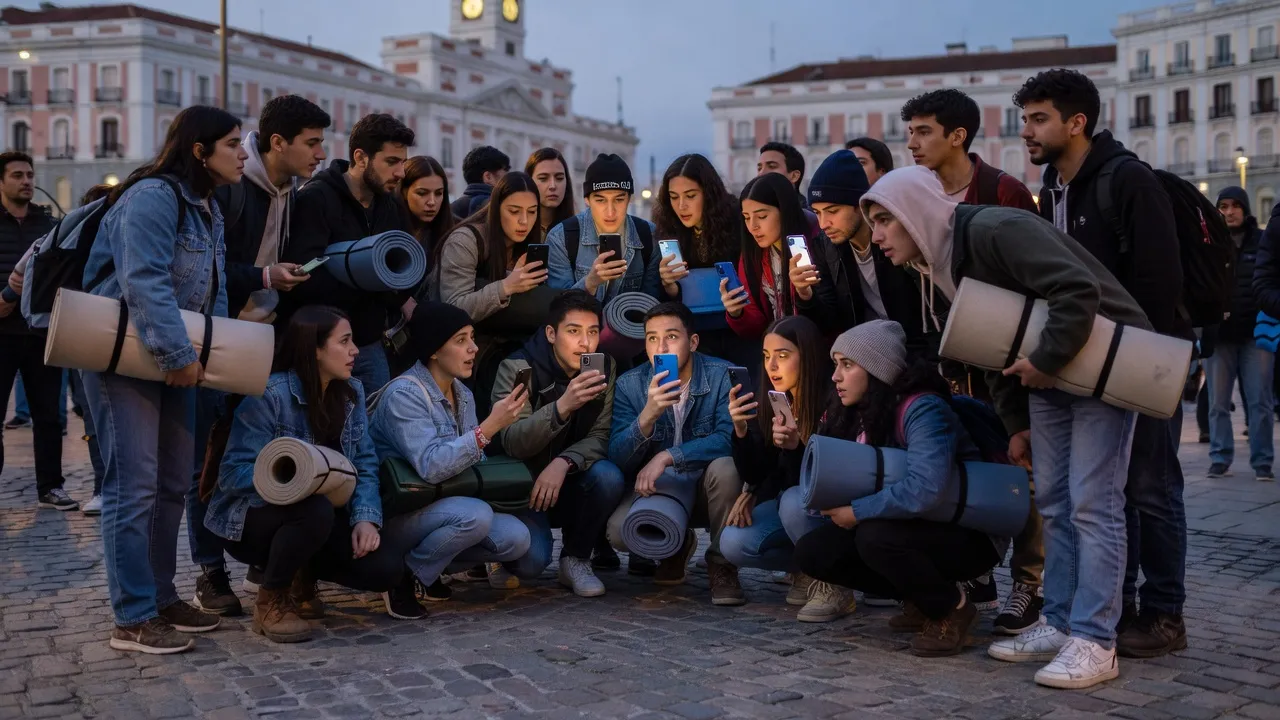
El Deber, which reprints an analysis from the BBC, delves into the strategic reading. According to this text, the wave of indignation over housing has given Sánchez "the ideal reason" to call the election. The issue would also allow him to distance himself from the debate over Ceuta and corruption accusations. The question of why now is therefore posed in terms of political calculation, rather than a response to the street.
In both media outlets, Spain is approached from a distance. None of the texts makes a connection with Bolivia or cites a reaction from La Paz. The perspective is that of an observer of the parliamentary life of a major Spanish-speaking country: arithmetic of seats, positioning of Vox, Sánchez's ability to reverse an unfavorable position in the polls. Housing appears as the trigger for the crisis, but the emphasis is on the government leader's maneuver and the outcome of the vote.