DOMINANT ANGLE
Santiago takes away from Trump's statement on Ireland less of a diplomatic stance than a question of Northern Irish sovereignty, between presidential quotes and street protests in Dublin.
Dominant angle identified — does not reflect unanimity of this country’s media
KEY POINTS
- 01
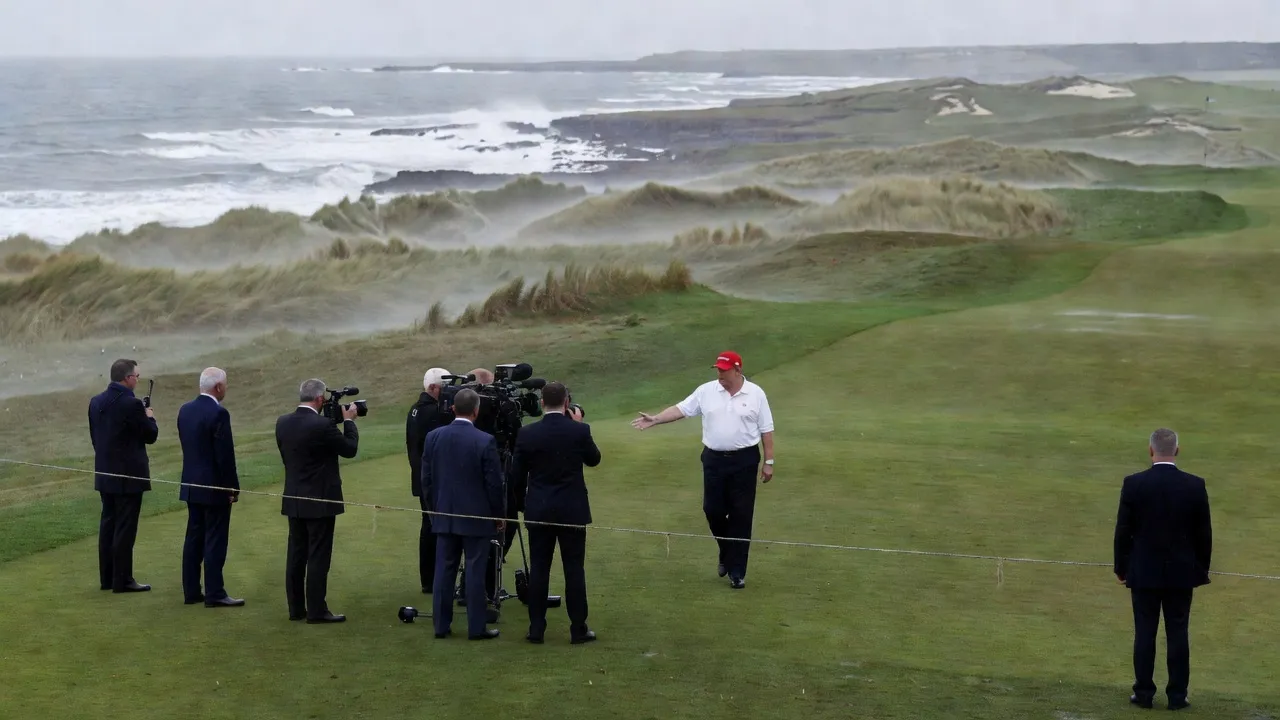
Trump stated on Saturday in Dublin, alongside Micheál Martin: "me encantaría verlo unificado. Tengo amigos en ambos lados, gente estupenda. Son irlandeses."
- 02
Trump acknowledged that the United Kingdom "tendrá algo que decir al respecto" regarding Northern Ireland, a territory that belongs to it (La Tercera)
- 03
El Ciudadano reports a protest in Dublin conveying a "mensaje directo de rechazo hacia Trump" and solidarity displayed with Palestine
ANALYSIS
Santiago, Monday, September 14, 2026. From the Chilean press, Donald Trump's visit to Ireland is seen through two distinct lenses: the presidential statement on reunification and the popular protest that accompanied it. La Tercera reports that the American president, on a two-day visit mainly dedicated to a golf tournament on his Doonbeg golf course, stated on Saturday, alongside Irish Prime Minister Micheál Martin, that a unified Ireland would be "algo fantástico". Quoted by the Santiago daily, Trump said: "No quiero causar ningún problema, pero te diré que me encantaría verlo unificado. Tengo amigos en ambos lados, gente estupenda. Son irlandeses." The newspaper emphasizes that Trump nonetheless recognized that the United Kingdom "tendrá algo que decir al respecto", recalling that Northern Ireland remains a British territory — a nuance that, for the Chilean press, places the presidential statement in the register of sovereignty rather than a simple personal opinion. La Tercera also notes that Trump, from the American embassy in Dublin, joked about the impossibility of "well responding" to the question, adding that his response would make the headlines of the next day's newspapers, a sign for the daily of the calculated nature of the statement. The newspaper finally recalls the historical context of the armed conflict in Northern Ireland opposing unionists attached to the United Kingdom and nationalists in favor of the island's unification. The other side of the Chilean narrative, carried by El Ciudadano, focuses less on the president's words than on the street: the media describes a "mensaje directo de rechazo hacia Trump" launched in Dublin, presented as a reflection of the "sentir popular irlandés". A video shows protesters chanting their solidarity with Palestine, establishing a link between the Irish cause and other self-determination struggles. Between La Tercera's institutional observation and El Ciudadano's militant perspective, the Chilean press retains from the episode less a transatlantic controversy than a question of sovereignty and self-determination, where the American presidential speech clashes with the legal status of the Northern Irish territory and the protest in Dublin.