
DOMINANT ANGLE
Paris is distancing itself from the improvised diplomacy of the American president and the barely veiled promotion of his Irish golf complex.
Dominant angle identified — does not reflect unanimity of this country’s media
KEY POINTS
- 01
Daniel Geary, professor at Trinity College in Dublin, quoted by Sud Ouest: "He's coming essentially to visit the golf complex he owns, with a stop in Dublin for a courtesy visit".
- 02
Ethicist Richard Painter (University of Minnesota) judges the timing of the visit harmful to the Republican Party as the midterm elections approach.
- 03
A May 2026 survey by the Institute of Irish Studies at the University of Liverpool found only 35% of Northern Irish people in favor of unification.
ANALYSIS
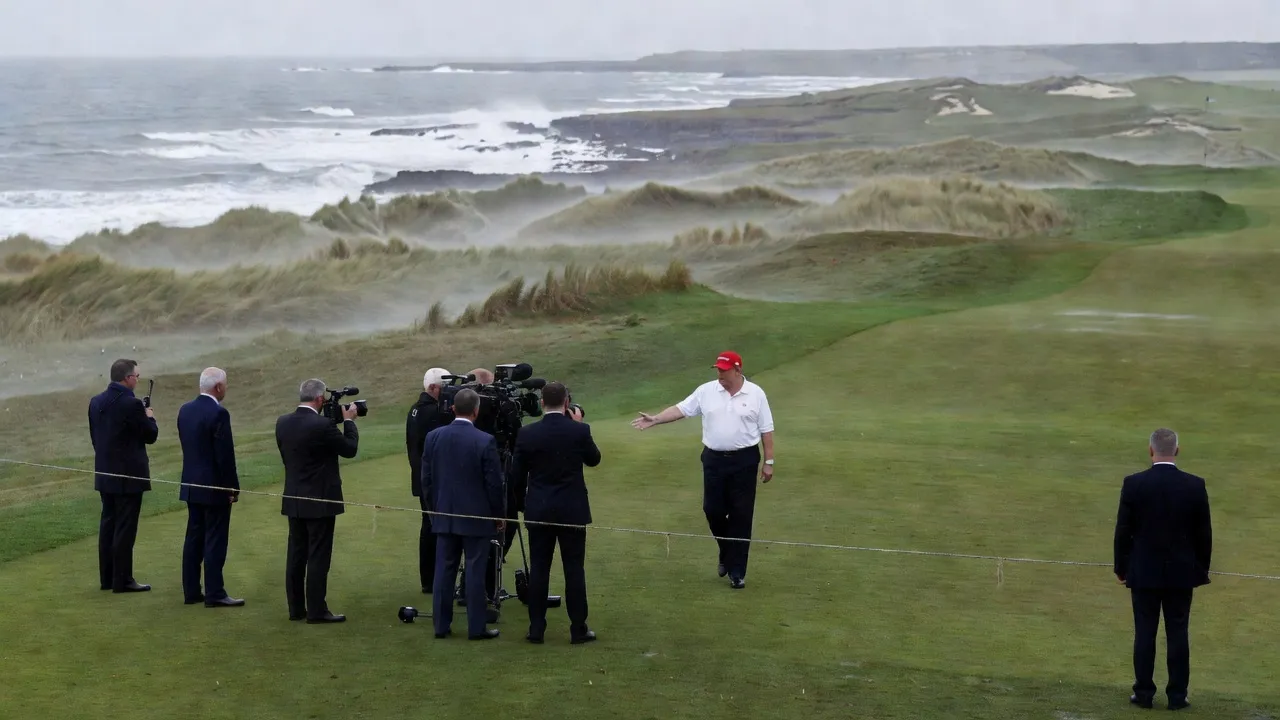
Paris, Monday, September 14, 2026. In Dublin and then on his golf course in Doonbeg, on the west coast of Ireland, Donald Trump stated on Saturday that he would "very much" like to see a "unified" Ireland, judging that such a prospect would be "fantastic" and "will eventually happen". These comments were made during a press conference with Irish Prime Minister Micheal Martin, and then reiterated on Sunday, breaking with the traditional neutrality displayed by Washington on this sensitive issue for Dublin and London.
The French press first interprets this statement through the prism of the American president's private interests. According to Daniel Geary, a professor of American history at Trinity College in Dublin, quoted by Sud Ouest, "he is essentially visiting the golf complex he owns, with a stop in Dublin for a courtesy visit". The 80-year-old billionaire, who openly promotes the golf activities of his family's holding company since his return to the White House, was then scheduled to attend the Irish Open tournament in Doonbeg, where Northern Irishman Rory McIlroy is among the headliners.
Ethicist Richard Painter, a law professor at the University of Minnesota, considers the timing to be awkward as the midterm elections approach: seeing the president "touring his golf courses" when "others are struggling to make ends meet" will not serve the Republican Party, he estimates.
On the substance, Downing Street referred to the comments of British Prime Minister Andy Burnham, who believes that a referendum on reunification is "not a priority": the 1998 peace agreements require a "clear consensus" before any consultation. A survey by the Institute of Irish Studies at the University of Liverpool, published in May, credited unification with only 35% support in Northern Ireland.
In the streets of Dublin, where thousands of protesters marched under heightened security, reactions ranged from annoyance to irony. "Trump doesn't understand history and isn't interested in it," a protester named Cora told RFI, while a retiree reminded AFP that he would do better to focus on Gaza before "talking about unifying Ireland".
SOURCES (5)
- France 24 ENMEDIUM
- Sud OuestMEDIUM
- HuffPost FranceMEDIUM
- BFMTV InternationalMEDIUM