
DOMINANT ANGLE
Berlin is interpreting Trump's comments on Ireland as an unusual interference in an extremely sensitive domestic issue, which has revived the divide between Northern Irish unionists and nationalists in just a few hours.
Dominant angle identified — does not reflect unanimity of this country’s media
KEY POINTS
- 01
Trump said Saturday in Dublin he would "very much like" to see a unified Ireland, a "fantastic" prospect, and then repeated Sunday that reunification "will happen eventually".
- 02
The office of British Prime Minister Andy Burnham rejected the idea of a referendum, recalling that the 1998 Good Friday Agreement reserves the calling of one for London alone.
- 03
Gavin Robinson, leader of the Democratic Unionist Party, judged that reunification would lead to "the destruction of our country", stressing the exclusive right of the Northern Irish people to decide.
ANALYSIS
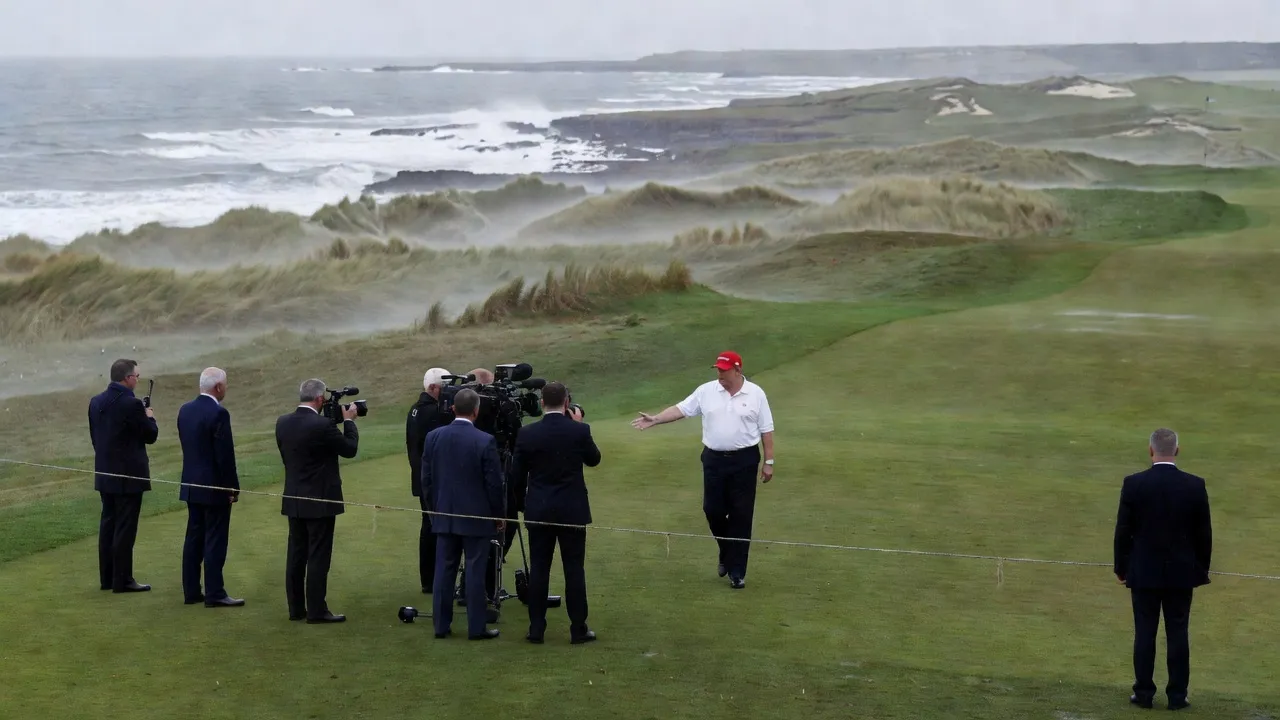
Berlin, Monday, September 14, 2026. For the German press, Donald Trump's brief visit to Ireland will be remembered less as a golfing escapade than as a political explosion. Received by Irish Prime Minister Micheál Martin in Dublin on Saturday, the American president bluntly stated that he would "very much" like to see the island reunified, calling the prospect "fantastic" and "pretty cool". The next day, at his Doonbeg golf complex where the Irish Open final was being played, he drove the point home: reunification "will eventually happen anyway".
Tagesschau describes a village of 300 inhabitants transformed into a fortified camp, with around 4,000 police officers and security agents mobilized across the country, including American forces, to oversee a visit combining golf, protests, and a highly inflammatory topic. ZEIT Online emphasizes London's immediate response: Prime Minister Andy Burnham's office recalled that a referendum on Northern Ireland's maintenance in the United Kingdom "is not on the agenda", referring to the 1998 Good Friday Agreement, which reserves for London alone the power to convene such a vote.
The most vehement reaction comes, however, from the unionist camp: Gavin Robinson, president of the Democratic Unionist Party, warned that reunification would lead to "the destruction of our country", recalling that it is the Northern Irish people, and they alone, who will decide the territory's constitutional future. Handelsblatt highlights the contrast between Trump's lightheartedness on the green and the seriousness with which Dublin and London continue, after his departure, to manage the fallout from remarks deemed unprecedented for an American president on this issue. British Housing Minister Angela Rayner attempted to defuse the situation: "Trump is Trump, he says what he thinks" — while ensuring that the government takes the Good Friday Agreement "very seriously". For Berlin, the episode illustrates how a weekend outing can reopen, nearly three decades after the peace, a still-sensitive constitutional wound between unionists and nationalists.
SOURCES (4)
- ZEIT OnlineMEDIUM
- HandelsblattMEDIUM