
DOMINANT ANGLE
Warsaw is primarily concerned with the legal framework of the Good Friday Agreement in light of Trump's comments on a united Ireland, more so than the unionist anger itself.
Dominant angle identified — does not reflect unanimity of this country’s media
KEY POINTS
- 01
Trump stated in Dublin, alongside Micheál Martin, that he would like to see a united Ireland and that it would "eventually happen" (RMF24, Dziennik.pl, citing Reuters/The Guardian).
- 02
According to the 1998 Good Friday Agreement, a referendum on Northern Ireland's exit from the United Kingdom can only be held at the decision of the British government (Dziennik.pl).
- 03
The office of British Prime Minister Andy Burnham judged that reunification did not have sufficient support to justify a referendum (Dziennik.pl).
ANALYSIS
Warsaw, Monday, September 14, 2026. The Polish press first focuses on the legal framework in which Donald Trump's comments on a unified Ireland are made, rather than the political charge of his statement. RMF24 and Dziennik.pl, citing Reuters and The Guardian, report that the American president stated in Dublin, alongside Irish Prime Minister Micheál Martin, that he would "very much like to see a united Ireland" and that it would "eventually happen", before adding, addressing Martin: "you have the right interlocutor here to move things forward". Trump, however, took care to specify that he did not want to "create problems" and that "the United Kingdom will have its say".
The two titles immediately recall that the issue is not just a presidential wish: according to the 1998 Good Friday Agreement, a referendum on Northern Ireland's exit from the United Kingdom can only be organized with the decision of the British government. Dziennik.pl emphasizes that this text, which put an end to three decades of conflict between Irish nationalists and unionists, was negotiated with strong involvement from the United States — an implicit reminder of Washington's historical role in the Northern Ireland dossier.
The official reaction from London occupies a central place in the Polish treatment. The two articles relay the position of the office of British Prime Minister Andy Burnham, for whom the idea of reunification does not have enough broad support to justify the organization of a referendum in light of the 1998 agreement.
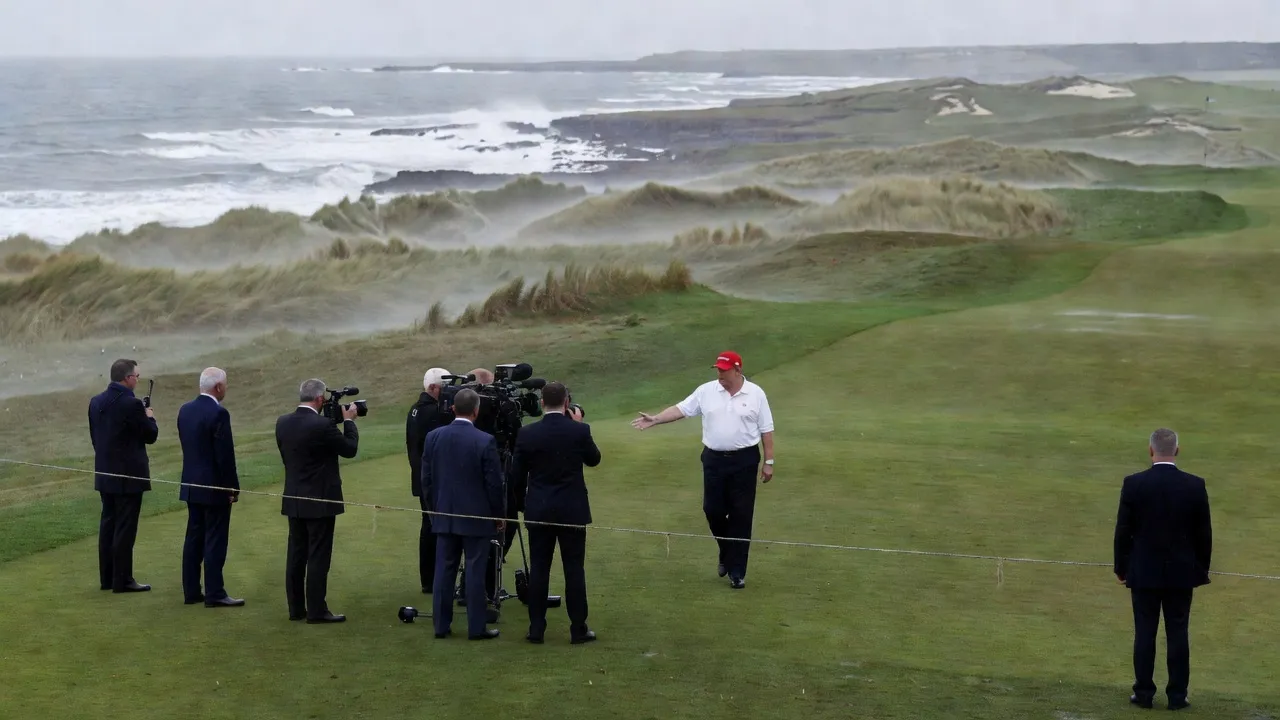
In contrast, the unionist rejection remains alluded to in passing: RMF24 only notes that Trump's comments "were not well received in either London or by the unionists of Northern Ireland", without citing any Northern Irish political officials. The polls, relayed by Reuters via RMF24, show that a majority in Northern Ireland remains in favor of remaining in the United Kingdom, even if the gap has narrowed since Brexit. Neither of the two articles dwells on the next step of the presidential visit, at Trump's golf course in Doonbeg, nor on the protests that accompanied the trip.