19 perspectives, each in the voice of that country's press.
Canberra is gauging the Houthi crisis at the pump: the surge in Australian fuel prices is becoming the immediate barometer of a distant war, more so than London's or the G7's diplomatic maneuvers.
3 sources
Brazil is measuring the Gulf crisis by the barrel: the drop in Brent below $100 carries more weight in Brasília than the military maneuvers undertaken by London.
2 sources
Ottawa is reopening its own debate on arms sales to Riyadh, in light of British support and the US withdrawal in the face of the Houthis.
3 sources
Copenhagen first takes note of the oil pipeline: British support for the Saudis and the G7 warning are seen as measures to ensure that oil continues to flow through the Persian Gulf and Hormuz.
2 sources
Ethiopia is gauging the Houthi crisis based on its own nationals repatriated from Saudi Arabia and the Yemeni refugees flocking to Djibouti, rather than the military calculations of London and Riyadh.
2 sources
Paris is first focusing on the economic stakes of the Bab el-Mandeb strait, placing the G7 statement and the strikes on Moka behind the issue of global maritime trade, without mentioning London's military support for Riyadh.
Jakarta weighs the human cost of an expanding war, between the six civilians killed in Moka and Washington's persistent refusal to engage militarily alongside Riyadh.
Israel fears that the escalation between Saudi Arabia and the Houthis may cause the Yemeni movement to directly target its own territory once again, as was the case during the previous wave of attacks.
Rome is particularly focused on the transatlantic contrast: the American withdrawal in the face of Saudi appeals, more than the G7's collective statement on Iran.
Kathmandu gauges the Yemen war by its displaced people rather than Western military maneuvers, as London arms the Saudi supply and Washington abstains.
Islamabad is relying on its shuttle diplomacy between Tehran and Riyadh, as the G7 urges Iran to stop arming the Houthis and Washington refrains from direct military engagement.
Doha is measuring the void left by Washington in the face of Riyadh, as the Gulf region's diplomacy attempts to contain the escalation with the Houthis
Riyadhh welcomes the G7 statement as diplomatic validation, but is particularly aware of the US military silence and the test that Bab al-Mandeb poses to its reconciliation with Tehran.
Stockholm first notes the firm stance taken by the G7, which demands that the Houthis cease their attacks and requires Iran to stop arming the movement, while reports from the field remind us of the human cost of the escalation in Yemen.
Singapore gauges the Yemen escalation in terms of its own trade routes: the threat to Bab al-Mandeb and the Strait of Hormuz serves as a direct warning for a city-state that thrives on maritime freight and imported energy.
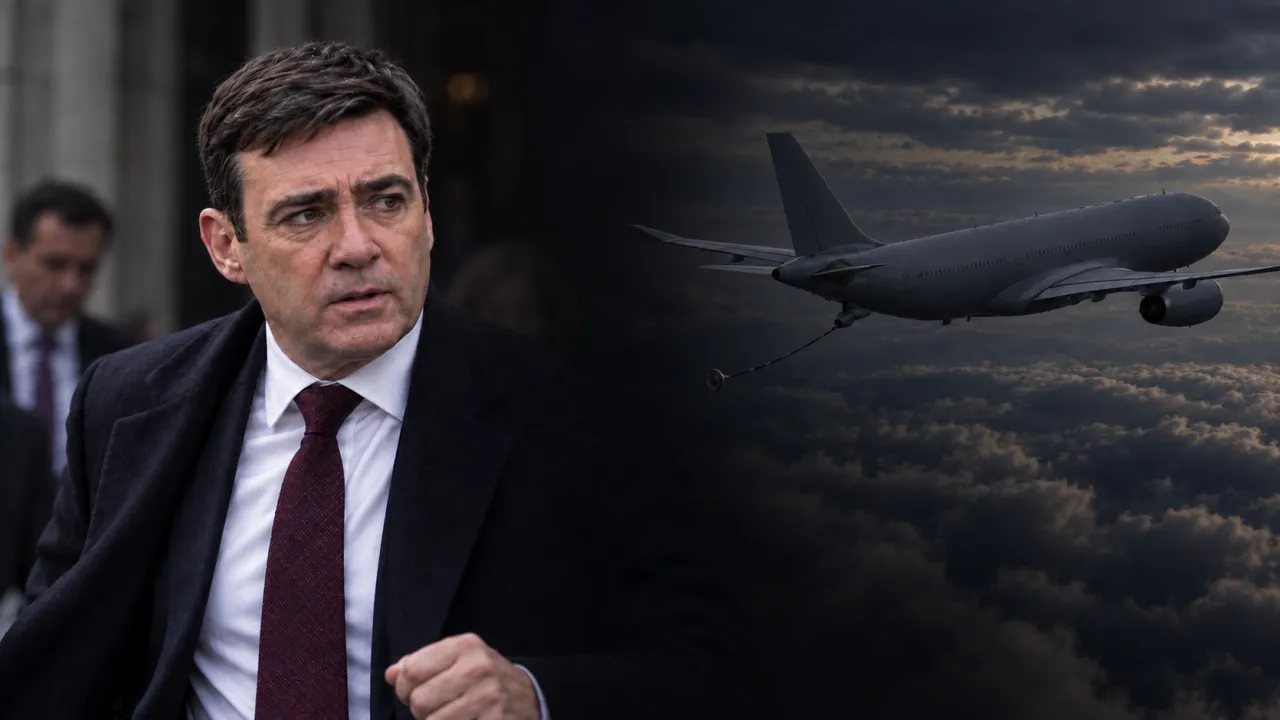
London is opting for a calibrated commitment: refuelling Saudi fighter jets in mid-air without crossing the line into a combat role, a choice that Downing Street justifies as much by the security of Riyadh as by the energy bill of the British.
The United States is calculating its withdrawal: Trump has ruled out strikes against the Houthis despite repeated calls from the Saudi crown prince, preferring to limit its military engagement while London provides in-flight refueling for Riyadh's fighters.
Pretoria is measuring its historical solidarity with Riyadh in light of the US military silence in the face of the Houthi advance
3 sources
Cross-media analysis
What the comparison reveals
Common ground and differences in coverage across the media analysed.
What the media report in common
1
The Houthi forces, backed by Iran, are waging a campaign of attacks - missiles, drones, strikes on oil facilities and on maritime transport - against Saudi Arabia, in a context of regional escalation.
2
British Prime Minister Andy Burnham has accepted a Saudi request for military support, in the form of in-flight refueling of Saudi combat aircraft by Royal Air Force Voyager planes, presented as defensive and limited in time.
Where media coverage diverges
Direct military engagement for Riyadh
In response to Saudi Arabia's request for military support against the Houthis, the United Kingdom has agreed to provide in-flight refuelling for its fighter jets, while the United States, approached several times by Crown Prince Mohammed bin Salman, has limited its contribution to intelligence and sharing of targeting data without engaging in strikes.
Coverage aligned with this reading
Coverage that diverges
Reliability of the narrative on Trump
The narrative, attributed to the New York Times, that Donald Trump had cancelled at the last minute strikes against the Houthis when bombs were already loaded onto the planes, is taken up as an established fact by some editorial offices, while others explicitly state that Reuters was unable to verify it independently.
Coverage aligned with this reading
Coverage that diverges
This grouping describes the publications analysed, not the position of these countries’ populations or of their governments.
Canberra is gauging the Houthi crisis at the pump: the surge in Australian fuel prices is becoming the immediate barometer of a distant war, more so than London's or the G7's diplomatic maneuvers.
KEY POINTS
The liter of unleaded gasoline has risen above $2.30, its highest level in nearly six months, according to The Age.
The East-West Saudi oil pipeline, which carried 4 million barrels per day (4% of global supply), was taken out of service by drone attacks.
According to the New York Times as cited by PerthNow, Donald Trump called off American strikes against the Houthis at the last minute, even as bombs were already loaded onto the planes.
ANALYSIS
Canberra, 22 September 2026. In Australia, the war between Saudi Arabia and the Houthis is first felt at the pump. The litre of unleaded petrol has risen above 2.30 Australian dollars, its highest level in nearly six months, after drone attacks damaged a major Middle Eastern oil axis for the second time, reports The Age. The 1200-kilometre East-West Saudi pipeline, the main bypass of the Strait of Hormuz, transported up to 4 million barrels per day, or 4% of global supply; its temporary closure deprives Riyadh of its export margin. Barclays analysts warn that prices "still have a long way to go" and could rise by an additional 50% if the situation persists. Australian prices follow crude markets with a seven to ten-day delay: every $10 increase in the barrel historically translates to 10 cents more per litre.
On the ground, Australian media describe a Houthi advance that has disrupted the regional balance. ABC News recalls that the movement, described as a "merchant of chaos", has taken the port of Moka and the island of Perim this year, ensuring almost total control of Yemen's Red Sea coast. According to analyst April Longley Alley, cited by ABC, this territorial gain allows the Houthis "to harass maritime traffic more easily" and makes them the "powerbroker" of the Bab el-Mandeb Strait. The United Nations reports nearly 700 deaths and 130,000 displaced since the resumption of fighting.
On the American side, PerthNow relays information from the New York Times that Donald Trump would have cancelled strikes against the Houthis at the last minute, when the bombs were already loaded onto the planes, despite repeated calls from Saudi Crown Prince Mohammed bin Salman. Reuters specifies that it was unable to verify this account independently, and that Washington made no direct commitment of support during a call with Riyadh. For the Australian press, it is this American void, more than British support in air refuelling or the G7 statement on Iran, that structures the perceived risk: a oil crisis capable of permanently increasing prices at the pump far beyond the Middle East.
Brazil
DOMINANT ANGLE
Brazil is measuring the Gulf crisis by the barrel: the drop in Brent below $100 carries more weight in Brasília than the military maneuvers undertaken by London.
KEY POINTS
Brent crude fell for the fourth consecutive session on Monday, September 21, dropping 3.09% to $100.66, with WTI down 3.27% at $92.94 (Estadão)
G7 foreign ministers (Canada, France, Germany, Italy, Japan, United Kingdom, United States) are demanding that the Houthis "immediately cease all military actions" and calling on Iran to halt its arms deliveries (Estadão/AFP)
The Red Sea International Film Festival in Saudi Arabia has been postponed to 2027 due to regional escalation and uncertainty over the Strait of Hormuz, after the cancellation of the Jeddah Grand Prix earlier this year (Veja)
ANALYSIS
Brasília, September 22, 2026. From Brazil, the crisis surrounding Saudi Arabia is first seen in oil price curves. Brent fell for the fourth consecutive session on Monday, September 21, dropping 3.09% to $100.66 a barrel, while WTI gave up 3.27% to $92.94, reports Estadão. The decline brings the international benchmark back below the symbolic $100 mark, after it had approached $110 earlier in the month. This is explained, according to the newspaper, by the "expectation of recovery of Saudi Arabia's oil flows" and by "diplomatic advances in the Middle East", particularly on the sidelines of the UN General Assembly. Riyadh is working to restore part of the capacity of its East-West oil pipeline, which alleviates the risk premium integrated into prices for several weeks — a relief that also benefits, notes Estadão, the yields of US Treasury bonds and stock markets.
On the diplomatic front, the Brazilian press relays the joint statement of the G7 foreign ministers — Canada, France, Germany, Italy, Japan, the United Kingdom, and the United States. Meeting on the sidelines of the UN General Assembly on Monday, they condemn the "unacceptable attacks" launched from Yemen against Saudi Arabia and demand that the Houthis "immediately cease all military actions", as well as threats to civilian navigation. The group also calls on Iran to end its supply of arms to the rebels, accusing it of violating UN Security Council resolutions, specifies Estadão citing AFP.
Canada
DOMINANT ANGLE
Ottawa is reopening its own debate on arms sales to Riyadh, in light of British support and the US withdrawal in the face of the Houthis.
KEY POINTS
British Prime Minister Andy Burnham announced that the Royal Air Force's Voyager tanker aircraft would refuel Saudi planes in mid-air, described as limited-time support (CBC).
According to the New York Times, cited by the Globe and Mail, Donald Trump reportedly called off American strikes against the Houthis at the last minute, even as bombs were already loaded onto the planes.
A contract for light armoured vehicles (LAVs) was signed with Saudi Arabia in 2014, which has since been contested by lawsuits and activist campaigns (National Post).
ANALYSIS
Ottawa, Tuesday, September 22, 2026. As London has agreed to provide in-flight refueling to Saudi combat aircraft engaged against the Houthis, the Canadian press is reopening a debate that is over a decade old: that of Canadian arms sales to Saudi Arabia. In a National Post editorial, columnist Jesse Kline argues that it is "now clear that we should have been selling the Saudis more military equipment, not less", recalling the controversial contract for light armored vehicles (LAV) signed by the Conservatives in 2014 and fought by militant campaigns and judicial appeals since. He defends the idea that the Saudi coalition was seeking to prevent an Islamist organization from taking control of a country located near a strategic passage point of the Red Sea, while acknowledging the reasons for mistrust of Riyadh, from the Saudi origin of fifteen of the nineteen 9/11 hijackers to the murder of journalist Jamal Khashoggi in 2018.
The Globe and Mail documents the void left by Washington. The newspaper reports that President Donald Trump would have canceled at the last minute American strikes against the Houthis, even as bombs were already loaded onto planes, according to the New York Times, information that Reuters was unable to verify and that the Pentagon did not comment on. The United States has so far rebuffed the repeated calls of Crown Prince Mohammed bin Salman to join the fighting, while the Houthis are advancing on the heights of Yemen to cut off the Red Sea coast from areas held by pro-government forces.
Denmark
DOMINANT ANGLE
Copenhagen first takes note of the oil pipeline: British support for the Saudis and the G7 warning are seen as measures to ensure that oil continues to flow through the Persian Gulf and Hormuz.
KEY POINTS
British Prime Minister Andy Burnham announced on Monday that he had approved in-flight refueling of Saudi fighter jets by RAF Voyagers, a 'defensive' and time-limited aid (DR Nyheder, citing The Guardian, Reuters and BBC).
The G7 foreign ministers (Canada, France, Germany, Italy, Japan, United Kingdom, United States) demanded on Tuesday that the Houthis immediately cease their military actions and that Iran stop arming the movement (Berlingske, citing AFP).
The Saba agency, close to the Houthis, reported that at least six people were killed and eight injured in strikes by the Saudi coalition on the port of Mokha, after a Houthi attack on Riyadh on Saturday.
ANALYSIS
Copenhagen, September 22, 2026. The Danish press is covering the British announcement and the G7 statement on the Houthis primarily through the lens of energy and maritime trade, rather than the military operations themselves.
DR Nyheder reports that British Prime Minister Andy Burnham announced on Monday, en route to New York for the UN General Assembly, that he had approved limited and time-limited "defensive" military aid to Saudi Arabia. According to The Guardian, cited by DR, this involves in-flight refueling of Saudi fighter jets by Royal Air Force Voyager aircraft, aimed at protecting the kingdom's "energy infrastructure" from Houthi attacks backed by Iran. Burnham claims that this support should contribute to stabilizing the region and ensuring that oil continues to flow in the Persian Gulf. The decision was made after consultation with the British Defense Minister and the head of diplomacy.
Berlingske, citing AFP, details the joint statement by the G7 foreign ministers - Canada, France, Germany, Italy, Japan, the United Kingdom, and the United States - published on Tuesday, which urges the Houthis to immediately cease all military actions and demands that Iran end its arming and support of the movement, accused of violating UN Security Council resolutions. The newspaper emphasizes that the Houthi advance on Yemen's Red Sea coast, particularly around the port of Mokha, has strengthened Iran's and its allies' control over two strategic straits, including the Ormuz Strait, which the Gulf monarchies and Saudi Arabia rely on to export their oil.
Ethiopia
DOMINANT ANGLE
Ethiopia is gauging the Houthi crisis based on its own nationals repatriated from Saudi Arabia and the Yemeni refugees flocking to Djibouti, rather than the military calculations of London and Riyadh.
KEY POINTS
The IOM reports that thousands of people have been fleeing by boat across the Bab el-Mandeb Strait to Djibouti for ten days, on overcrowded vessels with little food.
The authorities at the Obock camp are preparing for the possible arrival of up to 10,000 refugees fleeing the Houthi offensive targeting a strategic island and the port of Mokha.
A total of 1,592 nationals were repatriated from Saudi Arabia on nine flights last week, including 34 minors, bringing the total to over 103,000 since September 15, 2025.
ANALYSIS
Addis-Abeba, Monday, September 21, 2026. For ten days, thousands of Yemenis have been fleeing the western coast of Yemen by boat across the Bab el-Mandeb Strait to reach Djibouti, according to a BBC report filmed in the Obock camp. The International Organization for Migration, a UN agency, describes passengers "traveling on overcrowded boats and arriving with very little food and water". Local authorities are preparing for the possible arrival of up to 10,000 refugees. This influx is directly related to the Houthi movement's offensive, supported by Iran, to capture a strategic island and the port of Mokha — the same port where, according to the Houthi-affiliated Saba agency, strikes by the Saudi coalition have killed at least six people.
For Ethiopia, a neighbor of the Red Sea and a country of origin for tens of thousands of migrant workers in Saudi Arabia, the crisis is first and foremost read through its own citizens. The Ministry of Women and Social Affairs has announced the repatriation of 1,592 Ethiopians from the Saudi kingdom, who arrived on nine flights last week, including 34 minors. They are being taken care of at the airport and in temporary accommodation centers while waiting to be reunited with their families. Launched on September 15, 2025, this operation has now brought back more than 103,000 Ethiopians, according to the ministry, which presents it as the central pillar of a "citizen-centered diplomacy" under the Medemer state.
France
DOMINANT ANGLE
Paris is first focusing on the economic stakes of the Bab el-Mandeb strait, placing the G7 statement and the strikes on Moka behind the issue of global maritime trade, without mentioning London's military support for Riyadh.
KEY POINTS
The G7 urged the Houthis on Monday, September 21, on the sidelines of the UN General Assembly, to "immediately cease all military actions, threats, and attacks" against maritime transport.
The Houthi-affiliated Saba agency reported strikes by the Saudi coalition on the port of Moka that killed six civilians, including two children and a woman, and injured eight other people.
The Bab el-Mandeb Strait, under Houthi control since their early September offensive, has become crucial for Saudi oil exports since Iran has been blocking the Strait of Hormuz.
ANALYSIS
Paris, September 22, 2026. The French press first notes, in this surge of Houthi attacks against Saudi Arabia, the scope of the commercial and energy stakes at play around the Bab el-Mandeb Strait. Le Monde and Sud Ouest recall that this passage connecting Europe to Asia via the Red Sea and the Suez Canal, "already heavily used before the war in the Middle East", has become "even more important for Saudi Arabia, the world's largest crude oil exporter", since Iran has been blocking the Strait of Hormuz on its side. BFMTV has even titled its dispatch as an "energy crisis", a sign that the prism retained by the editorial offices goes beyond a simple diplomatic report.
In this context, the G7 foreign ministers urged the Houthis on Monday, September 21, on the sidelines of the UN General Assembly, to "immediately cease all military actions, threats, and attacks" against maritime transport. They denounce "reprehensible acts" that, according to their statement cited by BFMTV and Sud Ouest, constitute "a dangerous trajectory of escalation that risks exacerbating the conflict, disrupting international trade, and creating economic instability on a global scale". The G7 also demands that Iran stop delivering arms to the Yemeni rebels and reaffirms its support for the "legitimate government of Yemen".
Indonesia
DOMINANT ANGLE
Jakarta weighs the human cost of an expanding war, between the six civilians killed in Moka and Washington's persistent refusal to engage militarily alongside Riyadh.
KEY POINTS
Houthi spokesman Yahya Saree claimed the firing of "ballistic missiles, cruise missiles and drones" at Riyadh and the Yanbu oil facility on Saturday, September 19.
A strike by the Saudi coalition on the Moka port killed six civilians, including two children and a woman, and injured eight other people, according to the Saba agency, affiliated with the Houthis, as cited by AFP.
Rashad Al Alimi, head of the Yemeni Presidential Leadership Council, called Donald Trump on Sunday, September 20, to request American military support against the Houthis; Trump made no promises.
ANALYSIS
Jakarta, September 22, 2026. The Indonesian press paints a picture of a war that is spilling beyond its usual borders, between Houthi attacks on Saudi Arabia and strikes by the Saudi-led coalition against Yemen. CNN Indonesia recalls that the Houthi rebels targeted Riyadh and the oil facilities in Yanbu on Saturday, September 19, with, according to their spokesman Yahya Saree, "a large number of ballistic missiles, cruise missiles, and drones". The Saudi air defense intercepted the shots targeting the capital, with no reported human toll, but residents heard loud explosions and King Khaled International Airport experienced significant delays.
In response, the coalition led by Riyadh struck the Yemeni port of Moka on Tuesday, killing six civilians, including two children and a woman, and injuring eight others, according to the Saba agency, affiliated with the Houthis, cited by AFP. Jakarta relays this toll without questioning it, a sign that Indonesian coverage gives a large place to the Houthi camp's account of the civilian toll on this specific terrain.
The local press also highlights Donald Trump's dilemma. Rashad Al Alimi, the head of the Yemeni Presidential Leadership Council supported by Riyadh, called him on Sunday to demand American military support against the Houthis; Trump made no promises. Saudi Crown Prince Mohammed bin Salman also reportedly pressed him, so far in vain, to directly attack the Iran-backed movement. According to the New York Times, cited by CNN Indonesia, Trump has already changed his position several times, torn between Saudi pressure and the risk of opening a new front in the Middle East.
Israel
DOMINANT ANGLE
Israel fears that the escalation between Saudi Arabia and the Houthis may cause the Yemeni movement to directly target its own territory once again, as was the case during the previous wave of attacks.
KEY POINTS
Diplomatic officials told Maariv that the escalation between Riyadh and the Houthis raises fears of a resumption of direct fire against the country, as during the previous wave of attacks.
Saudi Arabia confirmed that a Houthi ballistic missile targeting Riyadh was intercepted by its air defense, a first since the start of the current escalation.
British Prime Minister Andy Burnham announced limited defensive air-to-air refueling support, limited in time, to Saudi aircraft engaged against the Houthis.
ANALYSIS
Jérusalem, September 22, 2026. In Jérusalem, the question posed by the escalation between Saudi Arabia and the Houthis goes beyond the fate of Riyadh: it affects the very security of Israeli territory. According to diplomatic officials cited Tuesday by Maariv, the dominant fear is that the confrontation, if it continues to intensify, will push the Iran-backed Yemeni movement to resume its direct fire against Israel, "as it did last year". These sources specify that the central question remains whether the situation can be controlled or if the escalation will continue.
The most concrete sign of this drift came from Riyadh itself: Saudi Arabia confirmed that a Houthi ballistic missile targeting its capital had been intercepted by its air defense, a first since the beginning of the current escalation wave. Residents reported an explosion and smoke near the airport. In response, the US State Department updated its security instructions for its citizens in the Middle East, and the US Embassy in Israel issued an alert mentioning possible air disruptions and airspace closures, while specifying that these expanded warnings do not necessarily signal an imminent development.
On the military front, the Israeli press relays information from the New York Times that Donald Trump had ordered the Pentagon to prepare strikes against the Houthis after pressure from Crown Prince Mohammed bin Salman, before backing down on Sunday, as American planes were already loaded. Washington remains the great absentee of concrete commitments: no direct promise to defend the kingdom has been made, leaving the United Kingdom to fill part of the void. British Prime Minister Andy Burnham announced limited-time defensive air supply support to Saudi planes.
Italy
DOMINANT ANGLE
Rome is particularly focused on the transatlantic contrast: the American withdrawal in the face of Saudi appeals, more than the G7's collective statement on Iran.
KEY POINTS
Trump withdrew the order to strike the Houthis on Sunday, after the president's early return from Camp David, while the list of targets had already been validated (ANSA)
The US State Department approved the potential sale of 48 F-35s to Saudi Arabia on September 17 for approximately $24.3 billion (Panorama)
La Repubblica highlights that only the United Kingdom has responded to Saudi calls, while the UN reports an increase in civilian casualties and 130,000 displaced people
ANALYSIS
Rome, September 22, 2026. The Italian press is highlighting a transatlantic contrast rather than the G7's collective statement. According to La Repubblica, while President Donald Trump withdrew the order to bomb the Houthis on Sunday, despite repeated calls from Saudi Crown Prince Mohammed bin Salman, "soltanto Londra tende una mano ai sauditi" - only London is extending a hand to the Saudis. The newspaper emphasizes that Washington "non vuole farsi coinvolgere nel conflitto yemenita", while the UN is sounding the alarm over the increase in civilian casualties and the displacement of 130,000 people.
ANSA is detailing the mechanics of the American about-face: the fighter jets were ready, the list of targets had been validated, and the strikes were on the verge of beginning. Then, according to "le ricostruzioni del New York Times" as reported by the agency, the White House reversed course after the president's early return from Camp David. The crown prince had made numerous calls over two weeks; even a conversation with Yemeni President Rashad al-Alimi failed to extract any promise of military support. Trump justified the reversal by claiming to be in direct talks with the rebels: "Parliamo con gli houthi", stressing that the movement had committed to not targeting American interests. The White House advisors, concerned about opening a new front ahead of the midterm elections, are said to have weighed in on the decision.
Malaysia
DOMINANT ANGLE
Kuala Lumpur is showing solidarity with Riyadh and calling for de-escalation, while London is engaging militarily and Washington is wavering.
KEY POINTS
The foreign ministry condemned on Monday, September 21, "in the strongest terms" the Houthi attacks and expressed solidarity with Saudi Arabia.
A ballistic missile fired towards Riyadh on Saturday, September 19, was intercepted; on September 14, strikes on Khamis Mushait, Abha, and Taif had injured 13 civilians according to the Riyadh-led coalition.
The G7 demanded on Tuesday, September 22, an immediate halt to Houthi actions and urged Iran to stop arming the movement, after Saudi strikes on Mokha killed at least six people according to the Saba agency.
ANALYSIS
Kuala Lumpur, September 22, 2026. The Malaysian Ministry of Foreign Affairs stated on Monday, September 21, that it condemns "in the strongest terms" the Houthi attacks against Saudi Arabia, which it says target civilians and civilian infrastructure, and expressed its solidarity with the Kingdom. Kuala Lumpur supports Riyadh's efforts to "preserve its sovereignty and territorial integrity," as well as the security of its population, "in accordance with the United Nations Charter and international law," according to the statement relayed by Bernama. The text also calls for "all efforts towards de-escalation and an immediate cessation of hostilities," and reaffirms Malaysia's commitment to its long-standing partnership with Riyadh, which it says it wants to "strengthen for the mutual interests of the two nations."
This stance comes after a ballistic missile fired towards Riyadh on Saturday, September 19, was intercepted and destroyed, according to Saudi authorities — the first strike targeting the capital of the kingdom in years. Houthi attempts to target civilians in Baish, Taif, Farasan, and Yanbu were also foiled, reports the Saudi Gazette, cited by Malay Mail. On September 14, missile and drone strikes on Khamis Mushait, Abha, and Taif had injured 13 civilians and damaged homes and vehicles, according to the coalition led by Riyadh.
Nepal
DOMINANT ANGLE
Kathmandu gauges the Yemen war by its displaced people rather than Western military maneuvers, as London arms the Saudi supply and Washington abstains.
KEY POINTS
According to the IOM, 130,000 people have been displaced from seven Yemeni governorates, including 73,494 in Taiz alone.
British Prime Minister Andy Burnham confirmed an agreement allowing RAF Voyager planes to refuel Saudi fighter jets in flight for a few weeks.
Washington is refusing the repeated calls from Crown Prince Mohammed bin Salman to join the fight against the Houthis; Trump reportedly cancelled planned strikes on Sunday, according to the New York Times as cited by The Kathmandu Post.
ANALYSIS
Katmandou, 22 septembre 2026. Nepal's press is primarily focusing on the exodus figures rather than the diplomatic maneuvers surrounding Yemen. According to the International Organization for Migration (IOM), cited by Ratopati, 130,000 people have been displaced from seven governorates due to increasing insecurity, including 118,086 as of September 18 and 11,352 additional individuals in just three days. The governorate of Taiz alone accounts for 73,494 displaced people. According to Othman Belbeisi, IOM's regional director for the Middle East and North Africa, the number of displaced people is increasing rapidly. As of Sunday evening, 3,106 people had arrived in Djibouti after crossing the Red Sea from Yemen.
This humanitarian situation is in addition to the announcement, also reported by Ratopati, of British military support for Saudi Arabia. Prime Minister Andy Burnham confirmed, en route to the United Nations General Assembly in New York, an agreement allowing Royal Air Force Voyager planes to refuel Saudi fighter jets in mid-air. This support, he specified, will only last a few weeks, with its duration subject to revision based on the evolving situation. The Houthis have also declared a blockade of Saudi maritime traffic in the Bab-el-Mandeb Strait and the Red Sea, targeting ships and oil infrastructure, which is fueling concerns about regional security, energy supply, and international trade.
Pakistan
DOMINANT ANGLE
Islamabad is relying on its shuttle diplomacy between Tehran and Riyadh, as the G7 urges Iran to stop arming the Houthis and Washington refrains from direct military engagement.
KEY POINTS
Interior Minister Mohsin Naqvi made his sixth visit to Tehran since February, as part of regional mediation efforts with Chief of Staff Asim Munir, to address Houthi strikes against Saudi Arabia and the resumption of talks with Washington.
On September 22 in New York, Ishaq Dar and Prince Faisal bin Farhan signed a reciprocal visa exemption agreement for diplomatic and official passports between Pakistan and Saudi Arabia.
The G7 Foreign Ministers condemned "in the strongest terms" the Houthi strikes against Saudi Arabia and demanded that Iran cease arming them.
ANALYSIS
Islamabad, September 22, 2026. As the United Kingdom prepares to refuel Saudi fighter jets in flight and the G7 urges Tehran to stop arming the Houthis, the Pakistani press first looks to its own shuttle diplomacy. Interior Minister Mohsin Naqvi, engaged in regional mediation alongside Chief of Staff Asim Munir, was received in Tehran by his Iranian counterpart, a sixth trip since February in the wake of the war launched by Washington and Israel against Iran, reports The Express Tribune. Iranian Foreign Ministry spokesman Esmail Baghaei presented this visit as part of "bilateral relations", adding that ties between the two countries are developing "in all areas, especially in recent months". However, he specified that no specific mediation message was planned. Naqvi is expected to address Houthi strikes against Saudi oil and economic infrastructure, as well as the resumption of stalled peace talks with the United States.
On the same day, Islamabad strengthened its ties with Riyadh on another front: Vice Prime Minister and Foreign Minister Ishaq Dar signed an agreement in New York, on the sidelines of the United Nations General Assembly, to reciprocally waive visas for holders of diplomatic and official passports with his Saudi counterpart, Prince Faisal bin Farhan, reports Geo News. Dar sees this as a step towards a "durable and fraternal strategic partnership", which extends Prime Minister Shehbaz Sharif's call to elevate the bilateral economic relationship, made last month before a Saudi business delegation.
Qatar
DOMINANT ANGLE
Doha is measuring the void left by Washington in the face of Riyadh, as the Gulf region's diplomacy attempts to contain the escalation with the Houthis
KEY POINTS
Andy Burnham has confirmed accepting a Saudi request for in-flight "defensive" refueling provided by the Royal Air Force, an agreement described as "time-limited"
The G7 has demanded that the Houthis immediately cease their attacks on maritime transport and has asked Iran to stop arming the movement
Saudi Minister Faisal bin Farhan has separately called his Kuwaiti, Egyptian, and Turkish counterparts to "contain regional tensions", while Washington has restricted the travel of its personnel to Taif and Yanbu
ANALYSIS
Doha, September 22, 2026. For the Qatari press, the British announcement is part of a sequence where Riyadh is seeking support as Washington stands back. Al Jazeera reports that British Prime Minister Andy Burnham, on his way to the United Nations General Assembly in New York, confirmed that he has accepted a request for defensive military support from Saudi Arabia: in-flight refueling provided by the Royal Air Force for Saudi fighter jets. According to Burnham, the agreement is "time-limited" and "will remain under review". Al Jazeera specifies that the Houthis targeted Riyadh with a missile and drone on Saturday, before interception, and seized the port of Mokha as well as key islands in the Red Sea, allowing them to better monitor traffic in the Bab al-Mandeb Strait, through which around 12% of global trade passes.
On the same day, the G7 foreign ministers, meeting on the sidelines of the General Assembly, condemned the "unacceptable and ongoing" Houthi strikes against Saudi Arabia "in the strongest terms", urging them to cease "immediately all military action, all threats and all attacks on civilian maritime transport". They also called on Iran to stop arming and supporting the movement, estimating that Tehran is violating UN Security Council resolutions and fueling a "dangerous escalation" threatening international trade.
Saudi Arabia
DOMINANT ANGLE
Riyadhh welcomes the G7 statement as diplomatic validation, but is particularly aware of the US military silence and the test that Bab al-Mandeb poses to its reconciliation with Tehran.
KEY POINTS
The G7 (United Kingdom, Canada, France, Germany, Italy, Japan, United States) on Monday, September 21, condemned "in the strongest terms" the Houthi strikes against Saudi Arabia and called on Iran to stop arming them, according to Asharq Al-Awsat.
UN spokesperson Stéphane Dujarric reiterated the condemnation of the Houthi cross-border attacks against the Kingdom, "including the attempt to target Riyadh", according to the Saudi Gazette.
Houthi military sources quoted by AFP claim that experts from the Iranian Revolutionary Guard Corps supervised the digging of tunnels and discussed radar near Bab al-Mandeb, according to Asharq Al-Awsat.
ANALYSIS
Riyadh, September 22, 2026. Saudi media is focusing on diplomacy: on Monday, September 21, the foreign ministers of the G7 — the United Kingdom, Canada, France, Germany, Italy, Japan, and the United States — issued a statement on the sidelines of the United Nations General Assembly, condemning "in the strongest terms" the Houthi attacks against Yemen and the Kingdom of Saudi Arabia, according to Asharq Al-Awsat. The statement urges the Houthis to immediately cease all military action, threats, and attacks against civilian transport, and to return to the political process, while also calling on Iran to end its arming of the movement, described as an escalation trajectory threatening international trade.
On the same day, the UN once again condemned the Houthi cross-border attacks against the Kingdom, "including the attempt to target Riyadh," said spokesperson Stéphane Dujarric, also citing strikes against civilians and energy infrastructure elsewhere in the country, according to the Saudi Gazette. He called on all parties to exercise restraint in the face of a worrying military escalation around Taiz, Lahj, and Marib.
On the ground, Yemeni government forces recaptured Mount Numan, west of Taiz, on Sunday, September 20, after clashes with the Houthis, who had conquered Hays, al-Khokha, and Mokha about ten days earlier before advancing towards Bab al-Mandeb and the island of Mayyun, according to Asharq Al-Awsat.
Sweden
DOMINANT ANGLE
Stockholm first notes the firm stance taken by the G7, which demands that the Houthis cease their attacks and requires Iran to stop arming the movement, while reports from the field remind us of the human cost of the escalation in Yemen.
KEY POINTS
The G7 demands that the Houthis cease "all military actions, all threats and attacks against civilian transport" and urges Iran to stop arming them
A Saudi aerial raid on the port of Mokha killed six people, including two children, and injured eight, according to the Houthi agency Saba cited by AFP
Mokha came under Houthi control a few weeks ago after an offensive that drove out the recognized Yemeni government, backed by Riyadh
ANALYSIS
Stockholm, September 22, 2026. The Swedish press is focusing its coverage of the Yemeni dossier on the joint statement by the G7 foreign ministers, published on the sidelines of the United Nations General Assembly. Aftonbladet quotes the text: the Houthis are being urged to cease "all military actions, all threats and attacks against civilian transport," and invited to return "in good faith" to the political process. The statement also demands that Iran stop "arming and supporting the Houthis." The newspaper recalls the composition of the group: the United States, Canada, Germany, France, Italy, the United Kingdom, and Japan.
This stance comes just hours after a Saudi aerial raid killed six people in the port of Mokha, on the Red Sea, according to the Houthi-controlled Saba agency, cited by AFP and reported by Sveriges Radio. Two children are reportedly among the victims; eight other people are said to have been injured. Aftonbladet specifies that Mokha has been under Houthi control for a few weeks, after a large-scale offensive drove the internationally recognized Yemeni government, backed by Riyadh, out of the city.
The mention in the G7 statement of threats against "civilian transport" refers to maritime traffic in the Bab el-Mandeb Strait, without the Swedish articles elaborating further on this economic dimension: neither Aftonbladet nor Sveriges Radio quantifies the impact on freight or ship insurance.
Singapore
DOMINANT ANGLE
Singapore gauges the Yemen escalation in terms of its own trade routes: the threat to Bab al-Mandeb and the Strait of Hormuz serves as a direct warning for a city-state that thrives on maritime freight and imported energy.
KEY POINTS
Andy Burnham agreed on September 21 to provide "defensive" in-flight refueling to Saudi Arabia via a Voyager aircraft, for a limited duration
Donald Trump made "no direct promise" of military support to Saudi Arabia or Yemen during his September 20 call with President Rashad al-Alimi
The Saba agency reported on September 22 that a strike by the Saudi coalition on the port of Mokha had killed six civilians, including two children, and injured eight people
ANALYSIS
Singapour, Tuesday, September 22, 2026. For a city-state that derives its prosperity largely from maritime trade and imported energy, the escalation in Yemen is first and foremost a matter of routes and prices. According to the Straits Times, British Prime Minister Andy Burnham announced on September 21 that he had accepted a Saudi request for "defensive" support, in the form of in-flight refueling provided by a Royal Air Force Voyager aircraft, in the coming days, for a limited duration that he says he wants to "keep under review". Riyadh had requested this support after the intensification of Houthi attacks, which already control the most populated areas of Yemen.
Washington, for its part, remains on the sidelines. Reuters, cited by the Straits Times, reports that Donald Trump made "no direct promise" of military support during a call on September 20 with Yemeni President Rashad al-Alimi, despite repeated pressure from Saudi Crown Prince Mohammed bin Salman. The New York Times, also cited by the same newspaper, even claims that Trump had prepared strikes on September 20 before canceling them "at the last minute", while bombs were already loaded onto planes - a piece of information that Reuters says it cannot verify.
On the ground, the Saba agency, close to the Houthis, reported on September 22 that a strike by the Saudi coalition on the port of Mokha had killed six civilians, including two children, and injured eight people. The Houthi advance towards the Red Sea coast, which began this month, has already resulted in nearly 700 deaths and displaced more than 120,000 people, according to the UN, while the World Food Programme says it is responding to a crisis where 90% of Yemeni food is imported and 18 million people suffer from acute food insecurity.
United Kingdom
DOMINANT ANGLE
London is opting for a calibrated commitment: refuelling Saudi fighter jets in mid-air without crossing the line into a combat role, a choice that Downing Street justifies as much by the security of Riyadh as by the energy bill of the British.
KEY POINTS
Andy Burnham has approved in-flight refuelling support by RAF Voyager aircraft, described as 'defensive air-to-air refuelling', for missions starting in the coming days and lasting several weeks
The G7 has demanded in a joint statement that Iran 'end its arming of and support' for the Houthis and condemned 'in the strongest terms' their attacks against Saudi Arabia
A Houthi strike has put a Saudi export pipeline to the Red Sea out of service, causing a surge in oil prices affecting petrol and diesel prices
ANALYSIS
London, 22 September 2026. Prime Minister Andy Burnham has confirmed, en route to the United Nations General Assembly, that he has accepted a request for military aid from Saudi Arabia: Royal Air Force Voyager tanker aircraft will refuel Saudi fighter jets in mid-air as they intercept Houthi drones and missiles. According to the Daily Mail, Burnham has stressed the strictly "defensive" nature of the mission and its limited duration, with operations set to begin in the coming days for several weeks. This, the newspaper notes, is the first major military decision made by the head of government since his arrival at Downing Street in July.
The Prime Minister explicitly links this choice to the British energy bill. A Houthi strike has put a Saudi pipeline carrying oil to the Red Sea out of service, causing a surge in prices and, in turn, an increase in petrol and diesel prices in the UK. Burnham thus justifies the commitment as much for the defence of Riyadh as for the need to "keep these routes open" for British interests, citing the "pressures on the cost of living" that he had promised to combat upon taking office.
On the sidelines of the General Assembly, the G7 foreign ministers, including the UK, have condemned the Houthi attacks on Saudi Arabia "in the strongest terms" and demanded that Iran "end its arming and support" for the movement. The statement calls on the Houthis to cease "immediately all military action, all threats and all attacks" against civilian transport, warning that the escalation threatens "global economic stability". The BBC notes that the text comes as thousands of Yemenis flee to Djibouti, where over 3,000 refugees have arrived in a matter of days at the Markazi camp.
United States
DOMINANT ANGLE
The United States is calculating its withdrawal: Trump has ruled out strikes against the Houthis despite repeated calls from the Saudi crown prince, preferring to limit its military engagement while London provides in-flight refueling for Riyadh's fighters.
KEY POINTS
Crown Prince Mohammed bin Salman called Trump twice in the same day to request strikes; Trump refused and only agreed to provide intelligence and targeting data (Axios)
Admiral Brad Cooper, commander of CENTCOM, prepared strike options and presented them to Defense Secretary Pete Hegseth on Saturday, before Trump backed down (Axios)
Houthi official Mohamed al-Bukhaiti assured AP that his movement is not targeting "either the US or any other nation" in the Bab el-Mandeb Strait, with the exception of Saudi Arabia (HuffPost World)
ANALYSIS
The United States government, facing the Houthi campaign against Saudi Arabia, has chosen restraint over direct intervention, a position that leaves the field open to London to refuel Saudi fighter jets in flight.
According to Axios, President Donald Trump considered, over the weekend, a strike against the Houthis before backing down. Ten days earlier, Crown Prince Mohammed bin Salman had called him twice in the same day to pressure him to act, as the Iran-backed group approached a strategic Red Sea crossing point. Trump had then refused, agreeing only to provide intelligence and targeting data. However, last weekend, Riyadh, struggling against Houthi advances, again requested American military action: the commander of Central Command (CENTCOM), Admiral Brad Cooper, prepared strike options and presented them to Defense Secretary Pete Hegseth on Saturday. Trump ultimately chose to temporize, citing, according to an official, the desire not to "open a Pandora's box".
This caution is also explained by the guarantees obtained from the rebels themselves. A Houthi official, Mohamed al-Bukhaiti, assured the AP that his movement does not target "the United States or any other nation" in the Bab el-Mandeb Strait, with the sole exception of the "Saudi enemy". Indirect contacts were held via Oman, mediator of the 2025 ceasefire that had ended a campaign of American bombings against the rebels. "The Houthis called us, they don't want to fight us," Trump summarized.
South Africa
DOMINANT ANGLE
Pretoria is measuring its historical solidarity with Riyadh in light of the US military silence in the face of the Houthi advance
KEY POINTS
Houthi fighters advanced on Monday towards Yemen's strategic highlands to cut off the Red Sea coast from areas held by Riyadh-backed forces (TimesLIVE, Business Day).
The New York Times reported that Donald Trump had called off planned strikes against the Houthis at the last minute on Sunday, with bombs already loaded onto planes, a account that Reuters was unable to verify.
Deputy Social Development Minister Ganief Hendricks mentioned in Pretoria Nelson Mandela's 1994 visit to Saudi Arabia and Saudi investments in the Bokpoort and Redstone solar plants.
ANALYSIS
Pretoria, Tuesday, September 22, 2026. As Houthi fighters advance towards Yemen's strategic heights to cut off the Red Sea coast from areas held by Riyadh-backed forces, South African diplomacy chooses to emphasize its own ties with Saudi Arabia rather than comment on the military escalation. On Monday, in Pretoria, South African Deputy Minister of Social Development Ganief Hendricks took advantage of the celebrations of the 96th Saudi National Day to call for a deeper partnership between the two countries, which he described as based on "faith and development". He recalled that Nelson Mandela had visited Saudi Arabia as early as 1994, "at the first opportunity after our freedom", and welcomed Saudi investments in the Bokpoort and Redstone solar power plants, before calling for "more projects, more investments, more economic activity", particularly in artificial intelligence and smart cities.
This speech comes as the South African press, quoting a Reuters dispatch, reports that Washington has so far refused the repeated calls of Crown Prince Mohammed bin Salman to join the fight against the Houthis, despite claimed strikes on Riyadh near the airport on Saturday. The New York Times claimed that Donald Trump had prepared strikes against the Iran-backed group on Sunday, before canceling them at the last minute, as bombs were already loaded onto planes; Reuters indicated that it could not verify this account. Trump spoke with Yemeni President Rashad al-Alimi on Sunday, who asked for military aid, without obtaining a direct promise of engagement, according to four cited sources.
Explore every perspective on this subject across 19 countries.
The UK will refuel Saudi jets against the Houthis, where Washington has held back
published on
September 22, 2026
19
countries
52
sources
76
articles
Beyond the British announcement and the G7 statement, the crisis is mobilizing Washington behind the scenes, reshaping alliances from Malaysia to Pakistan, displacing civilians to Djibouti and Ethiopia, and already affecting oil prices and the schedule of international events in Saudi Arabia.
The British operation has not yet started: operations are due to begin in the coming days and last several weeks, without direct American military engagement.
The American calculation
According to Axios, Admiral Brad Cooper, commander of US Central Command (CENTCOM), prepared strike options against the Houthis on Saturday, September 19, 2026, and presented them to Defense Secretary Pete Hegseth. Donald Trump ultimately chose to hold back, citing, according to a source quoted by Axios, the desire not to open a Pandora's box.
« neither the United States nor any other nation is targeted in the Bab el-Mandeb Strait, with the sole exception of the Saudi enemy »
Mohamed al-Bukhaiti, Houthi official, quoted by the Associated Press, as reported by HuffPost World
This caution is also based on indirect contacts established through Oman, a mediator of a ceasefire signed in 2025 that had ended a previous campaign of US bombings against the rebels, Axios reports. A Houthi official, Mohamed al-Bukhaiti, gave the Associated Press, cited by HuffPost World, the assurance that Washington is not among the targets of the movement.
Parallel diplomacies
The Malaysian Ministry of Foreign Affairs stated on Monday, September 21, 2026, that it condemns "in the strongest terms" the Houthi attacks against Saudi Arabia and expressed its solidarity with Riyadh, according to Bernama, cited by Malay Mail. Kuala Lumpur, a member of the Organisation of Islamic Cooperation, called for de-escalation and reaffirmed its partnership with the Kingdom.
In Pakistan, Interior Minister Mohsin Naqvi made his sixth visit to Tehran since February, alongside Chief of Army Staff Asim Munir, to discuss the Houthi strikes against Saudi infrastructure and the stalled US-Iran talks, reports The Express Tribune. Iranian spokesperson Esmail Baghaei presented this meeting as part of "bilateral relations", without any announced mediation message. On the same day, Pakistani Foreign Minister Ishaq Dar signed an agreement in New York with his Saudi counterpart, Prince Faisal bin Farhan, for the mutual exemption of diplomatic visas, according to Geo News.
In Doha, the press notes that Saudi Minister Faisal bin Farhan held separate talks with his Kuwaiti, Egyptian, and Turkish counterparts to "contain regional tensions", according to Gulf Times.
The Saudi daily Asharq Al-Awsat reports that Houthi military sources, cited by AFP, claim that experts from the Iranian Revolutionary Guard Corps supervised the digging of tunnels near Moka and discussed the installation of radars on the island of Zuqar, in the Red Sea. This raises questions, according to Gulf Research Center President Abdulaziz bin Sager, about the solidity of the reconciliation agreement concluded in Beijing between Riyadh and Tehran in 2023.
The human cost, far from chancelleries
The Ethiopian Ministry of Women and Social Affairs announced the repatriation of 1,592 nationals from Saudi Arabia, who arrived on nine flights last week, including 34 minors. Launched on September 15, 2025, this operation has now brought back more than 103,000 Ethiopians, according to the ministry, cited by Fana Broadcasting Corporate.
In Djibouti, the International Organization for Migration reports that thousands of Yemenis have been fleeing for ten days by boat across the Bab el-Mandeb Strait to the Obock camp, on overcrowded boats with little food, according to a BBC report. On Sunday evening, 3,106 people had already crossed the Red Sea, the Nepalese press specified, citing the IOM; local authorities are preparing for the possible arrival of up to 10,000 refugees.
On the ground, Al Jazeera counts at least 674 dead and more than 158,000 displaced since the resurgence of fighting. Yemeni government forces recaptured Mount Numan, west of Taiz, on Sunday, September 20, after clashes with the Houthis, who had conquered Hays, al-Khokha, and Moka about ten days earlier, according to Asharq Al-Awsat.
Markets reassure themselves
Brent crude fell for the fourth consecutive session on Monday, September 21, 2026, dropping 3.09% to $100.66 a barrel; WTI, meanwhile, lost 3.27% to $92.94, according to the Estadão. The decline is attributed, by the Brazilian daily, to anticipation of a partial resumption of Saudi oil flows and diplomatic progress on the sidelines of the United Nations General Assembly.
Regional tension has also resulted in concrete cancellations: the Red Sea International Film Festival, Saudi Arabia's main audiovisual event, has been postponed to 2027 due to the escalation in the Middle East and uncertainty over the reopening of the Strait of Hormuz, reports Veja. The Brazilian magazine sees this as an echo of the earlier cancellation this year of the Formula 1 Grand Prix in Jeddah, already penalized by the fallout from the war in Iran.
The port of Yanbu
The Red Sea terminal absorbs the bulk of Saudi oil exports that have been redirected.
The call from MBS
The crown prince called Trump twice on Sunday to demand strikes; Washington only provided intelligence.
The US restrictions
Washington limits the travel of its personnel to Taif and Yanbu, two Saudi cities targeted.
Israeli concern
Officials cite a risk of renewed direct Houthi fire against Israel.
Strikes by the Saudi coalition on the port of Moka kill at least six people
The regional tension is also translating into concrete cancellations, documented by Veja: the Red Sea International Film Festival, the region's main audiovisual event, has been postponed to 2027 "due to the escalation of tensions in the Middle East and uncertainties about the reopening of the Strait of Hormuz". A decision that echoes, according to the magazine, the earlier cancellation this year of the Jeddah Formula 1 Grand Prix, already a victim of the fallout from the war in Iran.
For the Brazilian press, it is these economic and logistical repercussions — barrel prices, international event schedules — that provide the most tangible measure of the crisis, far more than the military decisions made in London or elsewhere in the coalition.
It is in this context that CBC relays the announcement of British Prime Minister Andy Burnham: the Royal Air Force's Voyagers will refuel Saudi aircraft, support that he says he wants to limit in time and intended to secure British and regional interests, as the Houthis now control the port of Mokha and part of the access to the Bab el-Mandeb Strait, through which around 12% of global trade passes.
For the Canadian press, the British episode acts as a mirror: it raises the question of whether Ottawa, burned by its own controversies over the LAV, should reconsider its reluctance to engage more with Riyadh.
DR Nyheder also notes that Mokha is an important hub for global trade. The pro-Houthi Saba agency reported at least six dead and eight injured in Saudi coalition strikes on the port, following a Houthi attack on Riyadh on Saturday - the first to directly target the Saudi capital, according to AFP. Danish media are situating this escalation within the broader war that opened at the end of February with American-Israeli strikes against Iran.
None of the two available sources mention British support for the in-flight refueling of Saudi fighter jets, or the G7 statement demanding that Iran stop arming the Houthis. The Ethiopian reading of the file remains anchored in its two most concrete dimensions for the country: regional migration pressure towards the Horn of Africa, and the fate of its diaspora in Saudi Arabia, caught in the turmoil of the neighboring kingdom. This "citizen-centered" diplomacy prioritizes consular protection over regional military arbitration, while Riyadh seeks external support in the face of a Houthi campaign that shows no signs of weakening.
On the ground, the Saba agency, close to the Houthis, reported on Tuesday of strikes by the Saudi coalition on the port of Moka, killing six people, including two children and a woman, and injuring eight, according to Le Monde. These strikes are part of a Houthi offensive launched at the beginning of September, which has allowed them to take control of the entire Yemeni coastline of the Red Sea, consolidating their grip on Bab el-Mandeb. On Saturday, September 19, for the first time since the resumption of hostilities in July, Riyadh itself was targeted by an attack claimed by the Houthis.
The French articles consulted do not mention the British support in terms of air refueling announced by London in favor of the Saudi aviation: the French press prioritizes the UN framework and the economic angle of the file, without detailing for now the Western military contributions to the conflict.
The articles recall that the Houthis now control the entire Yemeni coastline on the Red Sea, opposite the strategic Bab-el-Mandeb Strait, a territorial gain that strengthens the grip of the Tehran-backed movement on two vital maritime routes for the Gulf. The British reinforcement - in-flight refueling of Saudi fighters by RAF Voyager aircraft, announced by Prime Minister Andy Burnham as "defensive" and limited to a few weeks - appears in only one article reprinted from Tempo, without echo elsewhere in Indonesian coverage, which is more focused on the fate of Yemeni civilians and American inaction.
On the sidelines of the UN General Assembly, the G7 foreign ministers condemned "in the strongest terms" the Houthi attacks against Saudi Arabia and demanded that Iran cease delivering arms to the movement, denouncing a dynamic threatening international trade.
This American withdrawal is being compared in the Italian press to another closely watched issue: Panorama recalls that the State Department approved the potential sale of 48 F-35 aircraft to Saudi Arabia on September 17, for an estimated $24.3 billion. The agreement, still subject to Congressional approval, would break with the American rule of preserving Israel's qualitative military advantage in the region - a precedent that Rome is watching closely, as Riyadh faces a Houthi campaign backed by Iran and Western engagement remains fragmented between Washington, which is being cautious, and London, which is taking a solo stance. The British surge in air refueling is thus being seen in Rome less as an isolated military choice than as a symptom of the void left by American hesitation, just a few weeks ahead of midterm elections deemed crucial for Trump.
The Malaysian press also reported the G7's condemnation on Tuesday, September 22, demanding that the Houthis "immediately cease all military action" and urging Iran to "end its arming and support" for the movement, which is accused of violating UN Security Council resolutions. Saudi strikes on the port of Mokha killed at least six people, according to the Houthi-aligned Saba agency. Malay Mail also noted US hesitation: The New York Times reported on Sunday, September 20, that Donald Trump had changed course twice, between pressure from Crown Prince Mohammed bin Salman and fear of opening a new front, before ordering and then canceling strikes already prepared against the Houthis.
For Kuala Lumpur, a member of the Organisation of Islamic Cooperation, the urgency remains diplomatic: supporting Riyadh without aligning with a logic of war, and pushing for a return to a political process rather than Western military escalation.
The Kathmandu Post notes that Washington continues to refuse the repeated calls of Crown Prince Mohammed bin Salman to join the fight against the Houthis, despite the Iran-backed group's lightning-fast progress this month towards Yemen's strategic heights, which threatens to cut off the Red Sea coast from areas still held by pro-Saudi forces. The New York Times, cited by the newspaper, claims that Donald Trump had prepared strikes against the Houthis on Sunday before canceling them at the last minute, as bombs were already loaded onto planes. The Houthis claim to have targeted Riyadh on Saturday; the missile was allegedly intercepted in flight.
For Nepal's press, the gap between the limited military aid promised by London and the US withdrawal highlights the fragility of a region on which part of the regional economy depends, while the number of Yemeni displaced people continues to climb.
Against this backdrop of rapprochement, the G7 foreign ministers condemned "in the strongest terms" the Houthi strikes against Saudi Arabia and demanded that Tehran stop arming the movement, while Washington continues to refuse any direct military intervention alongside Riyadh, according to ARY News: Yemeni Presidential Council Chairman Rashad al-Alimi himself requested help from Donald Trump, who promised no military support. Oil prices, meanwhile, fell on Monday to their lowest level in eleven days, below $100 a barrel, driven by hopes of a diplomatic breakthrough during the UN week and a partial resumption of Saudi exports.
The Qatari press also notes regional diplomatic activism: Gulf Times reports that Saudi Foreign Minister Prince Faisal bin Farhan held separate talks with his Kuwaiti, Egyptian, and Turkish counterparts to "contain tensions" and preserve "regional security and stability". The same newspaper notes that Washington restricted the travel of its government employees to Taif and Yanbu on Sunday, citing the security situation.
On the ground, Al Jazeera reports intensified fighting around the Kahboub mountains, between Taiz and Lahj, where the Houthis are seeking to secure their rear after the capture of Mokha and Mayyun Island. The reported toll stands at at least 674 dead and more than 158,000 displaced since the resumption of hostilities.
In the background, another article in the same Saudi publication questions the solidity of the 2023 Beijing agreement between Riyadh and Tehran: Houthi military sources cited by AFP claim that experts from the Iranian Revolutionary Guard Corps supervised the digging of tunnels near Mokha and discussed the installation of radar on the island of Zuqar, in the southern Red Sea. For Gulf Research Center President Abdulaziz bin Sager, the issue goes beyond the bilateral relationship: it is the agreement's ability to prevent armed groups from being used as a regional pressure lever that is being tested.
This set of information — the G7 statement, UN condemnation, government forces' advance, and doubts about Iranian commitment — outlines, in the Saudi press, a diplomatic front organizing itself around Riyadh without Washington engaging militarily, unlike London.
The Swedish press thus juxtaposes two registers: the diplomatic one, of a Western front united around a common text designating Tehran as the supplier of the Houthis, and the more concrete one, of a conflict that continues to kill civilians on the ground, including children. Sveriges Radio does not mention at this stage either British support for in-flight refueling of Saudi aircraft or the American position on a potential defense of the kingdom: the Swedish prism remains focused on the G7 text and the human toll reported by the Houthis.
Neither of the two articles reports any official Swedish or European reaction beyond the collective G7 text, or any comment on London's intentions. The coverage remains constructed from two sources: the diplomatic statement on one hand, and the toll of the strikes on the other.
For the Singaporean press, the crux of the matter remains the threat to the Bab al-Mandeb Strait and, by extension, the Strait of Hormuz, two vital passages for Saudi oil and a large part of global merchandise traffic: Saudi Arabia has already had to reroute its exports to Hormuz, a shift that, according to the Straits Times, is fueling a global increase in fuel prices. For a hub like Singapore, whose economy depends directly on freight and refining, every partial closure of a maritime corridor translates into insurance costs and delivery delays, even before affecting regional diplomacy.
No article in the British corpus mentions a US commitment equivalent to that of London to defend the Saudi kingdom; The Independent reports, on the contrary, that Washington has cancelled at the last minute strikes prepared against the Houthis, despite urgent appeals from Riyadh. The British gesture thus appears, in the local press, as a calibrated commitment: neither withdrawal nor entry into war, logistical support that leaves London exposed to the risk of an escalation if the Houthi campaign continues.
Meanwhile, London is moving forward: British Prime Minister Andy Burnham confirmed that RAF Voyager tanker planes will support Saudi fighter jets in missions deemed defensive, for several weeks.
The economic stakes weigh just as heavily on the American calculation. The closure of the Saudi East-West oil pipeline threatens to dry up Asia's supply, with South Korea being the most exposed, with 34.1% of its crude oil imports coming from the kingdom. Washington is also negotiating the controversial sale of 48 F-35s to Riyadh, notified to Congress on September 17, a file complicated by Israeli and Chinese concerns.
The Houthis, who have controlled Sanaa since 2014, seized the Red Sea coast this month, routing the internationally recognized Yemeni government forces backed by Riyadh. The Saudi air force has multiplied strikes on their positions in the heights, without managing to slow their advance as pro-government troops disperse. In this context, the absence of official South African comment on the conflict itself, in favor of a speech focused on trade and shared history, outlines a cautious line: Pretoria values its bilateral relationship with Riyadh without taking a stance on regional military engagement or Washington's role.