
DOMINANT ANGLE
New Delhi sees the throttling of Starlink as proof of a blurred line between commercial service and military tool, where Musk defers the decision to the Pentagon and Trump.
Dominant angle identified — does not reflect unanimity of this country’s media
KEY POINTS
- 01
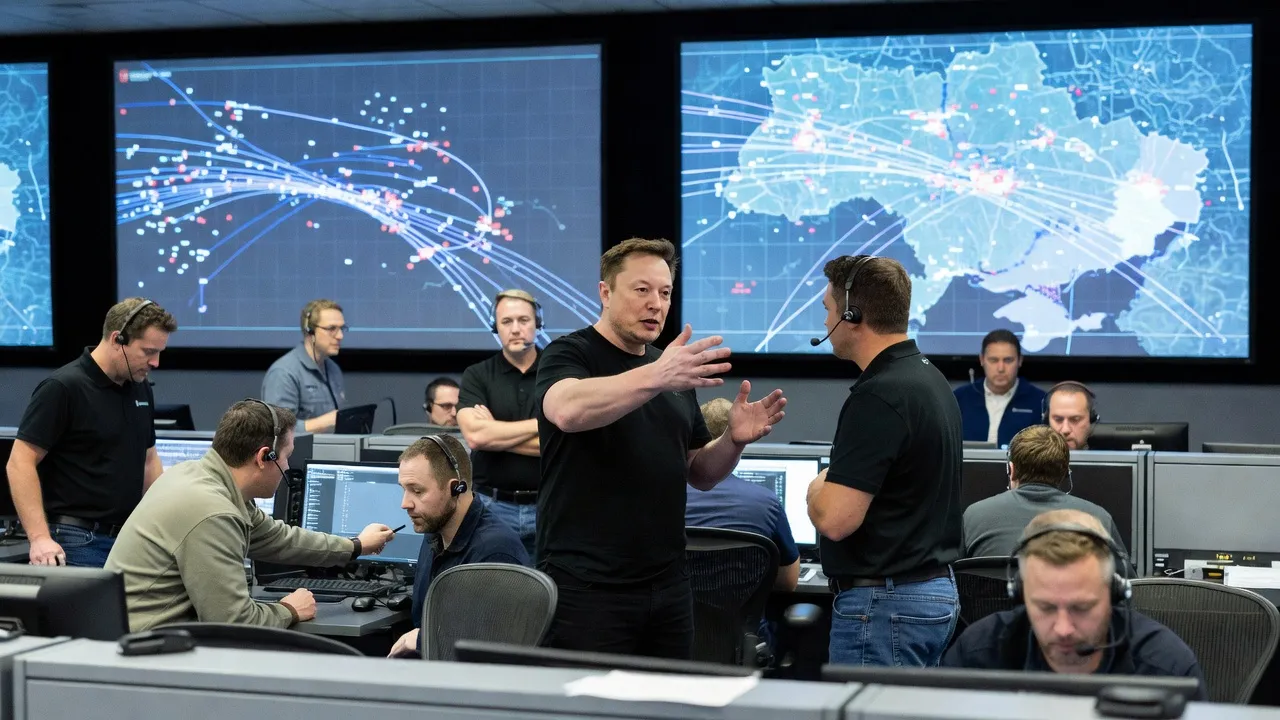
SpaceX has prevented the military version of Starlink from operating beyond 100 mph (160 km/h), according to advisor Serhiy Beskrestnov as cited by Free Press Journal.
- 02
The 7th rapid reaction corps says the connection can drop for 10 to 20 seconds at 110-120 km/h and that units have cancelled missions.
- 03
Musk claims that the limits of Starshield are set by the US army or the president, and that Starlink is limited to civilian or defensive uses.
ANALYSIS
New Delhi, October 15, 2026. The Indian press is treating the episode as a textbook case on the border between commercial service and military tool. The Hindu BusinessLine recalls that Starlink, "SpaceX's main profit driver," has over 11,000 satellites and around 13 million subscribers, from households to major airlines. It specifies that Starshield, the military version designed for the Pentagon, relies in many cases on the same satellite technology, even if Elon Musk presents the two systems as separate.
The factual thread comes from the Free Press Journal, which quotes Reuters. Presidential adviser Serhiy Beskrestnov indicated on Telegram that SpaceX had prevented its "military-grade" version from functioning beyond 100 miles per hour (160 km/h), without warning the Ukrainian forces. The 7th rapid reaction corps, in the southeast, specified that the connection could drop 10 to 20 seconds at 110-120 km/h, and that some units had to cancel missions. The newspaper also notes that Starlink does not work in Russia: the drones that strike the Russian oil industry use other means of communication.
On Wednesday, October 14, Musk responded on X: "The Starshield systems belong to the US government and are controlled by it," with speed or usage limits set by the US military or the president. Starlink, a commercial service, would be limited to civilian or defensive activities, as an offensive action would be "inappropriate for a commercial company."
The Times of India focuses on Washington. The daily links the restriction to the lack of usual alert from Western partners before Russian ballistic missiles on Kyiv, and to fears of losing access to US intelligence. It mentions the agreement between Donald Trump and Vladimir Putin to import Russian diesel, and Trump's statement on Saturday, October 10, that it was time for Ukraine to have a new president. It recalls that Trump claims Washington has not stopped sharing intelligence, and that his efforts to end the fighting have produced no progress.
The Free Press Journal notes that the reason for the restriction is not clear, while situating it at a time when Washington is pressing Kyiv to stop its strikes on Russian refineries.