
DOMINANT ANGLE
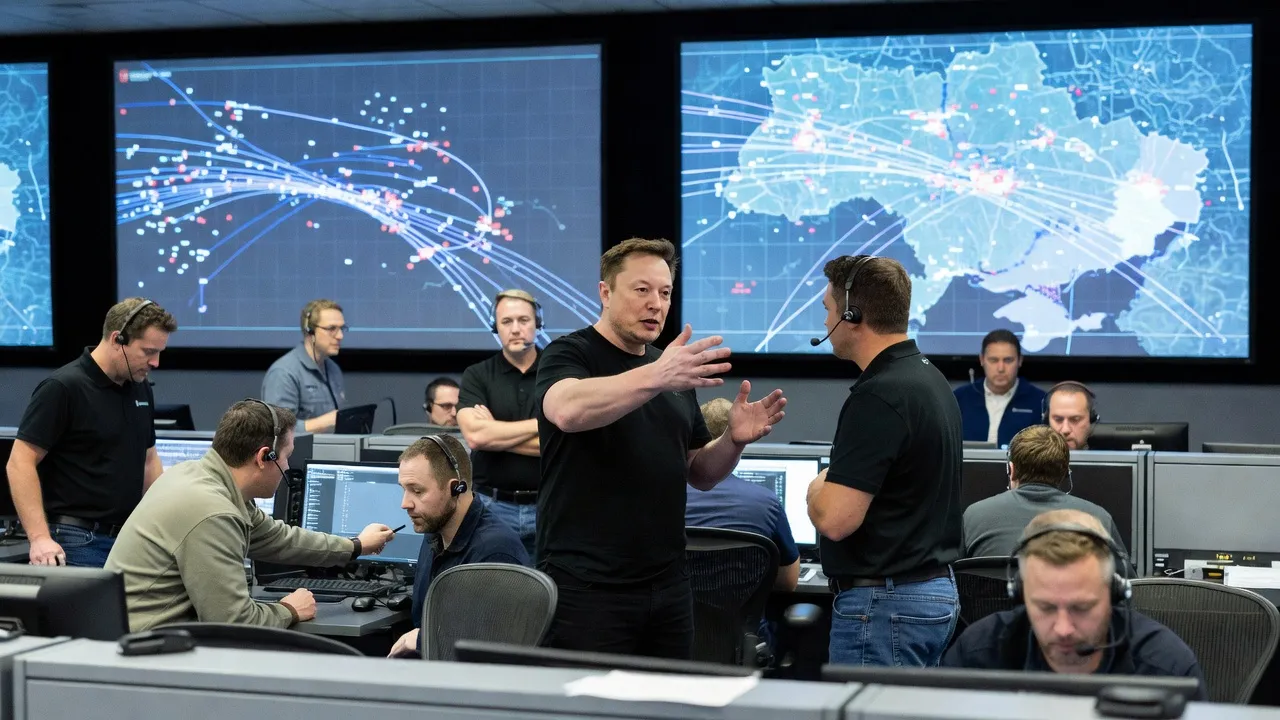
Belgrade is breaking down the Ukrainian army's dependence on an American network: the Serbian press is holding onto Musk's phrase that the decision ultimately falls to the President of the United States.
Dominant angle identified — does not reflect unanimity of this country’s media
KEY POINTS
- 01
According to Beskrestnov, SpaceX has limited the speed of Starlink terminals at night to 160 km/h without notifying Ukrainian officials (Blic, N1).
- 02
Musk: Starshield systems belong to the US government, limits are decided by the US military and, ultimately, by the President of the United States (Politika, N1).
- 03
Shahed jet drones fly at over 310 km/h, making their pursuit almost impossible under the ceiling, according to the Institute for the Study of War (Blic).
ANALYSIS
Belgrade, October 15, 2026. The Serbian press is treating the Starlink episode as a demonstration of dependence: that of a warring army on a network owned by an American entrepreneur, and beyond that, on Washington.
N1 Serbia reports that Ukrainian drones have lost some of their combat capability after the sudden introduction of restrictions on Starlink terminals, according to officials in Kiev, who had just suffered another night of missile strikes. Sergey Beskrestnov, an advisor to President Volodymyr Zelensky, indicated that SpaceX had capped the speed of terminals mounted on drones during the night. The slower attack drones become easier targets for Russian defense. Beskrestnov added: "Obviously, this gesture cannot be a coincidence and it is related to the current political situation," without elaborating. N1 notes that neither SpaceX nor the White House initially commented, and recalls that Politico had published on October 13 that Donald Trump could suspend intelligence support to Kiev or pressure Musk to cut off Starlink.
Blic, quoting a BBC text, explains why the issue is vital. The 160 km/h speed cap, which officials had not been informed about, makes it almost impossible to pursue Shahed jet drones, which fly at over 310 km/h. According to George Barros, from the Institute for the Study of War, Starlink is the "backbone of military communications in Ukraine" and there is no ready-made substitute.
Politika focuses on Musk's response on X: Starshield systems belong to the US government, speed or usage limits are set by the US military, and the final decision rests with the president. Starlink, a commercial service, would be reserved for civilian and defensive activities, not offensive operations. The daily quotes, via the Tanjug and Ukrinform agencies, connection losses at speeds ranging from 72 to 161 km/h depending on the units, which hinders interceptor drones, logistics, and reconnaissance.
The overall tone remains factual and centered on the statements of the protagonists: Kiev's sovereignty over its own communications is implicitly raised by Musk's admission that the final word belongs to the White House. The articles do not provide any specific Serbian interpretation nor mention European reactions.