
DOMINANT ANGLE
Ottawa is first examining the legal qualification of the UN report, which classifies the two American strikes in February as war crimes and the Iranian repression as crimes against humanity.
Dominant angle identified — does not reflect unanimity of this country’s media
KEY POINTS
- 01
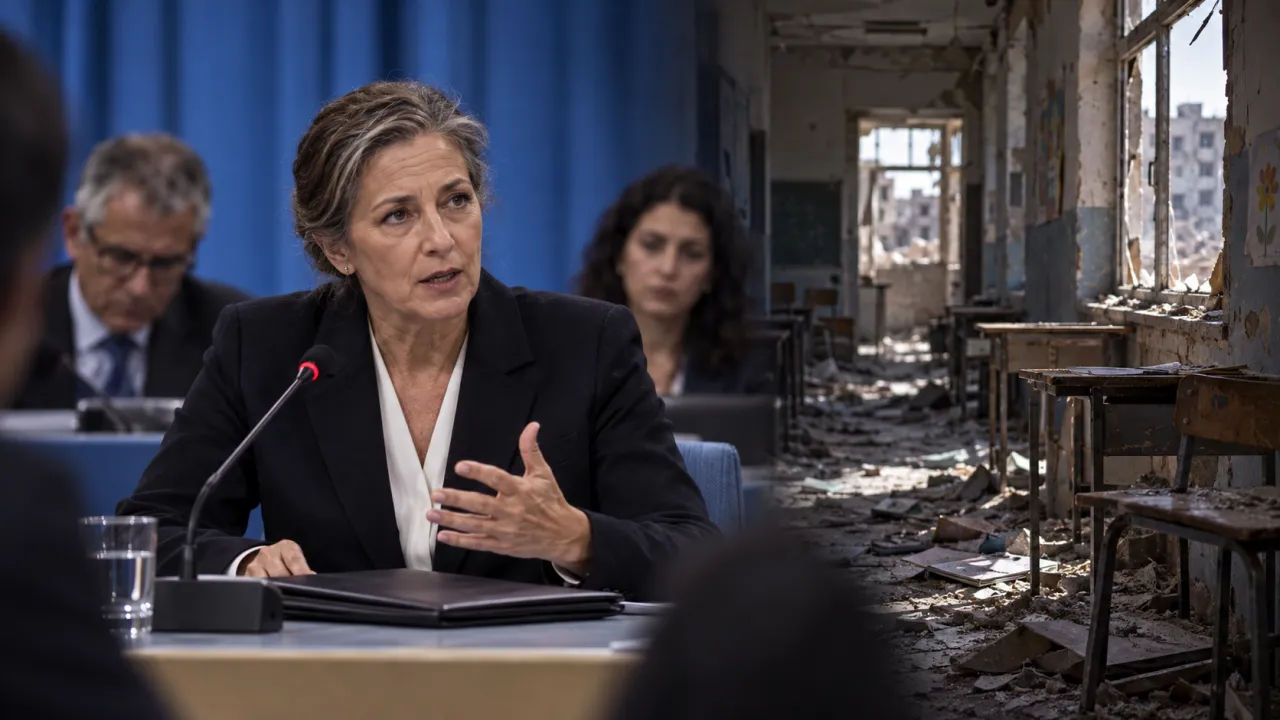
The UN mission says it has reasonable grounds to believe that the United States committed war crimes during two strikes in February, on an Iranian school and sports complex.
- 02
The strike on the Shajareh Tayyebeh primary school in Minab killed over 150 people, including about 120 schoolchildren, according to Iranian authorities.
- 03
The report, intended for the Human Rights Council in Geneva, also concludes that Iranian authorities committed crimes against humanity in the suppression of anti-government protests.
ANALYSIS
Ottawa, September 18, 2026. Canadian newsrooms are repeating, almost word for word, the UN dispatch released on Thursday: the International Independent Fact-Finding Mission on Iran, mandated by the UN, says it has "reasonable grounds" to believe that the United States is responsible for two military strikes carried out in February against an Iranian school and sports facility, and that these strikes constitute war crimes. The same report, intended for the Human Rights Council in Geneva, concludes that Iranian authorities have committed crimes against humanity in suppressing anti-government protests that began in late December, even before Washington and Israel launched their airstrikes against Iran on February 28.
CBC News and the Globe and Mail detail the strike on the Shajareh Tayyebeh primary school in Minab: over 150 people killed, including about 120 schoolchildren, according to Iranian authorities. UN experts describe this attack as indiscriminate, causing civilian deaths and damage to civilian infrastructure, which constitutes a war crime under international law.
The report emphasizes a specific point: the US military did not update its targeting databases concerning this school, which is located near a naval complex of the Revolutionary Guards, nor confirm that it was a military target. For the mission, this goes beyond simple negligence.
The two Canadian titles report that the Iranian and American permanent missions in Geneva did not immediately respond to requests from Reuters. They recall the consistent positions of the two capitals: Washington asserts that its military operations respect the law of armed conflict, Tehran rejects accusations of systematic human rights violations on its part.
None of the two articles consulted mention an official Canadian reaction. The coverage is limited to relaying the conclusions of the UN mission and the legal qualifications it retains - war crime for the American strikes, crime against humanity for the Iranian repression - without the federal government being quoted or questioned on this matter.








