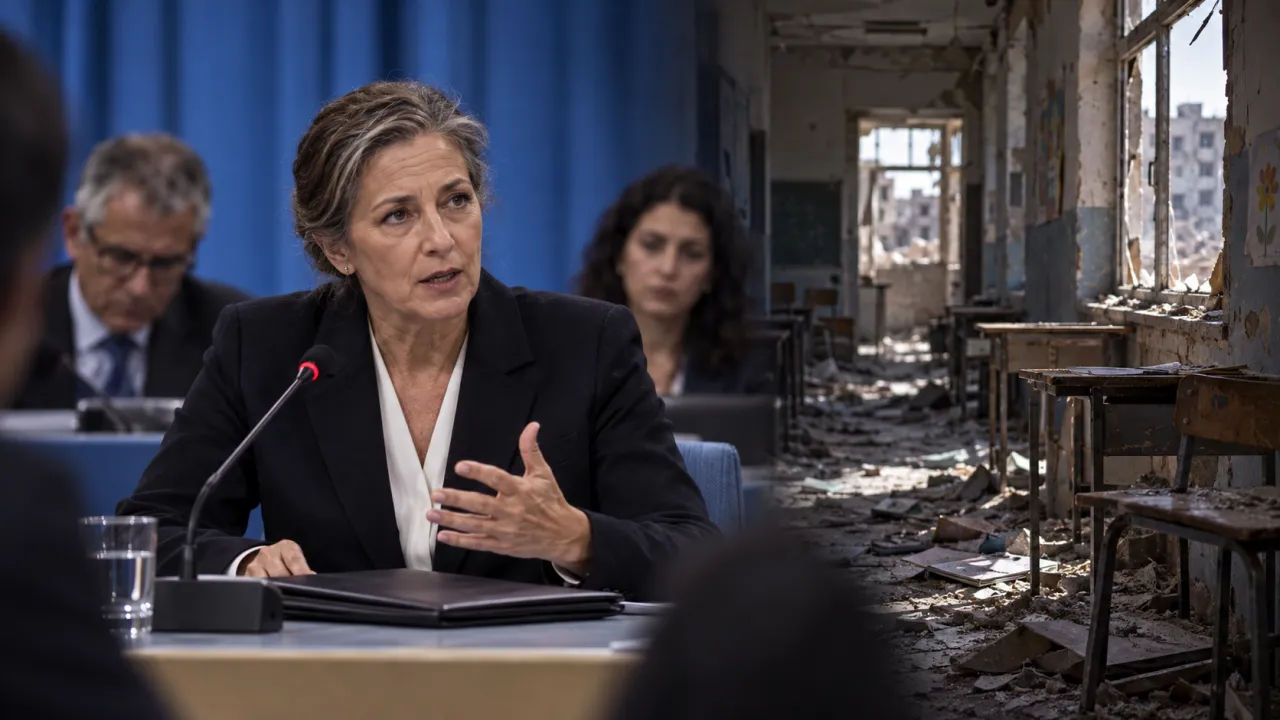

DOMINANT ANGLE
Lisbon retains particularly the legal qualification of the UN report: war crime for the American strike on the Minab school, crime against humanity for the Iranian repression, without dwelling on the concrete consequences in Geneva.
Dominant angle identified — does not reflect unanimity of this country’s media
KEY POINTS
- 01
The UN mission has "reasonable grounds" to believe that US forces committed a war crime by striking the Shajareh Tayyebeh primary school in Minab on February 28, with Tomahawk missiles and a tungsten warhead.
- 02
More than 150 people were killed at the Minab school, according to Iranian authorities (SAPO Notícias).
- 03
The same report concludes that Iranian authorities committed crimes against humanity in the repression of anti-government protests that began late December (Observador, citing Reuters).
ANALYSIS
Lisbon, September 18, 2026. The Portuguese press reported on Thursday the conclusions of the report by the International Independent Fact-Finding Mission on Iran, mandated by the UN Human Rights Council. According to SAPO Notícias, the mission claims to have "motivos razoáveis" (reasonable grounds) to believe that the United States committed war crimes during two military strikes in February against a school and a sports complex. The document, to be presented on Monday to the Human Rights Council in Geneva, particularly highlights the attack on February 28 against the Shajareh Tayyebeh primary school in Minab: American forces launched Tomahawk missiles against a clearly identifiable school, as well as another missile with a tungsten warhead. The mission describes this strike as "indiscriminée" (indiscriminate). SAPO recalls that in Minab, over 150 people were killed, according to Iranian authorities. SAPO also notes that these February 28 strikes are part of a series of American and Israeli attacks against Iran, and that the second case examined by the mission, in Lamerd, targeted a sports complex and a residential neighborhood.
The Observador, in its "A Guerra Traduzida" bulletin, cites Reuters to place the report in a broader context: the mission examined both American military conduct and the Iranian government's response to the unrest that began in late December. On the latter point, the UN investigation concludes that Iranian authorities committed crimes against humanity in the deadly repression of anti-government protests. Both media outlets note that Washington had, even before publication, claimed that its military operations respected the law of armed conflict, while Tehran continues to systematically reject accusations of human rights violations.
Neither SAPO nor the Observador provides details on the concrete actions the Human Rights Council could take in response to this report, nor the exact figures of Iranian repression mentioned in the UN dossier. The Portuguese coverage remains focused on the legal qualification itself: war crime for the school attack, crime against humanity for the repression, presented as the two sides of the same report submitted to Geneva.








