
DOMINANT ANGLE
London is measuring the diplomatic consequences of the UN report, between the military dilemma of Trump and the granting of Iranian visas in the midst of war.
Dominant angle identified — does not reflect unanimity of this country’s media
KEY POINTS
- 01
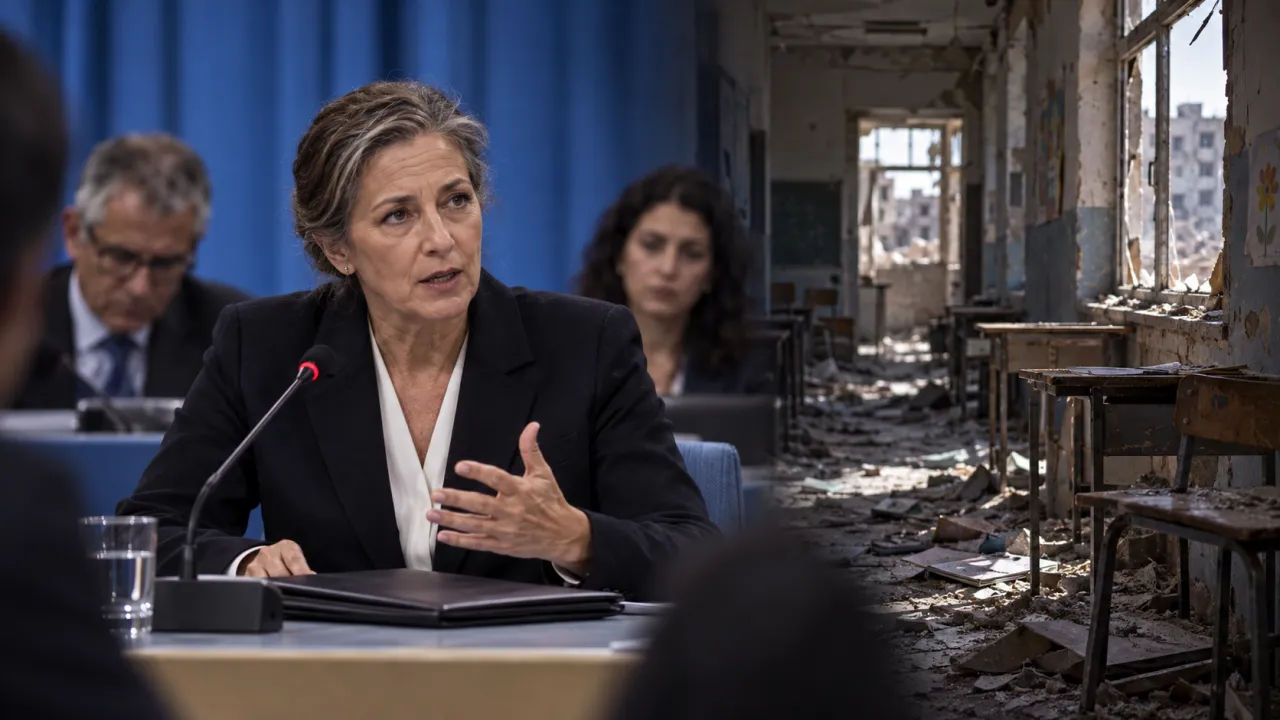
The Fact-Finding Mission report on Iran establishes "reasonable grounds" for US war crimes in Minab (at least 156 dead, including 120 children) and Lamerd (22 civilians killed or injured).
- 02
Washington has granted visas to the Iranian president and his foreign minister for the UN General Assembly in New York next week, despite the ongoing war.
- 03
Asked by Axios, Donald Trump mentions a "big decision" to come on Iran: "Do I want to go in and wipe them out or not?"
ANALYSIS
London, 18 September 2026. The report by the International Independent Fact-Finding Mission on Iran, mandated by the UN, is making headlines in the British press mainly due to its shockwave in Washington. The text, intended for the Human Rights Council in Geneva, establishes "reasonable grounds" to believe that the United States committed war crimes during two strikes in February: one on the Shajareh Tayyebeh primary school in Minab, where at least 156 civilians died according to investigators — including 120 children, a toll that Iranian state media puts at 168 — and another on a sports complex and residential area in Lamerd, which killed or injured 22 civilians. According to the mission, US forces relied on intelligence placing a commander of the Revolutionary Guards at the school, without verifying or confirming that the site remained a legitimate target. Washington had already denied striking Lamerd and said it was investigating Minab; a State Department official now claims that the US gives no credibility to the report's conclusions. The same document concludes that there were crimes against humanity on the Iranian side, for the repression of January's protests, with killings in all 31 provinces "on a staggering and unprecedented scale". Tehran has not commented on this new report, simply recalling that it rejects any accusation of systematic violations.
What the British press is mainly taking away from this is the impact on the conduct of the war itself. Asked by Axios, Donald Trump mentioned a "big decision" to come: "Do I want to go in and annihilate them [the Iranian regime] or not? It's a big decision. Anything can happen with me." Another sign of this climate: Washington has granted visas to the Iranian president and his foreign minister to attend the UN General Assembly in New York next week — despite the war still being at an impasse. For London's newsrooms, the Geneva report therefore settles nothing: it is part of an ongoing diplomatic balance of power between Washington, Tehran, and the UN, where the judicial issue weighs less, for now, than the American president's political calculation.








