China — news through its media
Stories followed in this country, with their framing set against the rest of the world.
253 subjects found

Meta and YouTube Found Liable for Minor Addiction: Silicon Valley's Big Tobacco Moment
A Los Angeles jury has ordered Meta and Google to pay $6 million to a young woman rendered dependent on Instagram and YouTube since childhood, in a landmark verdict treating social media platforms as defective products. This decision, comparable to the Big Tobacco moment of the 1990s, paves the way for more than 2,000 similar lawsuits and forces the world to rethink how digital platforms are regulated for minors.



 +6
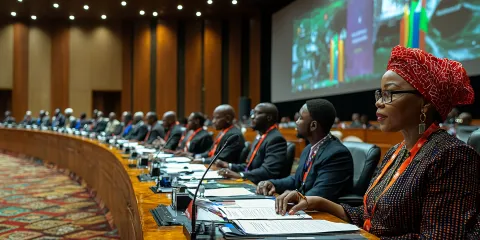
MC14 in Yaoundé: Global Trade Tested by Carbon Border Tax
The 14th WTO Ministerial Conference opens in Yaoundé, Cameroon — a first on the African continent. At the heart of debates: the European Union's Carbon Border Adjustment Mechanism (CBAM), which entered into force in January 2026 and requires importers to pay for CO2 emissions embedded in products. Developing countries denounce a form of green protectionism while the EU defends compatibility with WTO rules. 166 countries are negotiating the future of global trade.

 +8

US Medicaid Cuts: $665 Billion Stripped from State Healthcare Budgets
The One Big Beautiful Bill Act enacts historic Medicaid cuts, reducing federal spending by $911 billion over a decade. States face massive budget shortfalls while 7.5 million Americans risk losing health coverage. The debate pits conservative fiscal austerity against the defense of the social safety net.
+8
Russia's Economic Stagnation: The Price of Militarization
Russia's economy slides toward stagnation with growth forecast around 1% in 2026, after two years of 4%+ expansion. The Central Bank cut its key rate to 15% but inflation remains sticky around 6.5-7%. With 38% of the federal budget devoted to defense and security, an acute labor shortage, and oil revenues down 50%, the war economy model shows its structural limits.

 +6
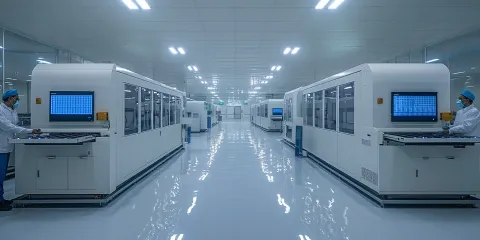
India Accelerates Semiconductor Mission: Toward Chip Self-Reliance
India consolidates its semiconductor self-reliance strategy with 10 approved plants totaling $18.3 billion in investments. The HCL-Foxconn joint venture in Uttar Pradesh, inaugurated by Modi, targets 36 million chips per month by 2028. S&P raises India's FY27 growth forecast to 7.1%, driven by the China Plus One strategy attracting global supply chains.

 +6

Zhongguancun Forum 2026: China Unveils Tech-Industry Integration Strategy
The 2026 Zhongguancun Forum brings together over 1,000 participants from 100 countries in Beijing under the theme 'Full Integration Between Technological and Industrial Innovation.' China showcases its ambitions in 6G, brain-computer interfaces, intelligent robots and AI, targeting 10 trillion yuan in AI-related industries by 2030. A strong signal in the global technology race.

 +8

Moscow Internet Blackout: Russia Accelerates Digital Lockdown Under Cover of Security
Since early March, Moscow has suffered massive mobile internet outages affecting all four major carriers. The Kremlin justifies the blackouts with the Ukrainian drone threat, but analysts see an acceleration of digital control. Economic losses exceed $38-63 million in five days, while a February 2026 law gives the FSB power to cut communications nationwide.
+6
Zhongguancun Forum 2026: China Accelerates Its Tech Offensive in AI and Humanoid Robots
The Zhongguancun Forum opens in Beijing from March 25-29 under the theme of integration between technological and industrial innovation. China showcases its advances in AI, humanoid robots, brain-computer interfaces and 6G, asserting its ambition to dominate tomorrow's technologies.
+6
India Faces Worst LPG Crisis in Its History: 330 Million Households Threatened
The closure of the Strait of Hormuz plunges India into an unprecedented energy crisis. With 90% of its LPG imports blocked, the Modi government invokes the Essential Commodities Act and increases domestic production by 28% in emergency measures. Moody's identifies India as the world's most vulnerable economy.


 +2

Global Energy Crisis: Asia on the Brink After Strait of Hormuz Closure
Iran's closure of the Strait of Hormuz triggers the worst energy crisis since the 1970s. The Philippines declares a national state of emergency with only 45 days of fuel remaining, while Japan, South Korea and India take drastic energy austerity measures.
 +6

Global AI Regulation: US Framework Redefines the Rules of Technological Competition
The Trump administration's announcement of a national legislative framework for artificial intelligence is reshaping the global regulatory landscape. Between the US deregulatory approach, the European normative model, and China's sovereignty-focused ambitions, each country is recalibrating its strategy in the face of the century's most transformative technology.
+8Understand global stakes from every perspective.
718 subjects · 75 countries · 8174 perspectives