China — news through its media
Stories followed in this country, with their framing set against the rest of the world.
253 subjects found
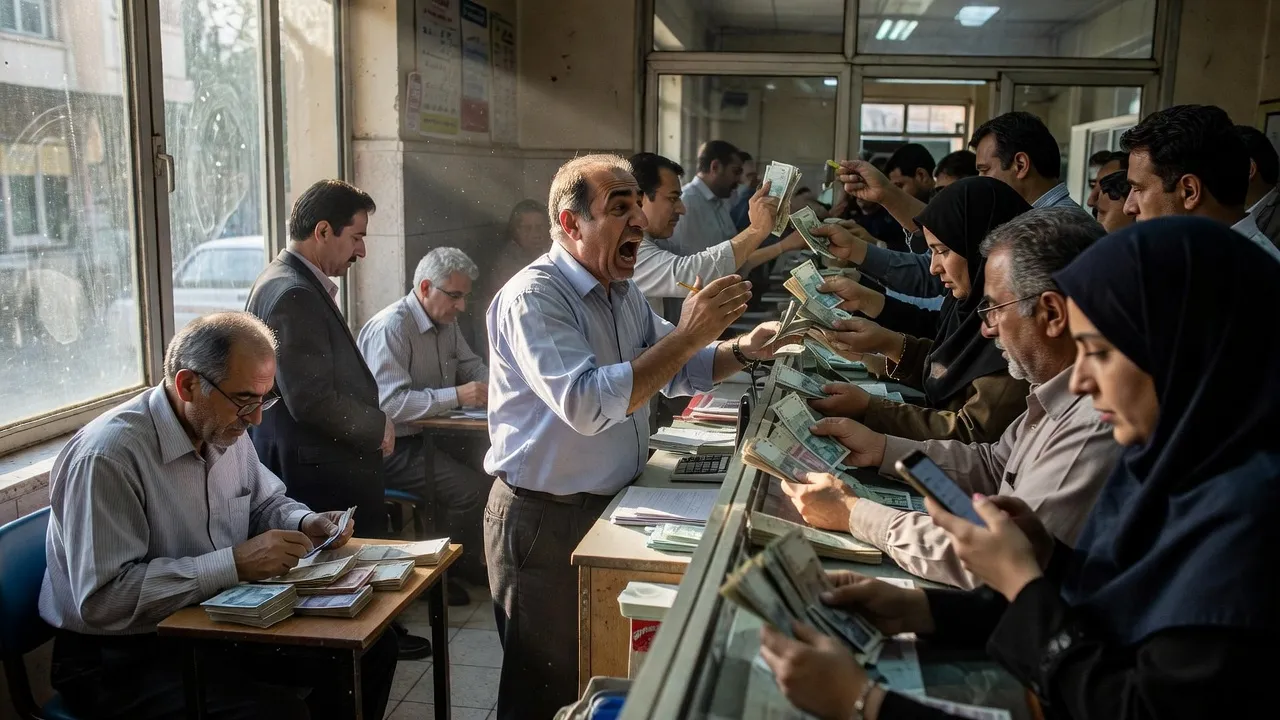
Washington declares 'economic war' on Iran and urges allies and China to cut all ties
US Treasury Secretary Scott Bessent announced a campaign to collapse Iran's economy, telling other capitals they are either with Washington or against it. Tehran calls the economic war a breach of international law and threatens a military response. Shipping traffic through the Strait of Hormuz is falling.


 +6
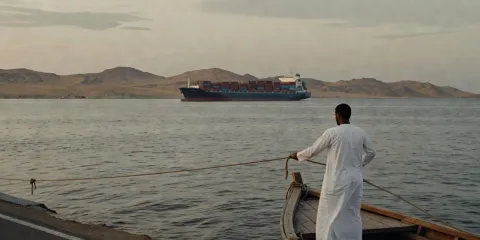
Trump threatens to bomb Oman, a US ally, as the Iran agreement expires
Donald Trump threatened to bomb Oman, a US ally, just as the memorandum framing the confrontation with Iran expired and Tehran announced an escalation around Hormuz. Muscat has served for fifteen years as a channel between Washington and Tehran. Twelve countries cover the sequence: the Gulf reads it as a warning about what allied status is worth, while Nigeria and Singapore read it through the price of crude.

 +8
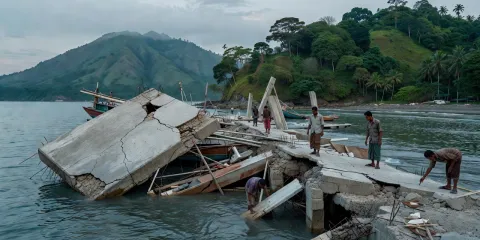
Magnitude 7.7 earthquake off Flores: the tsunami alert crosses the Pacific, and the death toll ranges from 1 to 20
A magnitude 7.7 earthquake struck off Flores island, Indonesia, on 15 August. The terminal of Maumere port collapsed onto boarding passengers. The tsunami alert, issued then lifted, mobilised the Peruvian and Ecuadorian navies thousands of kilometres away. The death toll ranges from 1 to 20 depending on which level of the Indonesian state is quoted.


 +10

Karoline Leavitt leaves the White House: a family decision for some, an electoral calendar for others
Donald Trump announced on 12 August that his press secretary would leave at the end of the month to become an outside adviser. At 28, she was the youngest in history. She cites her family; part of the press notes she is leaving two months before the midterm elections. No successor has been named.

 +14

Death of Zhu Rongji, the former premier who took China into the WTO — and whose age Beijing and the West report differently
Xinhua announced the death of Zhu Rongji, premier from 1998 to 2003, on 12 August in Beijing. He engineered China's WTO entry in 2001 and the restructuring of state-owned enterprises, at the cost of tens of millions of layoffs. A rare detail: Chinese agencies say he died at 98, the Western press at 97.
+4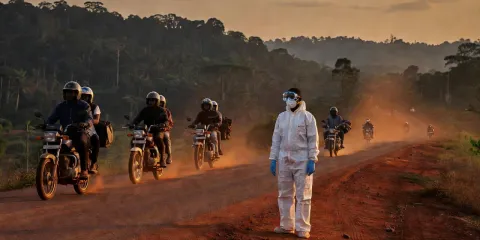
Ebola in DR Congo: more than 2,000 dead, and the WHO reveals the outbreak had been spreading since February
Congolese authorities report 2,011 deaths and 4,381 confirmed cases. The WHO reveals that the outbreak, declared on 15 May, had actually begun in February — early cases having been attributed to malaria and typhoid. "We are chasing the virus, it is ahead of us." The response is hampered by armed conflict, poor roads and unpaid health workers.

 +4
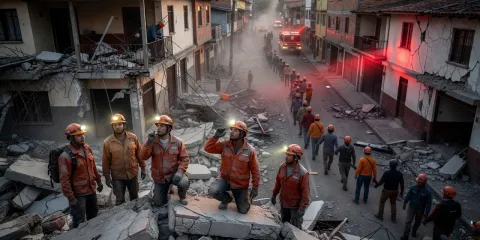
Magnitude 7.4 Earthquake in Colombia: National Disaster Declared Three Days After Espriella's Inauguration
At 7:34 a.m. on Monday, a magnitude 7.4 earthquake struck western Colombia, with its epicentre in Chocó. Felt as far as Quito, Panama and Caracas, it collapsed Pereira's airport and damaged hundreds of buildings. The president, in office for three days, declared a national disaster. Depending on the newsroom, the toll runs from 111 to 138 dead — and more than 2,000 people are registered as missing.


 +16
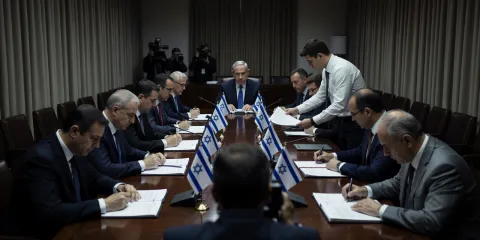
Netanyahu Rejects Trump's 15-Point Gaza Plan and Ties Any Withdrawal to Hamas Disarming
"Israel rejects the 15-point document." At a cabinet meeting on Sunday, Benjamin Netanyahu formally refused the roadmap published on 31 July by Donald Trump's Board of Peace and accepted by Hamas. No withdrawal before "genuine" disarmament, and no Palestinian state while he is in office. On the ground, though, Israel has scaled back its strikes since 3 August. Elections fall on 27 October.


 +12
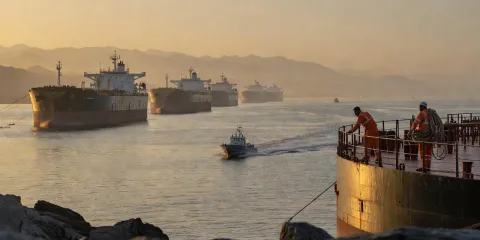
Iran Sets Six Conditions for Reopening Hormuz as the Revolutionary Guards Call the Strait a 'Theatre of War'
On Saturday the secretary of Iran's Supreme National Security Council published six preconditions for reopening the Strait of Hormuz: an end to the war, the lifting of the naval blockade and of sanctions, the withdrawal of US forces, compensation for war damage and the release of frozen assets. On Sunday the Revolutionary Guards hardened the line while Oman negotiated a temporary shipping corridor and Washington spoke of 'some progress'. A fifth of the world's oil is waiting.
 +19
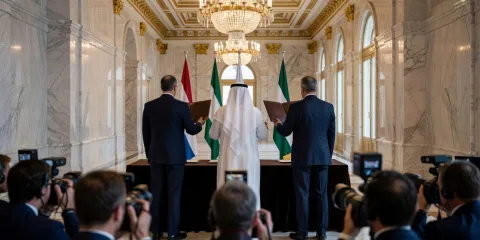
Saudi Arabia, Turkey and Pakistan sign the Mecca defence pact
On 7 August 2026, Mohammed bin Salman, Recep Tayyip Erdoğan and Shehbaz Sharif signed an agreement at Al-Safa Palace stating that an armed attack on any one of the three countries will be treated as an attack on them all. Riyadh insists it is 'neither a military axis nor a sectarian bloc'; thirteen countries read it differently, and Iran, its implicit target, is absent from the account.
 +9
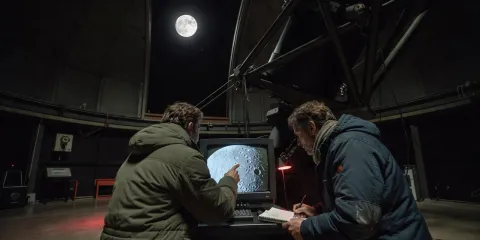
A SpaceX rocket stage crashes into the Moon and leaves a crater
On 5 August 2026 at 06:35 GMT, the upper stage of a Falcon 9 launched in January 2025 struck the Moon at 8,690 km/h after eighteen months adrift. The object is the same everywhere; its meaning is not. Twelve countries read it in turn as a scientific windfall, a space-debris problem, or a chance to prove their own capabilities — and the United States, where the rocket came from, is absent from the account.
 +8
Understand global stakes from every perspective.
718 subjects · 75 countries · 8174 perspectives