Germany — news through its media
Stories followed in this country, with their framing set against the rest of the world.
432 subjects found
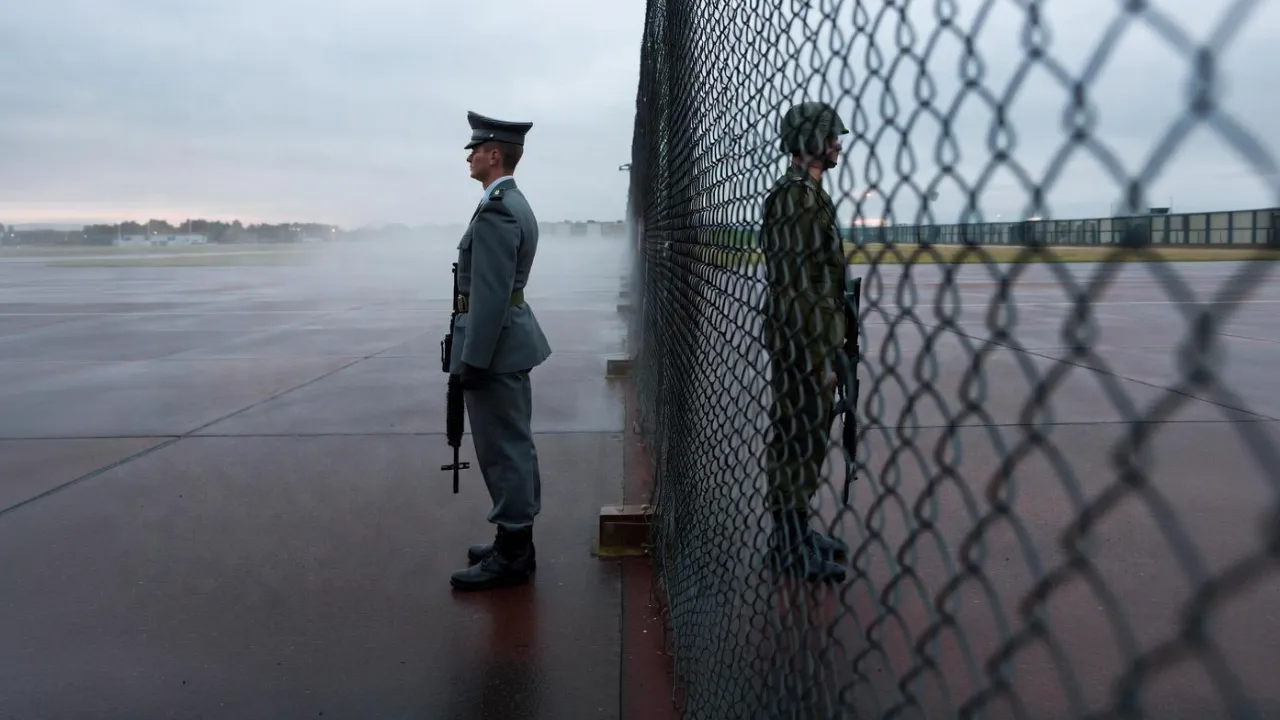
Trump Threatens to Pull US Troops from Germany: The Transatlantic Fracture Deepens
On April 30, Donald Trump posted on Truth Social that Washington is 'studying and reviewing the possible reduction of troops in Germany,' with a decision expected 'over the next short period of time.' The threat came directly after Chancellor Merz said Iran was 'humiliating' the US at the negotiating table — a comment Trump flatly rejected, calling Merz someone who 'doesn't know what he's talking about.' Berlin says it's 'prepared.' The next day, Trump extended the threat to Italy and Spain. South Korea, with 28,500 US troops of its own, is watching anxiously.


 +5

London's Golders Green Stabbing: Two Jewish Men Attacked in Antisemitic Terror Incident as UK Raises Threat Level
A 45-year-old British-Somali man stabbed two Jewish men in London's Golders Green neighborhood on April 29, in an attack police declared a terrorist incident. The UK raised its national terror threat level to 'severe' for the first time since 2021, pledged £25 million for Jewish community security, and Prime Minister Starmer pointed the finger at Iran as the indirect orchestrator of a months-long wave of antisemitic attacks — arson at synagogues, attempted bombings near the Israeli embassy, and now a knife attack on the street.


 +9

UAE Quits OPEC: The End of Gulf Solidarity
Sixty years of petro-solidarity shatter as the UAE walks out of OPEC, leaving Riyadh alone at the head of a fractured cartel and reshaping the global energy map.

 +10

Trump-Putin: The Call and the May 9 Ceasefire
Trump says he asked Putin for 'a little bit of a ceasefire' on Victory Day — an offer that Kyiv receives with suspicion and that Europe reads as a Russian communications maneuver.
 +8

Musk versus OpenAI: the trial that judges whether artificial intelligence belongs to humanity
Elon Musk is claiming $150 billion and the soul of AI: the trial against Sam Altman will determine whether a nonprofit promise can survive the race for technological power — and who controls the artificial intelligence of tomorrow.
+4
Iran proposes reopening Hormuz strait in exchange for end to US naval blockade
Iran has submitted a formal proposal: reopen the Strait of Hormuz if Washington lifts its naval blockade — while Trump declares Iran in 'state of collapse' and Merz accuses it of waging war without strategy.

 +13

NATO Wounded by Trump: Merz Accuses Washington of Humiliation, Alliance Considers End to Annual Summits
German Chancellor Friedrich Merz has publicly stated that Iran humiliated the United States in their conflict, while NATO debates eliminating its annual summits and Russia and North Korea deepen their military cooperation. The transatlantic fracture is becoming institutionalized.
 +5

Iran-Strait of Hormuz: Tehran Plays Moscow Card While Trump Awaits a Phone Call
Facing military stalemate, Iran proposes reopening Hormuz in exchange for ending the U.S. blockade, while Foreign Minister Araghchi bypasses Pakistani mediation by visiting Putin. Trump responds that all Tehran needs to do is call. Europe grows impatient.


 +13

King Charles III's State Visit to the United States: The 'Special Relationship' Under Its Greatest Strain Since Suez
On April 27, 2026, King Charles III and Queen Camilla begin a four-day state visit to the United States despite a shooting at the previous evening's correspondents' dinner. The visit—which includes a state dinner at the White House, an address to Congress, and a wreath-laying at the 9/11 memorial—comes as the American-British relationship faces its gravest crisis since the Suez crisis in 1956, with Trump repeatedly criticizing Prime Minister Starmer for refusing to support the American war against Iran.
 +4

40 Years Since Chernobyl Amid War: Zelensky Accuses Russia of Nuclear Terrorism
April 26, 2026 marks the 40th anniversary of the Chernobyl nuclear disaster, commemorated by Ukraine in the context of total war. Zelensky accused Russia of 'nuclear terrorism,' recalling that a Russian drone struck the reactor containment structure in February 2025 and that drones regularly fly over the site. The IAEA calls for urgent repairs. During commemorations, Russian strikes killed at least 16 people across Ukraine.
+4
White House Correspondents' Dinner Shooting: Cole Allen Targeted Trump and Cabinet Members
On April 26, 2026, an armed man attempted to force his way into the annual White House Correspondents' Dinner in Washington, wounding a Secret Service agent and forcing Donald Trump and JD Vance to be evacuated. The suspect, Cole Tomas Allen, 31, a California tutor with a Caltech background, sent a manifesto to his family ten minutes before the attack, identifying himself as the 'Friendly Federal Assassin.' Authorities determined he targeted Trump and members of his administration.
+15Understand global stakes from every perspective.
718 subjects · 75 countries · 8174 perspectives