Israel — news through its media
Stories followed in this country, with their framing set against the rest of the world.
173 subjects found
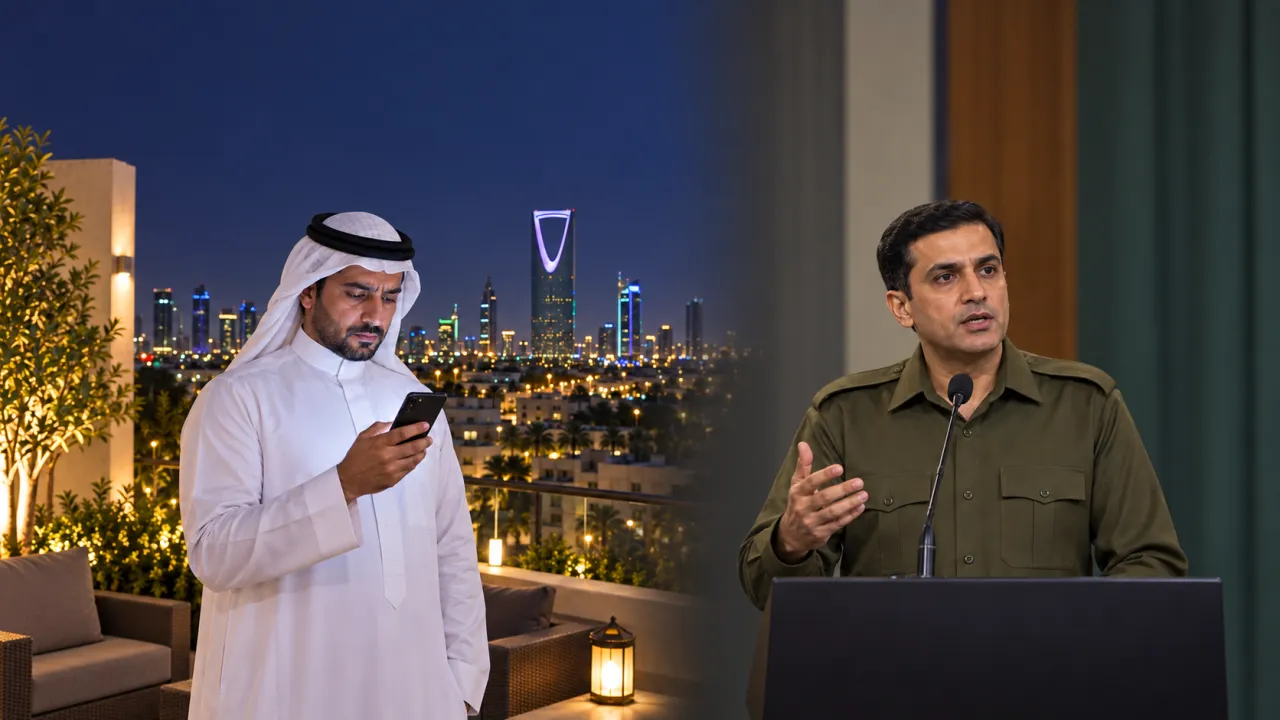
Air raid alert in Riyadh: facing the Houthi offensive, Saudi Arabia seeks support, Pakistan vows to defend it and Washington stays on the sidelines
Riyadh saw its first air raid alert on Saturday since the escalation with the Houthis, who hold Bab al-Mandab and are blockading Saudi tankers. Pakistan, bound to the kingdom by a defence pact, vows to defend it "physically"; China has privately asked Iran to rein in the Houthis, while Donald Trump is limiting himself to intelligence support, according to CBS News.


 +22
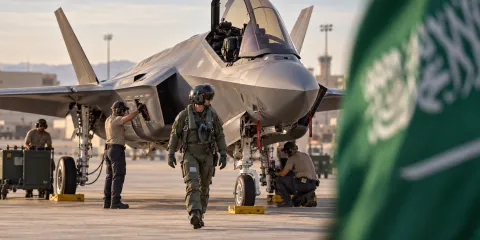
The United States approves the sale of 48 F-35 fighter jets to Saudi Arabia for $24.3 billion
The State Department on Thursday approved the potential sale of 48 F-35A jets and their engines to Saudi Arabia for $24.3 billion; Congress has yet to review it. Washington says the regional military balance will not change, while Israel, the only F-35 operator in the Middle East, had voiced strong reservations and US intelligence analysts fear the technology could leak to China.


 +4
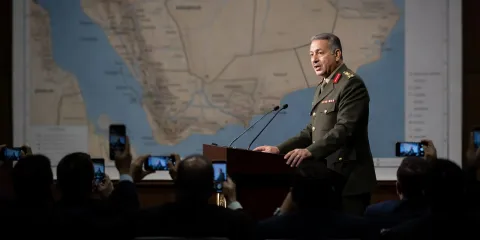
Traffic collapses in the Strait of Hormuz as the Houthis strike three Saudi cities and the Gulf meeting is postponed
The Saudi-led coalition says thirteen civilians were wounded and seven houses damaged by Houthi missile and drone fire on Khamis Mushait, Abha and Taif; its spokesman, Major General Turki Al-Malki, invokes Article 51 of the UN Charter. At the same time shipping traffic is collapsing in the Strait of Hormuz, and the meeting due between Iran and Gulf states on navigation arrangements was postponed at Riyadh's request. In Yemen, the Houthis have taken the port of Mokha and then Mayyoun island.

 +15
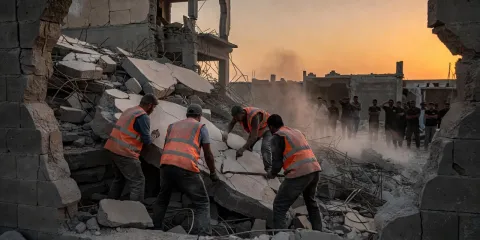
Israel on two fronts: a family killed by a strike in Gaza, Hezbollah tunnels blown up in Lebanon, the Rome talks postponed
On 11 September, the Israeli army blew up a Hezbollah tunnel network in southern Lebanon, a detonation recorded as a magnitude-4.1 tremor, and says it is ready for further strikes. In Gaza, a strike on a home killed a family of four, including two children, according to Palestinian medical sources; Israel says it killed the commander of Hamas's Khan Younis brigade. The Israel-Lebanon talks planned in Rome are postponed to October.
 +7
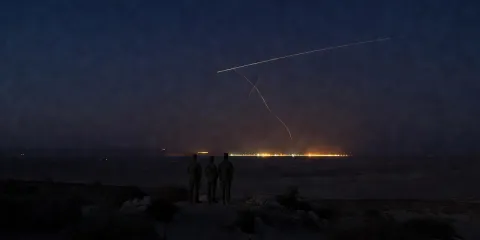
US destroys five Iranian tankers, Tehran strikes Jordan's Al-Azraq base, and Brent crude climbs back above $100
US Central Command destroyed five Iranian oil tankers on 8 September, calling it a response to two ballistic missile attempts against a Navy warship. Iran struck the Al-Azraq base in Jordan, which says it intercepted 18 of 20 missiles, then claimed attacks on shipping in the Strait of Hormuz, where one seafarer was killed and another reported missing. Brent crude passed $100 for the first time since July.


 +25
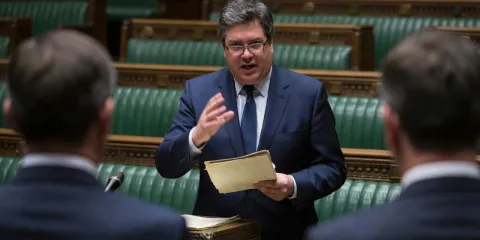
Twelve countries move to ban trade with Israeli settlements; Israel orders the British consulate closed
On Tuesday 8 September, twelve countries — the United Kingdom, France, Canada and nine European states — said they intend to ban trade with Israeli settlements in the occupied West Bank, which British Foreign Secretary Ed Miliband linked to “ethnic cleansing”. Two hours later Israel ordered the British consulate in East Jerusalem to close, told diplomats to leave and barred twelve Britons from entry. Washington said it would not follow.

 +16

Hormuz: Iran strikes Kuwait and the UAE, Oman refuses its toll, Washington cuts contact
Day five of the Hormuz escalation: Iran struck US bases located in Kuwait and the UAE — Gulf states themselves — and some twenty Emirati civilian flights were disrupted. Qatar condemned the strikes, Oman quietly rejected the toll Tehran wants to levy, and Washington says it has cut contact while floating an embargo.


 +9
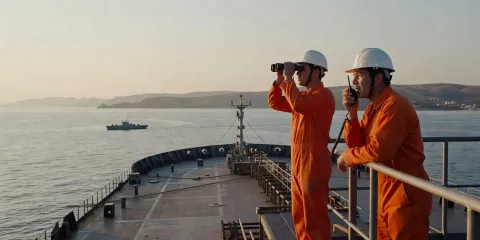
US strikes Hormuz, Iran hits back at Jordan and the Emirates: first exchange of fire in a month
After a month of calm during which Washington had shifted its effort to an economic war, US forces struck missile launchers on an island in the Strait of Hormuz on 31 August 2026. Tehran retaliated against two US bases in Jordan and targets in the United Arab Emirates, which called the attack a dangerous escalation. A tanker was hit by three projectiles in the strait's southern lane and a Saudi supertanker was intercepted. Brent rose to around 91 dollars.
+10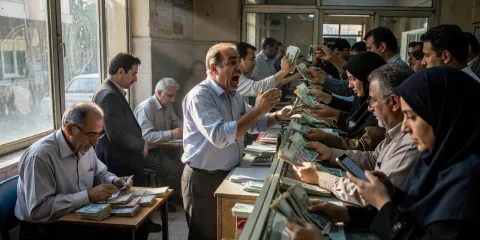
Washington declares 'economic war' on Iran and urges allies and China to cut all ties
US Treasury Secretary Scott Bessent announced a campaign to collapse Iran's economy, telling other capitals they are either with Washington or against it. Tehran calls the economic war a breach of international law and threatens a military response. Shipping traffic through the Strait of Hormuz is falling.

 +6
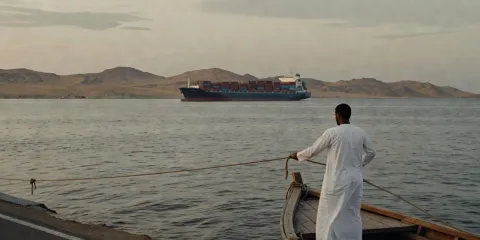
Trump threatens to bomb Oman, a US ally, as the Iran agreement expires
Donald Trump threatened to bomb Oman, a US ally, just as the memorandum framing the confrontation with Iran expired and Tehran announced an escalation around Hormuz. Muscat has served for fifteen years as a channel between Washington and Tehran. Twelve countries cover the sequence: the Gulf reads it as a warning about what allied status is worth, while Nigeria and Singapore read it through the price of crude.
 +8
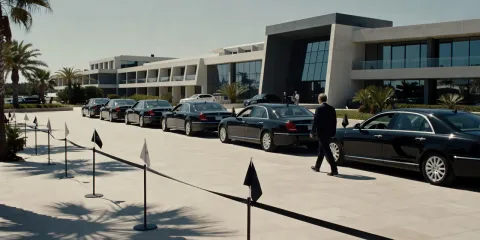
Jared Kushner meets Hamas leaders in Egypt before seeing Netanyahu
Jared Kushner, Donald Trump's envoy, met a Hamas delegation on 16 August at El-Alamein in Egypt before travelling to Israel to see Benjamin Netanyahu. The talks cover disarmament and the fifteen-point roadmap for post-war Gaza. Six countries cover the sequence; Egypt, where the meeting took place, and Qatar, the long-standing mediator, are each represented by a single outlet.
 +2
Understand global stakes from every perspective.
718 subjects · 75 countries · 8174 perspectives