India — news through its media
Stories followed in this country, with their framing set against the rest of the world.
254 subjects found
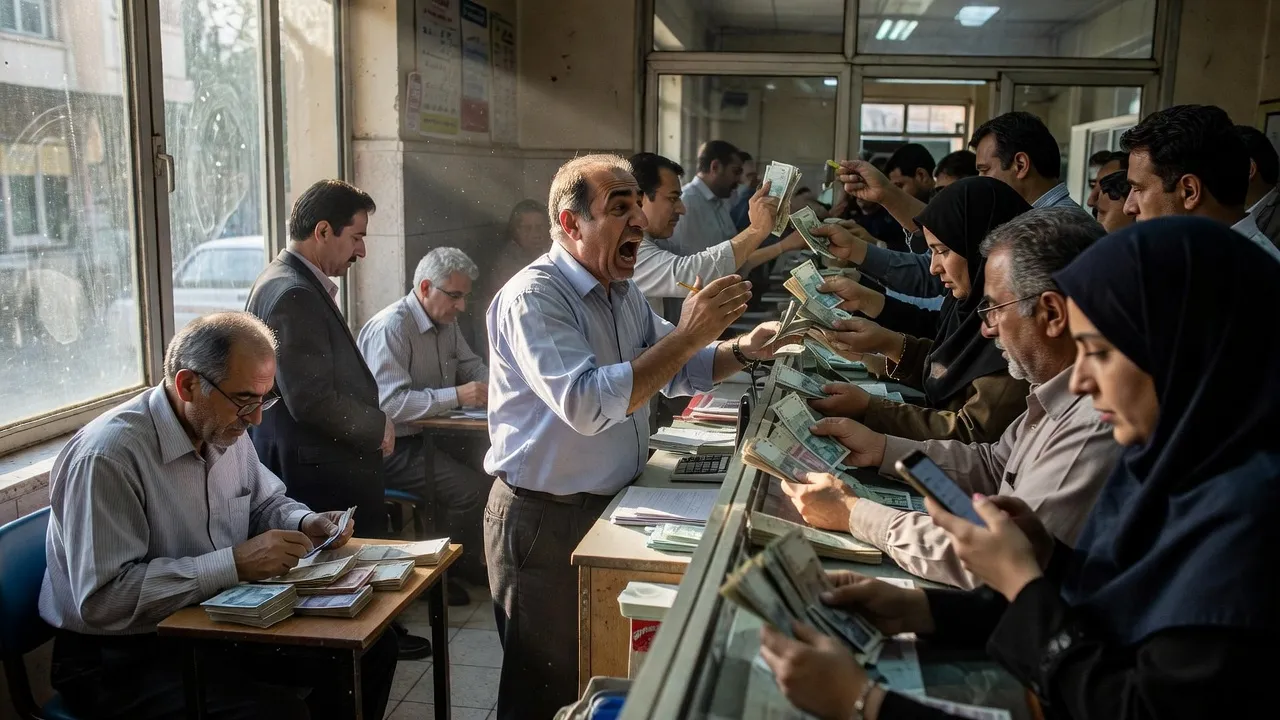
Washington declares 'economic war' on Iran and urges allies and China to cut all ties
US Treasury Secretary Scott Bessent announced a campaign to collapse Iran's economy, telling other capitals they are either with Washington or against it. Tehran calls the economic war a breach of international law and threatens a military response. Shipping traffic through the Strait of Hormuz is falling.


 +6
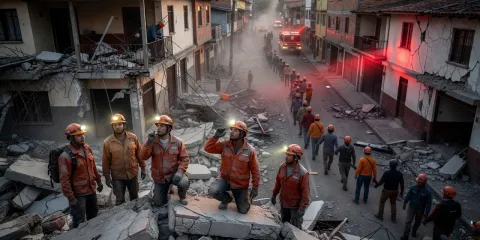
Magnitude 7.4 Earthquake in Colombia: National Disaster Declared Three Days After Espriella's Inauguration
At 7:34 a.m. on Monday, a magnitude 7.4 earthquake struck western Colombia, with its epicentre in Chocó. Felt as far as Quito, Panama and Caracas, it collapsed Pereira's airport and damaged hundreds of buildings. The president, in office for three days, declared a national disaster. Depending on the newsroom, the toll runs from 111 to 138 dead — and more than 2,000 people are registered as missing.


 +16
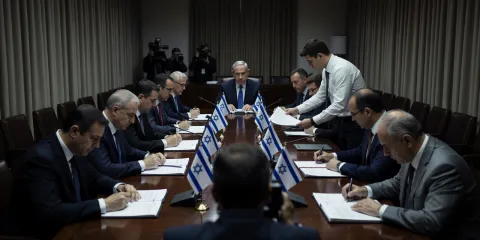
Netanyahu Rejects Trump's 15-Point Gaza Plan and Ties Any Withdrawal to Hamas Disarming
"Israel rejects the 15-point document." At a cabinet meeting on Sunday, Benjamin Netanyahu formally refused the roadmap published on 31 July by Donald Trump's Board of Peace and accepted by Hamas. No withdrawal before "genuine" disarmament, and no Palestinian state while he is in office. On the ground, though, Israel has scaled back its strikes since 3 August. Elections fall on 27 October.


 +12
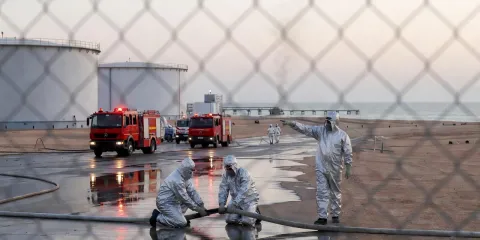
Houthis Strike an Aramco Refinery in Saudi Arabia as the UN Condemns and Yemen's War Reignites
On Sunday, Houthi forces claimed a drone strike on the Aramco refinery at Jazan on the Red Sea; Riyadh said the fire was out with no casualties. The same day, shelling of the port of Mokha killed at least seven people. Two days earlier the UN Security Council had condemned Houthi fire on the kingdom since 13 July. A conflict frozen since the 2022 truce is reigniting, two days after the Riyadh-Ankara-Islamabad defence pact.
 +10
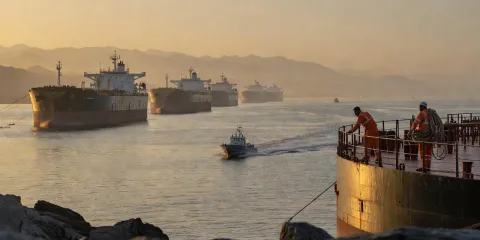
Iran Sets Six Conditions for Reopening Hormuz as the Revolutionary Guards Call the Strait a 'Theatre of War'
On Saturday the secretary of Iran's Supreme National Security Council published six preconditions for reopening the Strait of Hormuz: an end to the war, the lifting of the naval blockade and of sanctions, the withdrawal of US forces, compensation for war damage and the release of frozen assets. On Sunday the Revolutionary Guards hardened the line while Oman negotiated a temporary shipping corridor and Washington spoke of 'some progress'. A fifth of the world's oil is waiting.

 +19
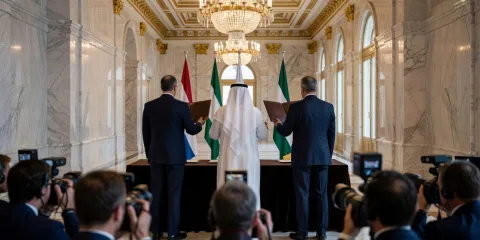
Saudi Arabia, Turkey and Pakistan sign the Mecca defence pact
On 7 August 2026, Mohammed bin Salman, Recep Tayyip Erdoğan and Shehbaz Sharif signed an agreement at Al-Safa Palace stating that an armed attack on any one of the three countries will be treated as an attack on them all. Riyadh insists it is 'neither a military axis nor a sectarian bloc'; thirteen countries read it differently, and Iran, its implicit target, is absent from the account.


 +9
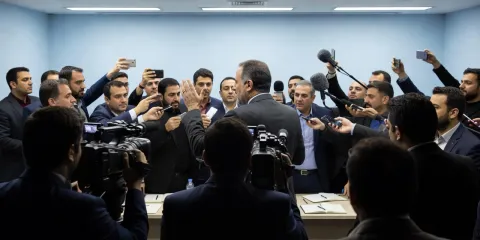
Tehran Denies the Deal Trump Announced: "A Sheer Lie"
Donald Trump says he called off a strike on Iran — "the biggest attack since World War II" — because the parameters of a deal on Hormuz and the nuclear file had been reached. Tehran denies it: "a sheer lie." Crude fell more than 5 percent. One question divides thirteen capitals: whom do you believe when two states narrate the same day differently?

 +9
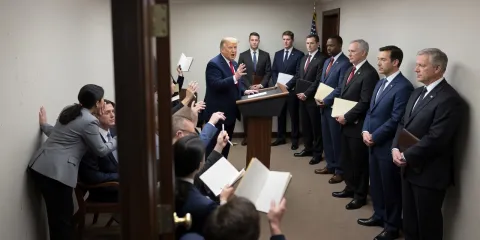
Trump Announces Deal for Full Hamas Disarmament and Israeli Withdrawal from Gaza
Donald Trump says a "Board of Peace" has reached a deal providing for the full disarmament of Hamas, an Israeli military withdrawal from Gaza and a new Palestinian governance structure. Hamas ties disarmament to a prior troop withdrawal, experts call the announcement hard to believe, and Israel's buy-in remains unclear. Ten countries read the same announcement as a historic breakthrough, a communications move, or a framework imposed from outside.

 +6
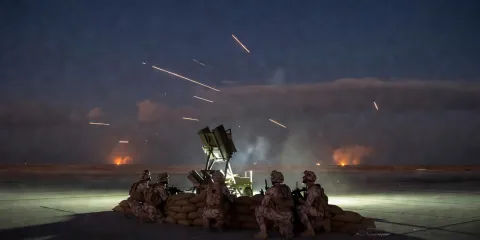
The United States strikes Iran, joint US-Saudi strikes in Iraq as the war widens
On July 30, 2026, after a brief lull, the United States launched a massive wave of strikes against dozens of targets in Iran, retaliating for Iranian missile fire on American bases in Jordan. The same day, US and Saudi forces jointly struck pro-Iranian militias in Iraq for the first time, killing at least twenty. Riyadh's entry and the threat to the Strait of Hormuz mark a regional escalation.
+8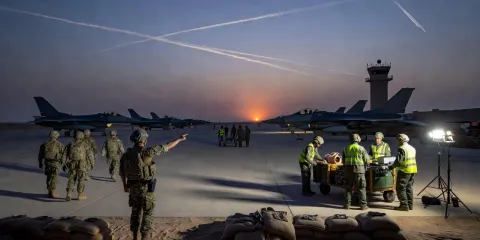
Iran strikes a U.S. base, the United States and Saudi Arabia retaliate in Iraq
After a brief pause, Iran launched a ballistic-missile attack on a U.S. base in Jordan, quickly followed by joint U.S.-Saudi strikes on pro-Iranian militias in Iraq (at least ten dead). Riyadh's entry into the conflict and the use of Israeli bases mark a regional escalation.
+6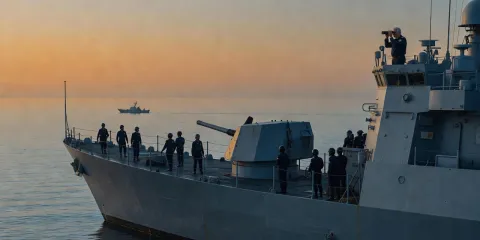
The United States and Iran halt their strikes: a pause for talks
After thirteen nights of U.S. bombing, Donald Trump orders a pause that Iran says it reciprocates by halting its reprisals. Tehran denies any direct negotiation despite Qatari and Pakistani mediation, while oil prices retreat and the Strait of Hormuz stays tense.
+11Understand global stakes from every perspective.
718 subjects · 75 countries · 8174 perspectives