Nigeria — news through its media
Stories followed in this country, with their framing set against the rest of the world.
161 subjects found
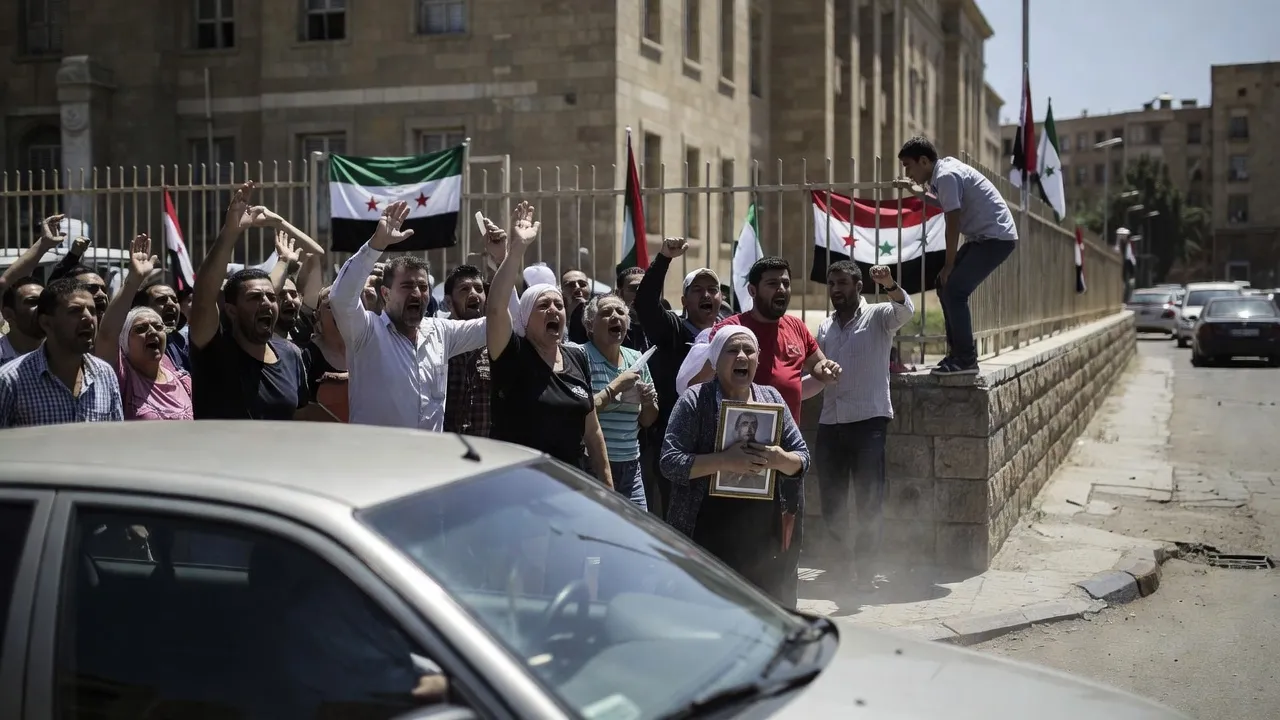
Bashar al-Assad Sentenced to Death in Absentia in Damascus, the First Verdict Against Syria's Former Regime
On Tuesday, Damascus's Fourth Criminal Chamber sentenced Bashar al-Assad to death in absentia for war crimes and crimes against humanity — the killing of children, torture leading to death. His brother Maher and seven other officials were sentenced alongside him; only his cousin Atef Najib appeared in person. The verdict was read live on state television. Assad, living near Moscow since December 2024, has not been extradited.


 +14
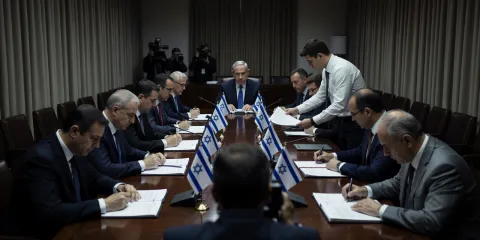
Netanyahu Rejects Trump's 15-Point Gaza Plan and Ties Any Withdrawal to Hamas Disarming
"Israel rejects the 15-point document." At a cabinet meeting on Sunday, Benjamin Netanyahu formally refused the roadmap published on 31 July by Donald Trump's Board of Peace and accepted by Hamas. No withdrawal before "genuine" disarmament, and no Palestinian state while he is in office. On the ground, though, Israel has scaled back its strikes since 3 August. Elections fall on 27 October.

 +12
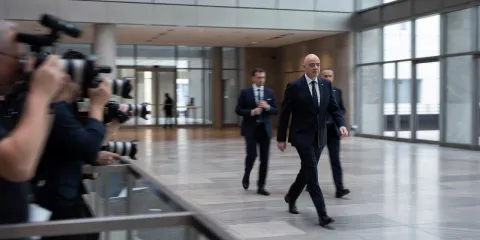
Infantino Faces Favouritism Allegations from His UEFA Years as FIFA Denounces a 'Concerted Effort' to Weaken Him
The Telegraph reports that UEFA paid a six-figure settlement to a former employee with whom Gianni Infantino is said to have had a relationship while he was its general secretary. UEFA confirms the payment, Infantino denies the claims 'categorically', and FIFA denounces a 'concerted and ongoing effort'. Northern Europe wants him gone; Africa and South America back him.


 +13

Iran Sets Six Conditions for Reopening Hormuz as the Revolutionary Guards Call the Strait a 'Theatre of War'
On Saturday the secretary of Iran's Supreme National Security Council published six preconditions for reopening the Strait of Hormuz: an end to the war, the lifting of the naval blockade and of sanctions, the withdrawal of US forces, compensation for war damage and the release of frozen assets. On Sunday the Revolutionary Guards hardened the line while Oman negotiated a temporary shipping corridor and Washington spoke of 'some progress'. A fifth of the world's oil is waiting.
 +19
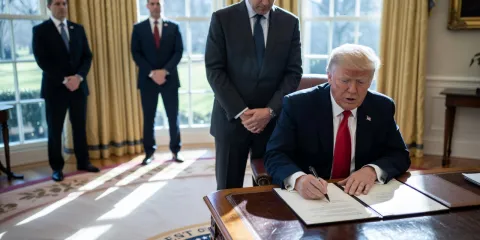
Trump narrows birthright citizenship and bans 'birth tourism'
Five weeks after the Supreme Court struck down his first executive order, Donald Trump signed two more on 6 August 2026: one denies automatic citizenship to children of four categories of non-citizen parents, the other bans 'birth tourism'. Fourteen countries read it from very different vantage points — a constitutional precedent for some, a direct threat to their nationals for others.


 +10
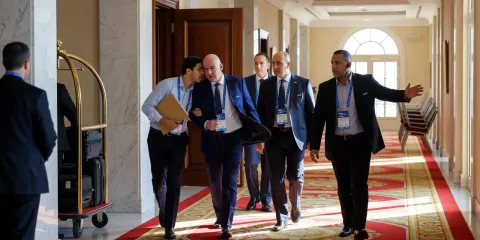
Gianni Infantino Abandoned by European Football, Backed by Africa, Facing UEFA Legal Threats
After pulling his plan to sell World Cup stakes to private investors, Gianni Infantino's re-election has gone from settled to uncertain: Wales, England, Serbia and Jordan have withdrawn their backing, UEFA is threatening FIFA with legal action, and both Arsène Wenger and the secretary general have distanced themselves. Twenty-one countries read the same crisis — Europe a fall, Africa a position to hold.

 +17
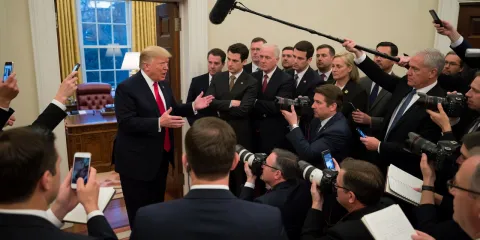
Trump Gives Iran a "Last Chance" as Tehran Denies Any Talks Are Under Way
Donald Trump says he called off a strike and opened talks with Iran, calling them a "last chance before decapitation". Tehran denies it: its only acknowledged channel is Omani mediation over the Strait of Hormuz, where a cargo vessel was struck. Twenty-one countries read the same ultimatum, between taking it seriously and weariness at a familiar cycle.
+17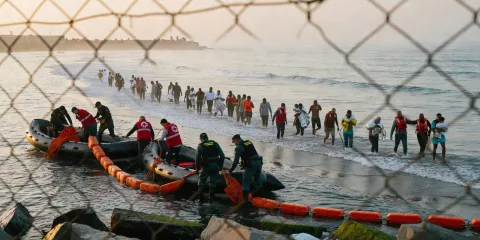
Ceuta: 67 dead, a floating barrier and a fractured Europe
The death toll from the rush on Ceuta has risen to at least 67, with roughly 60,000 crossings since 30 July. Spain is installing a 500-metre floating barrier at Tarajal, twenty-two states are demanding an emergency council, and Italy has suspended Schengen with Madrid.

 +6
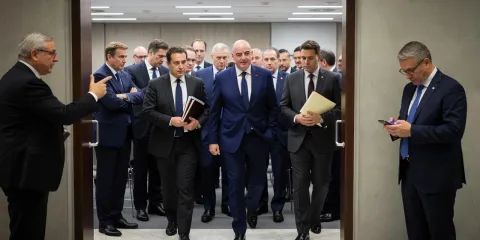
FIFA Drops Plan to Sell World Cup Stakes to Private Investors
Gianni Infantino has dropped the plan to sell private investors a share of World Cup revenues, after a revolt by the confederations and boycott threats. His senior adviser resigned, calling the plan "bad," while FIFA rejects the criticism and says it will continue consulting. Nine countries tell this retreat as a win for sporting governance, or as a tactical postponement.
 +5
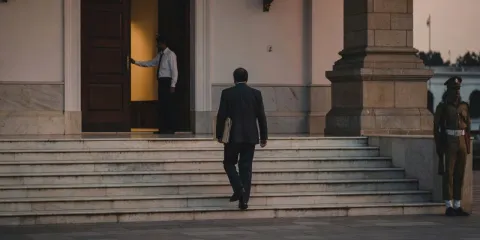
Bangladesh President Shahabuddin Resigns, Former Ally of Ousted PM Hasina
Bangladesh President Mohammed Shahabuddin, 76, resigned a year after the fall of Prime Minister Sheikh Hasina, whose ally he had been. His departure, described as voluntary, is part of the political transition led by the interim government and revives debate over constitutional continuity, the role of the presidency and the country's stability.


 +1
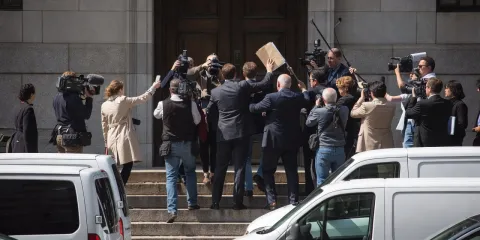
US Court Sets June 1, 2027 for Nicolás Maduro's Drug-Trafficking Trial
Federal judge Alvin Hellerstein of the Southern District of New York set 1 June 2027 as the start of the trial of former Venezuelan president Nicolás Maduro, charged alongside his wife Cilia Flores with narco-terrorism and drug trafficking. Maduro plans to challenge his immunity in November. The ruling revives debate over a US court's jurisdiction over a foreign former head of state and over Venezuelan sovereignty.
 +6
Understand global stakes from every perspective.
722 subjects · 75 countries · 8238 perspectives