Qatar — news through its media
Stories followed in this country, with their framing set against the rest of the world.
310 subjects found
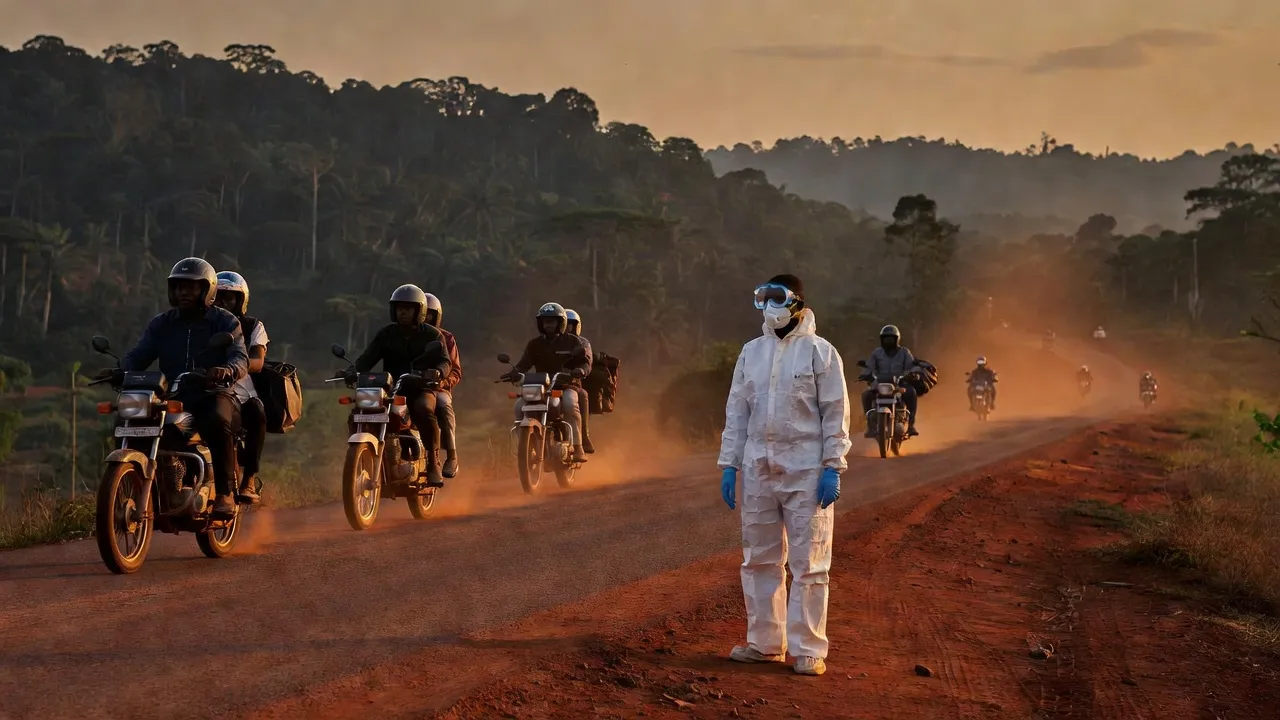
Ebola in DR Congo: more than 2,000 dead, and the WHO reveals the outbreak had been spreading since February
Congolese authorities report 2,011 deaths and 4,381 confirmed cases. The WHO reveals that the outbreak, declared on 15 May, had actually begun in February — early cases having been attributed to malaria and typhoid. "We are chasing the virus, it is ahead of us." The response is hampered by armed conflict, poor roads and unpaid health workers.


 +4
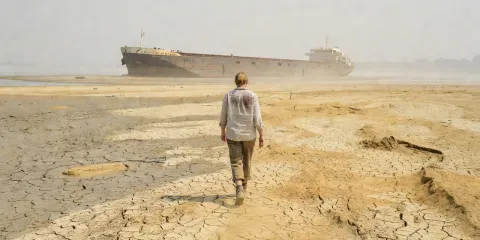
July, the hottest month ever recorded in the United States: Europe under its fifth heatwave, South Korea parched
Copernicus recorded the hottest June-July ever measured in Western Europe (21.62 °C) and NOAA confirmed the hottest July in the contiguous United States. A fifth heatwave hits Europe: rivers at record lows, nuclear reactors under strain, 70% of France under water restrictions. At the same time, South Korea is mobilising its army against drought — with no narrative link to Europe.


 +10
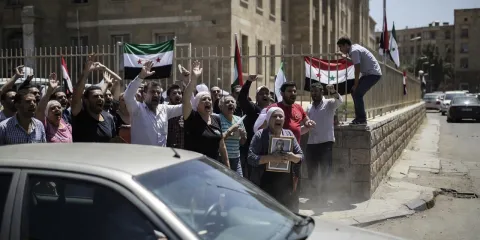
Bashar al-Assad Sentenced to Death in Absentia in Damascus, the First Verdict Against Syria's Former Regime
On Tuesday, Damascus's Fourth Criminal Chamber sentenced Bashar al-Assad to death in absentia for war crimes and crimes against humanity — the killing of children, torture leading to death. His brother Maher and seven other officials were sentenced alongside him; only his cousin Atef Najib appeared in person. The verdict was read live on state television. Assad, living near Moscow since December 2024, has not been extradited.


 +14

'Football Belongs to No Individual': Three Confederations Accuse Infantino as Trump Rushes to His Defence
UEFA, CONCACAF and the AFC — three of FIFA's six confederations, whose presidents are also FIFA vice-presidents — accuse Gianni Infantino of breaking trust "through deception" and demand an independent review of the abandoned plan to sell a stake in the World Cup. CAF and CONMEBOL did not sign. That evening, Donald Trump said replacing him would be "a terrible mistake".
 +11
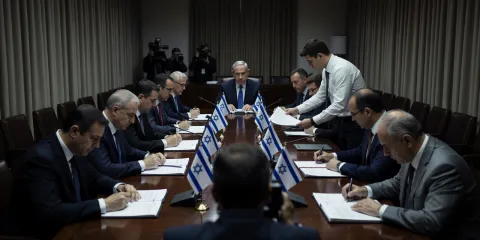
Netanyahu Rejects Trump's 15-Point Gaza Plan and Ties Any Withdrawal to Hamas Disarming
"Israel rejects the 15-point document." At a cabinet meeting on Sunday, Benjamin Netanyahu formally refused the roadmap published on 31 July by Donald Trump's Board of Peace and accepted by Hamas. No withdrawal before "genuine" disarmament, and no Palestinian state while he is in office. On the ground, though, Israel has scaled back its strikes since 3 August. Elections fall on 27 October.

 +12
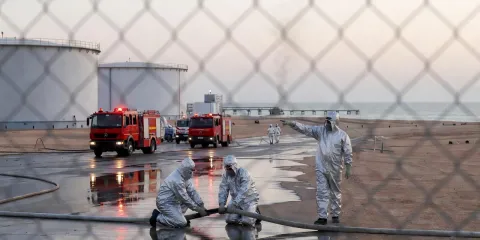
Houthis Strike an Aramco Refinery in Saudi Arabia as the UN Condemns and Yemen's War Reignites
On Sunday, Houthi forces claimed a drone strike on the Aramco refinery at Jazan on the Red Sea; Riyadh said the fire was out with no casualties. The same day, shelling of the port of Mokha killed at least seven people. Two days earlier the UN Security Council had condemned Houthi fire on the kingdom since 13 July. A conflict frozen since the 2022 truce is reigniting, two days after the Riyadh-Ankara-Islamabad defence pact.
+10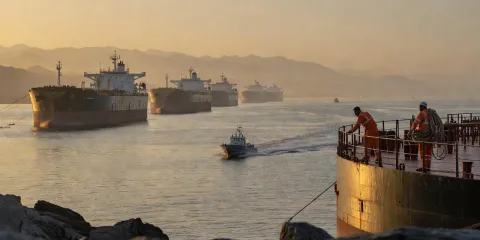
Iran Sets Six Conditions for Reopening Hormuz as the Revolutionary Guards Call the Strait a 'Theatre of War'
On Saturday the secretary of Iran's Supreme National Security Council published six preconditions for reopening the Strait of Hormuz: an end to the war, the lifting of the naval blockade and of sanctions, the withdrawal of US forces, compensation for war damage and the release of frozen assets. On Sunday the Revolutionary Guards hardened the line while Oman negotiated a temporary shipping corridor and Washington spoke of 'some progress'. A fifth of the world's oil is waiting.
 +19
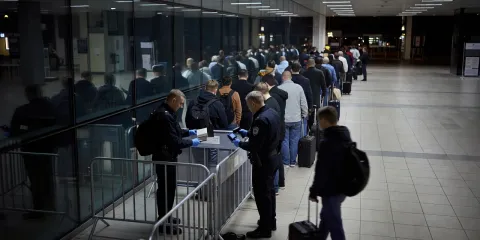
Spain imposes its own border checks on Italy, which refuses to back down
Madrid gave Rome until 9 August to lift the checks imposed on 1 August, then acted: controls on travellers from Italy until 7 September. Italy extended its own. Behind the quarrel lie at least 141 dead at Ceuta, 1,342 unaccompanied minors, and an investigation into Russia-linked accounts. Twenty-two countries order these three threads differently.


 +18
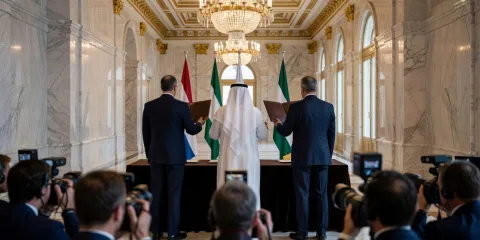
Saudi Arabia, Turkey and Pakistan sign the Mecca defence pact
On 7 August 2026, Mohammed bin Salman, Recep Tayyip Erdoğan and Shehbaz Sharif signed an agreement at Al-Safa Palace stating that an armed attack on any one of the three countries will be treated as an attack on them all. Riyadh insists it is 'neither a military axis nor a sectarian bloc'; thirteen countries read it differently, and Iran, its implicit target, is absent from the account.
+9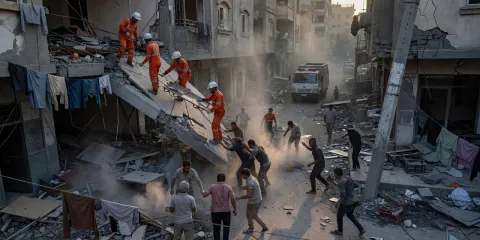
Israel Refuses to Withdraw From Gaza Despite the Deal as Its Strikes Kill Nine
Israel has conveyed to Washington its "serious security concerns" over Hamas disarmament and refuses any withdrawal until it is complete. Trump's Board of Peace backed that position. The strikes continued: nine killed on Saturday, up to eighteen on Sunday. Fifteen countries, from Jerusalem to Doha, do not tell the same day's story.
+11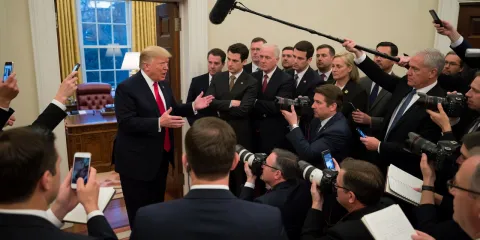
Trump Gives Iran a "Last Chance" as Tehran Denies Any Talks Are Under Way
Donald Trump says he called off a strike and opened talks with Iran, calling them a "last chance before decapitation". Tehran denies it: its only acknowledged channel is Omani mediation over the Strait of Hormuz, where a cargo vessel was struck. Twenty-one countries read the same ultimatum, between taking it seriously and weariness at a familiar cycle.
+17Understand global stakes from every perspective.
722 subjects · 75 countries · 8238 perspectives