United States — news through its media
Stories followed in this country, with their framing set against the rest of the world.
508 subjects found
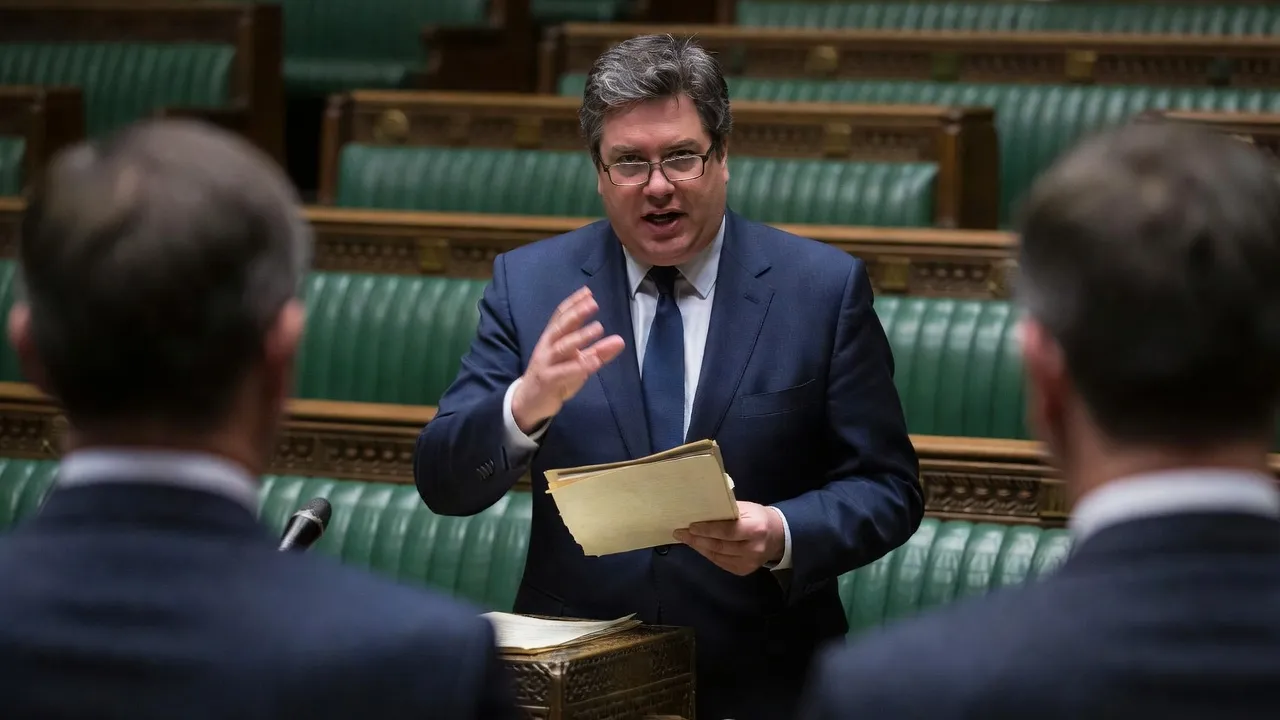
Twelve countries move to ban trade with Israeli settlements; Israel orders the British consulate closed
On Tuesday 8 September, twelve countries — the United Kingdom, France, Canada and nine European states — said they intend to ban trade with Israeli settlements in the occupied West Bank, which British Foreign Secretary Ed Miliband linked to “ethnic cleansing”. Two hours later Israel ordered the British consulate in East Jerusalem to close, told diplomats to leave and barred twelve Britons from entry. Washington said it would not follow.


 +16

The CDU's "heaviest defeat": Merz holds his ground as the succession fight opens in Saxony-Anhalt
The day after the AfD's victory, Friedrich Merz told reporters at the CDU headquarters in Berlin that he was "deeply shocked", calling the result the party's heaviest defeat in decades. He is holding his position for now, but the internal fight has begun: Sepp Müller is running for the CDU chairmanship in Saxony-Anhalt, and the coalition's reform agenda looks harder to carry.


 +9
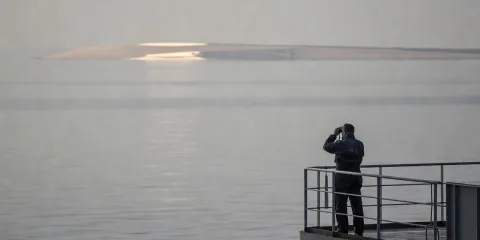
Shipping collapses in the Strait of Hormuz as Iran announces a restricted zone
Shipping through the Strait of Hormuz has fallen to its lowest level since May: a ten-day moving average of ten vessels a day, down from more than fifteen on Friday, according to Kpler cited by Reuters. Iran has announced a new restricted zone near the strait and three tankers turned back after a warning from the Revolutionary Guard. Canada has joined the US-French-British effort to reopen the passage.

 +10
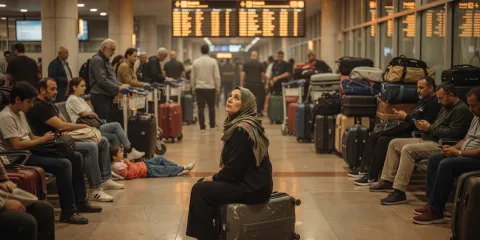
Anak Krakatau shuts eight Indonesian airports and grounds hundreds of flights in Jakarta
The eruption of Anak Krakatau in the Sunda Strait suspended operations at eight Indonesian airports and paralysed part of Jakarta's air traffic. The continuous eruptive episode lasted about twenty-five hours before activity returned to a Strombolian pattern. Five fallback airports were opened around the clock. The number of passengers affected ranges from 150,000 to 170,000 depending on the source.

 +11

AfD wins Saxony-Anhalt with 43.8% and falls three seats short of an absolute majority
The AfD won Sunday's regional election in Saxony-Anhalt with 43.8% of the vote, 23 points more than in 2021, on a record turnout of 77.8%. It takes 39 of the Landtag's 83 seats and falls three short of an absolute majority. Sahra Wagenknecht's BSW scraping in at 5.3% makes both an AfD majority and a cordon-sanitaire coalition of all the other parties impossible at once.
 +13
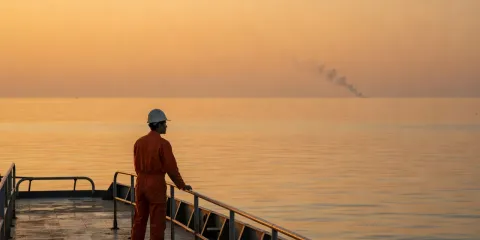
Washington destroys three Iranian tankers, Tehran says it hit three American ships
US Central Command said on Saturday 5 September that it had struck three Iranian oil tankers in response to ballistic missiles which it says the Revolutionary Guard fired at an aircraft carrier and a destroyer. Tehran calls the strikes a war crime under the United Nations Charter, and says it hit three American ships of its own. The two accounts of that night cannot be reconciled.
 +12

Witkoff and Kushner received for three hours at the Kremlin, expected in Kyiv under a three-day truce
Vladimir Putin received US emissaries Steve Witkoff and Jared Kushner at the Kremlin on Saturday 5 September for three hours and ten minutes. The two men are expected in Kyiv on Sunday, where Volodymyr Zelensky is to receive them for the first time. The local three-day truce framing the visit suspends strikes on Kyiv and Moscow alone: elsewhere along the front, the bombardments continued.
 +9
Falklands: Milei announces oil sanctions and a naval base, London reasserts sovereignty, Washington leaves doubt hanging
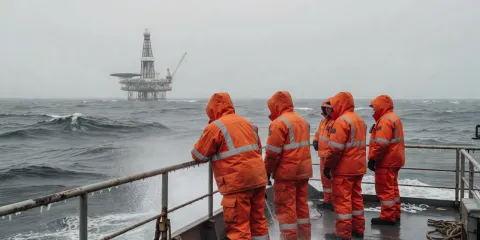
In a national televised address on September 4, Javier Milei announced a package of decrees, a bill and a national security council targeting the Sea Lion offshore oil project, 220 kilometers north of the Falklands, along with a naval base in Tierra del Fuego. He disputes the 3,600 islanders' right to self-determination. The announcement follows remarks by Donald Trump suggesting Washington is reassessing its position; London replied with an "unshakeable commitment".

 +10

Meloni, 1,413 days: the longest-serving government of the Italian Republic celebrates its record in Bari
On September 4 Giorgia Meloni's government became the longest-serving in the history of the Italian Republic, with 1,413 days in office, surpassing the second Berlusconi government. Fratelli d'Italia marked the record at the port of Bari, where organizers expected 10,000 people, while an opposition march passed nearby. A poll cited by La Repubblica puts disapproval of the government at 53 percent.
 +6
The UN drops Mercator for Equal Earth: Africa at its true size, the United States the only vote against
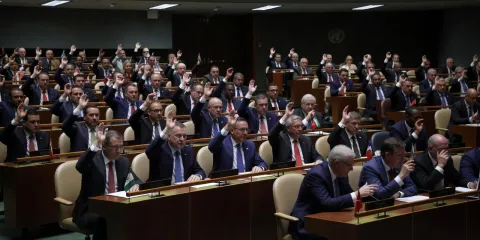
On September 4 the United Nations General Assembly adopted a resolution encouraging member states to move away from the Mercator projection, in use since 1569, in favor of Equal Earth. Togo led the initiative on behalf of the African Union: on Mercator, Greenland appears almost as large as Africa though it is fourteen times smaller. The United States was the only country to vote against.


 +9

Hormuz: Iran strikes Kuwait and the UAE, Oman refuses its toll, Washington cuts contact
Day five of the Hormuz escalation: Iran struck US bases located in Kuwait and the UAE — Gulf states themselves — and some twenty Emirati civilian flights were disrupted. Qatar condemned the strikes, Oman quietly rejected the toll Tehran wants to levy, and Washington says it has cut contact while floating an embargo.

 +9
Understand global stakes from every perspective.
725 subjects · 75 countries · 8262 perspectives