
DOMINANT ANGLE
Islamabad first notes Beijing's call to secure global supply chains, as the Strait of Hormuz remains disrupted by the war between Washington and Tehran.
Dominant angle identified — does not reflect unanimity of this country’s media
KEY POINTS
- 01
Xi Jinping has called on BRICS members and partners to maintain "stable and unhindered" industrial and supply chains in the face of disruptions to the Strait of Hormuz related to the USA-Iran war.
- 02
Xi described the Global South as a "key force driving the world towards multipolarity" and deemed the logic of "might makes right" outdated.
- 03
Xi demanded WTO reform "in the right direction", support for the New Development Bank, and a global AI governance framework based on broad consensus.
ANALYSIS
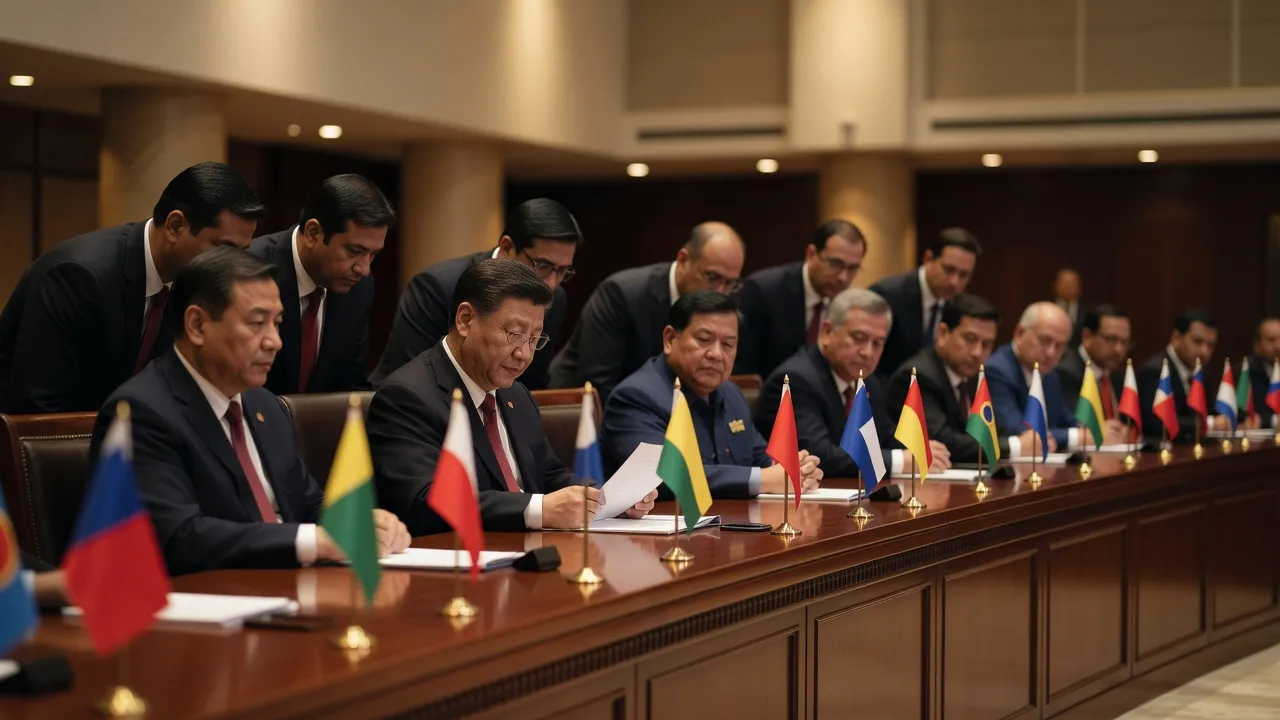
Islamabad, September 14, 2026. The BRICS summit closed on Sunday in New Delhi with a call from Chinese President Xi Jinping to preserve "stable and unimpeded" industrial and supply chains, as the Strait of Hormuz remains disrupted by the war between the United States and Iran. The Pakistani press, via The Express Tribune and The Nation, reported this speech delivered during the final session of the 18th BRICS leaders' summit, titled "Resilience, innovation, cooperation and sustainability: shaping the future for inclusive global growth".
For Islamabad, which relies on trade routes crossing the Gulf and is linked to Beijing by structuring economic agreements, this call resonates directly: any prolonged disruption to traffic in the Strait of Hormuz would weaken the country's energy and industrial supplies, which are already under budgetary tension. Xi Jinping described the Global South as a "key force driving the world towards multipolarity", considering the logic of "might makes right" to be outdated. He called for strengthened multilateralism, a collectively written reform of international law, and respect for the authority of the United Nations, while supporting reforms to multilateral institutions.
On the economic front, the Chinese leader demanded a reform of the international financial architecture, better representation for developing countries, and a reform of the WTO "in the right direction". He promised that China "will continue its voluntary and unilateral opening-up", and called for support for the functioning and development of the New Development Bank, the financial pillar of the group. Xi also advocated for the acceleration of a global governance framework for artificial intelligence based on a broad consensus.
The two Pakistani newspapers reported almost word for word the same speech, without expanding to other voices from the summit — neither the Russian announcements on a future BRICS space council, nor the session with invited countries where Indonesian Prabowo Subianto defended national autonomy. The Pakistani account primarily retains the economic and commercial dimension of the summit, deemed the most directly relevant to a country exposed to the ups and downs of global supply chains.