EXPLORE THIS STORY
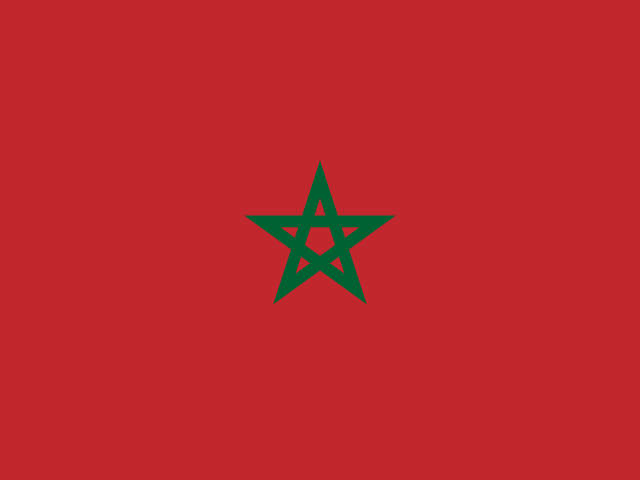
MOROCCO PERSPECTIVE
SIX WEEKS OF KEROSENE IN EUROPE, THREE MILLION NEW POOR IN THE PHILIPPINES: THE ENERGY BILL OF WAR
Single source
DOMINANT ANGLE
Morocco increases transport fuel subsidies by 25 percent without ever mentioning the war
Dominant angle identified — does not reflect unanimity of this country’s media
ANALYSIS
Rabat responds to the crisis with a concrete, immediate measure: a 25 percent increase in fuel subsidies for professional road transport operators. Morocco World News reports that this government decision aims to 'cushion the ongoing pressure of fuel prices.' Morocco, a net oil importer, is directly affected by the Hormuz crisis but lacks the Gulf's fiscal reserves to absorb the shock. The Moroccan response is typical of intermediate economies: no $26 billion plan like India's, but a targeted subsidy on the weakest link in the economic chain—transporters, who pass costs throughout the economy. What Morocco does not say is equally revealing: no mention of the war itself, no diplomatic positioning. Rabat manages consequences without commenting on causes, a posture of a small country that cannot afford to displease either Washington or Tehran.
KEY POINTS
- Fuel subsidies for transporters increased by 25 percent
- Morocco is a net oil importer without fiscal reserves comparable to the Gulf
- No diplomatic positioning on the conflict—managing consequences without commentary on causes
COGNITIVE BIASES IDENTIFIED
Complete avoidance of geopolitical context behind price increases
Presentation of government measure as sufficient without analysis of real impact
Absence of critical voices on Moroccan energy policy
SOURCES (1)
Does this analysis seem accurate?
SHARE
Compare with another country
Discover how another country covers this same story.