Common ground and differences in coverage across the media analysed.
The toll is established by IOM: at least 109 dead, including 15 children in the first version taken up by five of the six corpora (Bangladesh, Belgium, Latvia, Senegal, United Kingdom), and by the French press as well, which follows it up to 139.
The boat capsized in the night of October 8 to 9 near Guhere, north of Obock, shortly after its departure from Djibouti to Yemen.
The survivors, more than 80, are all of Ethiopian nationality.
Regarding the number of passengers, Latvia and Senegal report 305 according to the IOM, the United Kingdom reports around 350, and Belgium cites both figures according to the media (La Libre Belgique 305, VRT NWS 350).
Coverage that diverges
Regarding the toll as of the date of reading, the French press reports the IOM update (139 dead, 84 missing); Bangladesh, Belgium, Latvia, Senegal, and the United Kingdom stick to 109 dead and more than 116 missing.
Coverage aligned with this reading
Coverage that diverges
Regarding what drives the crossing, Bangladesh, France, and Senegal cite economic difficulties and opportunities in the Gulf, the United Kingdom cites poverty, insecurity, and climate; Latvia does not detail the causes.
Coverage aligned with this reading
Coverage that diverges
This grouping describes the publications analysed, not the position of these countries’ populations or of their governments.
What the coverage of each country leaves aside, while others put it forward.
Bangladesh
Belgium
France
Latvia
Preview: 3 of 6 media perspectives. Syntheses of the media analysed — not direct quotations. Method & limitations
Dakar reports the shipwreck off Obock as a human tragedy, quantified by the IOM and the UN, which affects Ethiopians driven towards the Gulf despite the war in Yemen.
2 sources · View sources
London is first focusing on the human toll of the shipwreck off the coast of Obock, as told through the numbers from the IOM and the fate of the children, more than the political causes of the East route.
2 sources · View sources
Dhaka takes away from the shipwreck of Djibouti its economic root: poverty and the search for employment in the Gulf drive Ethiopian migrants onto a deadly route.
2 sources · View sources
DOMINANT ANGLE
Dakar reports the shipwreck off Obock as a human tragedy, quantified by the IOM and the UN, which affects Ethiopians driven towards the Gulf despite the war in Yemen.
KEY POINTS
ANALYSIS
Dakar, October 12, 2026. Sénégal's Dakaractu and PressAfrik report on the shipwreck that occurred near Obock, Djibouti, based on statements from the International Organization for Migration (IOM) and its head of mission in Djibouti, Alexandre Coissac.
The reported toll is the one announced on Sunday, October 11: at least 109 migrants dead and more than 116 missing. Dakaractu specifies, according to the UN, that the overcrowded boat was heading to Yemen and capsized on the night of October 8-9 near Guhere, north of Obock. It was carrying 305 people, according to the IOM, "nearly 350" according to other survivors cited by PressAfrik. The articles do not mention the later toll of 139 dead.
The account emphasizes the human dimension. Alexandre Coissac speaks of "devastating human loss" and reports the testimony of survivors: the boat began to capsize from the rear as soon as it set off. PressAfrik indicates that the IOM is on the ground to provide emergency assistance and that all the victims are of Ethiopian nationality.
The East route is presented as one of the most dangerous in the world. Dakaractu mentions tens of thousands of migrants each year, PressAfrik hundreds of thousands leaving Ethiopia. Despite the resumption of fighting in early September in Yemen between Houthis and pro-government forces, the IOM has recorded over 20,000 arrivals from Ethiopia to Djibouti since September 10. A group of 150 passengers had already been turned back from Yemen and was attempting to cross again.
The causes are analyzed at two levels. PressAfrik cites economic difficulties and the hope of opportunities in Gulf countries, particularly Saudi Arabia. Dakaractu notes that a survivor came from Tigray, where fighting resumed last month between the TPLF and the federal army. "The goal is always the same, to reach the Gulf countries," says Alexandre Coissac.
PressAfrik finally recalls that the IOM had recorded 94 deaths on this axis in the first quarter of 2026, figures considered largely underestimated by the organization. The two articles do not mention smugglers or the reaction of an African government, and Sénégal is only visible through the gaze of its media on a distant crisis.
DOMINANT ANGLE
London is first focusing on the human toll of the shipwreck off the coast of Obock, as told through the numbers from the IOM and the fate of the children, more than the political causes of the East route.
KEY POINTS
ANALYSIS
London, 12 October 2026. The British press is treating the shipwreck off Djibouti as a humanitarian catastrophe documented by the United Nations. The BBC is reporting on the children among the 109 dead, with 116 people still missing, according to the International Organization for Migration (IOM). The Independent is carrying the same toll and the same hierarchy: "Children among 109 dead after migrant boat capsizes off Africa".
The two articles reconstruct the facts from the testimonies of survivors cited by the IOM. A boat carrying around 350 people, which set off from Djibouti to Yemen, capsized near Guhere, north of the port of Obock, on the night of Thursday, 8 October. Around 80 people were rescued, all of Ethiopian nationality. Among the recovered bodies are 52 men, 42 women, nine girls, and six boys. The Djiboutian authorities are continuing the search and organizing the burials; the IOM is assisting 64 survivors at its Obock centre.
The voice is almost entirely that of Alexandre Coissac, IOM's chief of mission in Djibouti. He is speaking of a "devastating loss of life" and a "stark reminder" of the dangers faced by migrants seeking economic opportunities. No Djiboutian, Ethiopian, or Yemeni official is quoted in the two articles.
The context is given in a few lines. Tens of thousands of migrants from the Horn of Africa attempt to reach Gulf countries every year by crossing the Bab el-Mandeb strait. The BBC writes that they are driven by "poverty, insecurity and the growing impacts of climate change", despite a Yemeni civil war that has been going on for over ten years. It adds that the IOM's displacement tracking system has recorded over 20,000 movements from Ethiopia to Djibouti since 10 September. The Independent recalls that more than 900 migrants died or disappeared on this route in 2025.
DOMINANT ANGLE
Dhaka takes away from the shipwreck of Djibouti its economic root: poverty and the search for employment in the Gulf drive Ethiopian migrants onto a deadly route.
KEY POINTS
ANALYSIS
Dacca, October 12, 2026. The Bangladeshi press is covering the shipwreck off the coast of Djibouti based on information from the International Organization for Migration (IOM), published on Sunday, October 11. The Daily Star and TBS News report that at least 109 migrants, including 15 children, died when a boat capsized in the night of October 8 to 9, near Guhere, north of Obock, shortly after its departure towards Yemen.
The detailed toll includes 52 men, 42 women, and 15 children, including nine girls and six boys. More than 116 people are missing. The number of passengers varies according to the accounts: around 305 for TBS News, 350 for the Daily Star, which cites the survivors. More than 80 people survived, all of Ethiopian nationality.
The dominant narrative is that of the economic causes of the exodus. Both titles quote Alexandre Coissac, IOM's chief of mission in Djibouti: this tragedy is "a brutal reminder of the dangers faced by migrants along this migration corridor" as they seek "economic opportunities". The Daily Star specifies that the crossing of the Bab el-Mandeb Strait aims for the Gulf countries, and quotes the IOM: "poverty, insecurity, and the growing effects of climate change" drive many people to leave despite regional instability.
TBS News adds the context of Yemen, the scene of the most serious escalation between government forces supported by Saudi Arabia and the Houthis supported by Iran since the UN ceasefire in 2022. Relief efforts are only briefly mentioned: IOM teams are working with local authorities, who are continuing the search, treating survivors, and organizing burials.
DOMINANT ANGLE
Brussels first notes the count of dead and missing from the Obock shipwreck, as reported by the UN and IOM, and records it as part of the structural danger of crossing the Red Sea.
KEY POINTS
ANALYSIS
Brussels, October 12, 2026. The Belgian press reports, in brief and factual coverage, the shipwreck that occurred on the night of October 8-9 off the coast of Djibouti. La Libre Belgique, in an article published on Sunday, October 11, indicates that at least 109 migrants, including 15 children, have died and that more than 116 others are missing, according to the UN.
The daily newspaper specifies the sequence of events as established by the International Organization for Migration (IOM): the boat, which was transporting 305 people from Djibouti to Yemen according to the survivors, capsized near Guhere, north of the Djiboutian town of Obock. IOM teams are on the ground alongside local authorities to provide emergency assistance.
The Flemish media VRT NWS reports the same figures: at least 109 dead, including 15 children, and 116 missing. However, it retains a different estimate of the boat's capacity, 350 people on board according to the survivors, whereas La Libre Belgique mentions 305. Both texts attribute these figures to the United Nations and the IOM, without any additional independent source.
VRT NWS highlights a temporal element: the disaster occurred on Thursday night, but "the news only became known this weekend". The information therefore arrives with a delay of several days after the event, and the tolls remain provisional, since the number of missing persons exceeds that of confirmed dead at this stage.
DOMINANT ANGLE
Paris is primarily focused on the human toll of the shipwreck off the coast of Obock, reported almost exclusively through UN and IOM press releases, with a death toll ranging from 109 to 139.
KEY POINTS
ANALYSIS
Paris, October 12, 2026. The French press is reporting on the shipwreck that occurred on the night of October 8-9 off the coast of Djibouti, relying almost entirely on statements from the UN and the International Organization for Migration (IOM). On Sunday, October 11, the death toll rose from 109 to at least 139, "after the discovery of 30 additional bodies," according to France 24, citing the IOM. Le Monde reports that 84 people are still missing, while BFMTV, RFI, and Sud Ouest, which are quoting the initial statement, still mention more than 116 missing people.
The numbers regarding the vessel vary depending on the source. L'Obs and Le Monde mention 305 people on board, while France 24, BFMTV, and RFI report 350, "according to survivors." The boat capsized near Guhere, north of Obock, en route to Yemen. Among the recovered bodies are 52 men, 42 women, and 15 children, including nine girls and six boys. More than 80 people survived, all of Ethiopian nationality; the IOM is assisting 64 of them at its Obock center, providing care, temporary housing, and food aid, while the Djiboutian authorities continue their search.
The articles extensively quote Alexandre Coissac, IOM's chief of mission in Djibouti: "This tragedy brutally reminds us of the dangers faced by migrants along this migration route." RFI also reports his observation of a "devastating human loss."
DOMINANT ANGLE
Riga measures the shipwreck of Djibouti by its sole human cost: 109 dead, including 15 children, and 116 missing according to the IOM, relayed without its own investigation.
KEY POINTS
ANALYSIS
Riga, October 12, 2026. The Latvian press is covering the shipwreck in Djibouti with a dispatch: Jauns and TVNET have published almost identical texts, dated Sunday, October 11, which are entirely based on the International Organization for Migration (IOM in the Latvian text).
According to this organization, at least 109 migrants have died, including 15 children, when a boat capsized near the Djiboutian coast. The vessel was carrying 305 people and was traveling from Djibouti to Yemen. It overturned during the night of Thursday to Friday, from October 8 to 9. The Latvian articles do not contain a more recent update than this figure of 109.
The two texts specify that more than 80 people have survived, while at least 116 are still considered missing. The head of the IOM mission in Djibouti is quoted: "This tragedy is a brutal reminder of the dangers faced by migrants on this migration route." This is the only direct voice in the account: neither survivors, nor Djiboutian authorities, nor the government of a country of origin are interviewed, and the articles do not provide any information on the progress of the search at sea.
The regional context is summarized in one sentence: "in the hope of a better life," tens of thousands of migrants from the Somali peninsula pass through Djibouti, cross the Bab el-Mandeb Strait, and reach the countries of the Persian Gulf. This migration continues, the articles note, despite the violence in Yemen. The texts do not mention the nationality of the passengers, the causes of the shipwreck, or the role of potential smugglers.
Explore every perspective on this subject across 6 countries.
Compare viewpoints and see where they diverge.
published on
countries
sources
articles
gap
The six corpora are based on the same UN and IOM press releases, with the differences lying in the date of the balance sheet used, the contextual elements added, and the space given to survivor testimonies.
The toll is not stabilized: search efforts continue and about 84 people remain missing.
Survivor accounts are coming through the IOM. Dakaractu reports, according to mission chief Alexandre Coissac, that the boat started taking on water at the back as soon as boarding began.
The BBC and The Independent write that the vessel was carrying around 350 people. La Libre Belgique and several French or Latvian outlets report 305, and PressAfrik mentions both figures, the second coming from "other survivors".
PressAfrik also indicates that the IOM is on the ground to provide emergency aid. According to Dakaractu, a group of 150 passengers had already been turned back from Yemen and were attempting the crossing again.
Several outlets have quantified the flow. According to the IOM, cited by the BBC and Sud Ouest, more than 20,000 arrivals from Ethiopia have been recorded in Djibouti since September 10. Sud Ouest adds around 178,000 arrivals between January 1 and October 1, 2026.
« The same goal of reaching the Gulf countries still exists »
Regarding deaths, RFI and PressAfrik recall that the IOM had recorded 94 on this axis in the first quarter of 2026, a figure the organization considers largely underestimated, according to RFI. The Independent writes that more than 900 migrants have died or disappeared on this axis in 2025.
The BBC mentions a Yemeni civil war that has lasted for more than ten years. TBS News describes the most serious escalation between government forces supported by Saudi Arabia and Houthis supported by Iran since the UN ceasefire in 2022.
When it comes to what drives people to leave, the answers overlap without being identical. The Daily Star, RFI, and PressAfrik mention economic difficulties and the hope of opportunities in Gulf countries. The BBC cites "poverty, insecurity, and the growing effects of climate change".
Dakaractu adds an element specific to its coverage: a survivor came from Tigray, where fighting resumed last month between the TPLF and the federal army. The BBC does not mention these clashes, and the Latvian articles do not detail any cause.
Five of the six reports stop at 109 deaths and more than 116 missing. The French press reports the update from the IOM, with at least 139 deaths and 84 missing. This count measures the date of reading for each report, not a divergence on the facts.
Sources are limited almost everywhere to the UN and the IOM. TBS News notes that a spokesperson for the Ethiopian government did not respond immediately and that the Djiboutian government could not be reached.
VRT NWS emphasizes that the news was only known this weekend, while the shipwreck dates back to Thursday night.
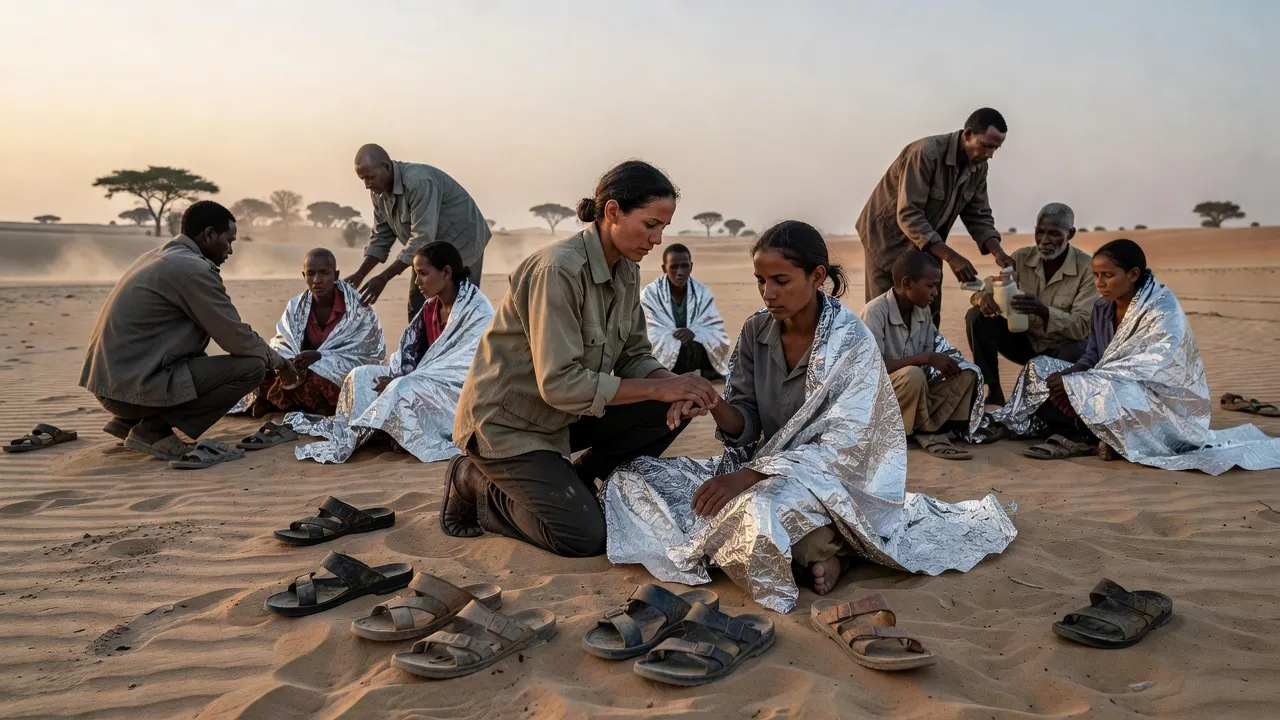
Some of the survivors, all Ethiopians, are being taken care of by the IOM at its migrant aid center in Obock.
The initial toll of 109 deaths included 52 men, 42 women and 15 children.
This corridor runs from the Horn of Africa to the Gulf countries via Yemen, where fighting has intensified.
The British media outlets are stopping at the initial toll of 109 dead. The IOM has since updated the figure to at least 139 dead, with the boat's overload designated as the main cause, but this figure does not appear in the British articles analyzed. The treatment remains that of a UN agency dispatch: figures, testimony from an official, reminder of the migration route, without investigation into the smugglers or the departures from Ethiopia.
Both articles maintain a sober and factual tone, without editorial commentary or a Bangladeshi perspective. TBS News notes that an Ethiopian government spokesperson did not immediately respond to requests for comment, and that the Djiboutian government could not be reached. Neither text mentions smugglers, criminal responsibilities, or a link to the internal Ethiopian situation.
La Libre Belgique places the event in a broader context. It writes that crossing the Red Sea "remains a particularly dangerous migration route" for those trying to reach the Arabian Peninsula from the Horn of Africa. The shipwreck is thus presented as one episode in a series on a route known for its risks, rather than as an isolated accident.
In these two articles, the angle is therefore humanitarian: the number of victims, the presence of children, the intervention of rescue teams. The available texts do not detail the causes of the capsizing, the origin of the passengers, the political context of the countries of departure and arrival, or the reaction of the Djiboutian or Belgian authorities.
The context is provided by the IOM, which Le Monde and Sud Ouest are quoting: tens of thousands of migrants from the Horn of Africa transit through Djibouti and cross the Bab el-Mandeb Strait to Yemen every year, hoping to reach the Gulf countries. "Poverty, insecurity, and the increasing consequences of climate change" are driving them to leave. Since September 10, the IOM has recorded over 20,000 arrivals from Ethiopia to Djibouti, and approximately 178,000 between January 1 and October 1, 2026, according to Sud Ouest.
RFI places the drama on the so-called Eastern route, "one of the most used routes in the world," where the conflict in Yemen, which has recently escalated, is not deterring candidates from leaving. It recalls that the IOM had already recorded 94 deaths on this axis in the first quarter of 2026, figures that it considers largely underestimated. The reporting remains factual and focused on the victim count, without any reported official French reaction in the corpus.
The coverage is that of an international brief. Jauns headlines the magnitude of the drama ("a colossal number of migrants" dead) and illustrates the article with an image of rescuers helping survivors; TVNET reuses the same text with a more sober title, focused on the figure of 109 dead. No Latvian official is quoted, and no connection is made to European migration policy. Latvia receives the subject as a distant tragedy, measured in lives lost, children dead, and missing people still being searched for.
More divergent than 13% of recent comparable stories (reference: 90 recent stories measured with the same method).