
DOMINANT ANGLE
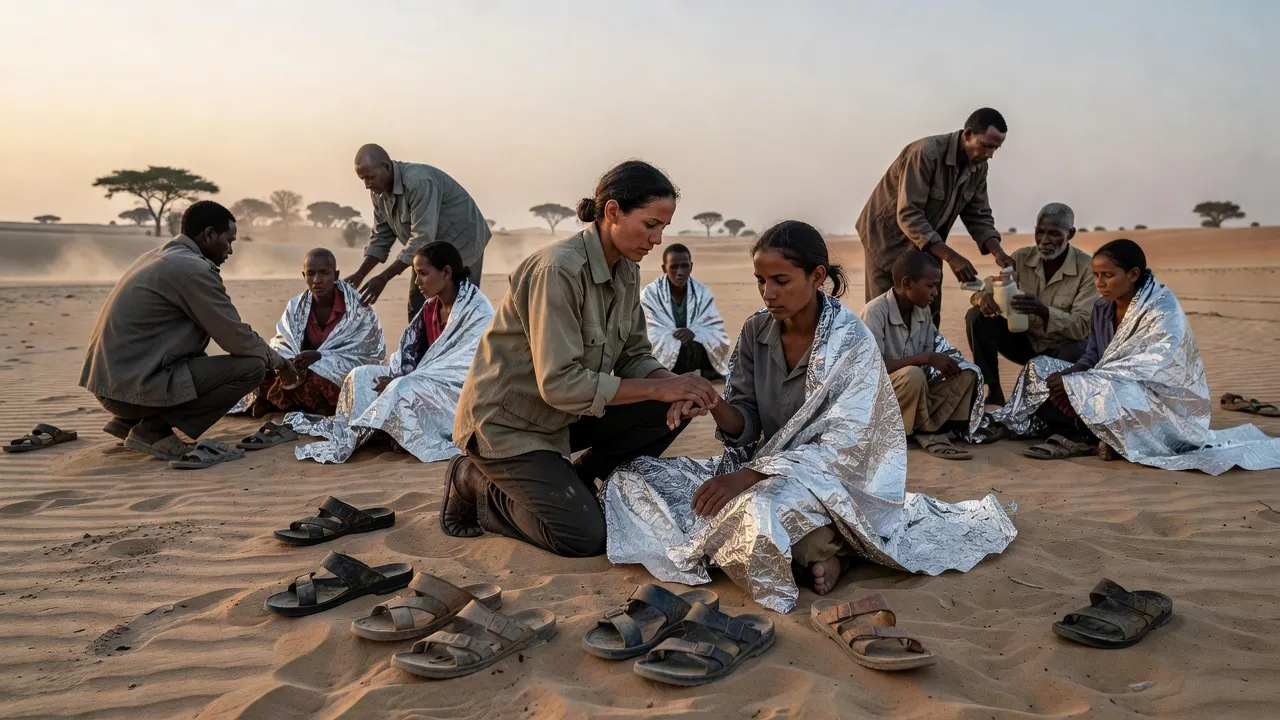
Brussels first notes the count of dead and missing from the Obock shipwreck, as reported by the UN and IOM, and records it as part of the structural danger of crossing the Red Sea.
Dominant angle identified — does not reflect unanimity of this country’s media
KEY POINTS
- 01
At least 109 migrants, including 15 children, have died and more than 116 are missing, according to the UN (La Libre Belgique, October 11).
- 02
The vessel, which set sail from Djibouti to Yemen, capsized near Guhere, north of Obock, on the night of October 8-9, according to the IOM.
- 03
The number of people on board varies: 305 according to La Libre Belgique, 350 according to VRT NWS, citing the survivors.
ANALYSIS
Brussels, October 12, 2026. The Belgian press reports, in brief and factual coverage, the shipwreck that occurred on the night of October 8-9 off the coast of Djibouti. La Libre Belgique, in an article published on Sunday, October 11, indicates that at least 109 migrants, including 15 children, have died and that more than 116 others are missing, according to the UN.
The daily newspaper specifies the sequence of events as established by the International Organization for Migration (IOM): the boat, which was transporting 305 people from Djibouti to Yemen according to the survivors, capsized near Guhere, north of the Djiboutian town of Obock. IOM teams are on the ground alongside local authorities to provide emergency assistance.
The Flemish media VRT NWS reports the same figures: at least 109 dead, including 15 children, and 116 missing. However, it retains a different estimate of the boat's capacity, 350 people on board according to the survivors, whereas La Libre Belgique mentions 305. Both texts attribute these figures to the United Nations and the IOM, without any additional independent source.
VRT NWS highlights a temporal element: the disaster occurred on Thursday night, but "the news only became known this weekend". The information therefore arrives with a delay of several days after the event, and the tolls remain provisional, since the number of missing persons exceeds that of confirmed dead at this stage.
La Libre Belgique places the event in a broader context. It writes that crossing the Red Sea "remains a particularly dangerous migration route" for those trying to reach the Arabian Peninsula from the Horn of Africa. The shipwreck is thus presented as one episode in a series on a route known for its risks, rather than as an isolated accident.
In these two articles, the angle is therefore humanitarian: the number of victims, the presence of children, the intervention of rescue teams. The available texts do not detail the causes of the capsizing, the origin of the passengers, the political context of the countries of departure and arrival, or the reaction of the Djiboutian or Belgian authorities.