
DOMINANT ANGLE
Ottawa interprets the papal warning about the "paradise of machines" as the direct extension of the first encyclical of Leo XIV dedicated to artificial intelligence.
Dominant angle identified — does not reflect unanimity of this country’s media
KEY POINTS
- 01
Léon XIV warned, Friday, September 25, 2026, that a "paradise of machines" risks causing humanity to lose its humanity, in his speech at the Élysée in front of Emmanuel Macron.
- 02
The Pope devoted his first encyclical, Magnifica Humanitas, to artificial intelligence, calling for robust regulation and developers' work for the common good rather than profit.
- 03
He termed the doctrine of nuclear deterrence an "error" fueling a new arms race, stating that peace "is built day after day, through dialogue and justice".
ANALYSIS
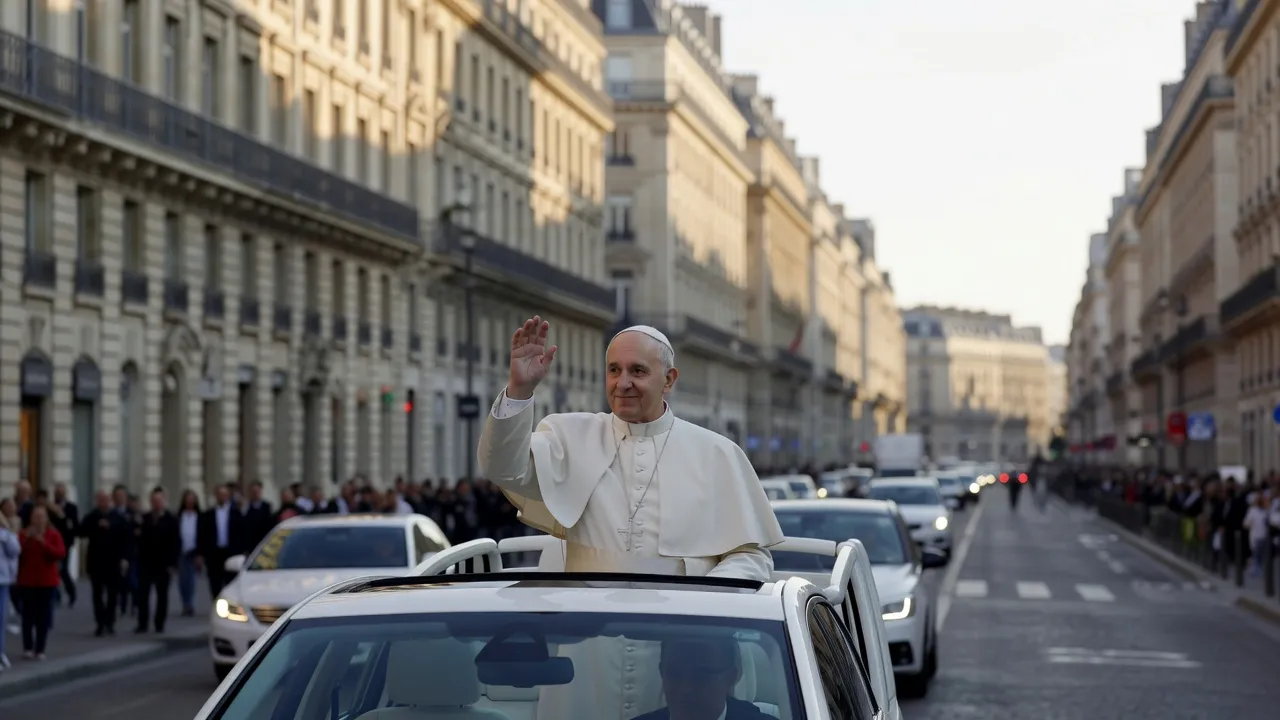
Ottawa, September 26, 2026. For the Canadian press, the first speech of Léon XIV in France, on Friday, September 25, 2026, is first and foremost a technological warning. The Pope warned that humanity risks sinking into a "paradise of machines" if artificial intelligence is not framed by ethical reflection. Speaking before Emmanuel Macron and the diplomatic corps at the Élysée, he stated: "If we want to avoid losing our humanity within a 'paradise of machines' that invades and conditions our daily lives, there is an urgent need for education in ethical discernment."
The Globe and Mail and CBC News link this warning to the Pope's first encyclical, Magnifica Humanitas, entirely dedicated to artificial intelligence, in which he called for robust regulation and urged developers to work for the common good rather than for profit. CBC recalls that Léon XIV has, since the beginning of his pontificate, identified AI as one of the greatest challenges for humanity, and that he has asked developers and politicians to "slow down" in the face of growing calls for safeguards. On his way to Paris, he said he was satisfied that his message was being heard.
The trip, the first official visit of a Pope to France in eighteen years, is also seen as a test for a Church that, according to The Globe and Mail, has lost ground on ethical issues in a country where secularism is enshrined in the Constitution. Léon XIV invoked the "deep Christian roots" of France, a country from which his paternal ancestors originated, while reaffirming the Vatican's opposition to nuclear weapons, qualifying the doctrine of deterrence as an "error" that fuels a new arms race: "Peace is not a balance of powers; it is built day by day, through dialogue and justice."
Macron hailed a visit that brings "a source of hope", recalling that France defends "peace, effective multilateralism, and respect for international law". According to Canadian media, up to a million people were expected to see the Pope, whose program then included a visit to UNESCO, vespers at the reopened Notre-Dame, followed by Lourdes and Metz.