
DOMINANT ANGLE
Nigeria is particularly mindful of Pope Leo XIV's warning against a "paradise of machines", a message that its press links to its own concerns about artificial intelligence and technological dehumanization, more than the diplomatic stakes of the visit.
Dominant angle identified — does not reflect unanimity of this country’s media
KEY POINTS
- 01
The pope warned at the Élysée: "if we want to avoid losing our humanity in the midst of a machine paradise that invades and conditions our daily life, there is an urgent need for education in ethical discernment" (Vanguard).
- 02
More than half a million faithful are expected on Saturday at the Place de la Concorde for the papal mass, according to Punch Nigeria.
- 03
France adopted a law in June opening up a right to end-of-life care for certain adult patients; the pope expressed concern over genetic manipulation, surrogacy, and organ trafficking, according to Vanguard.
ANALYSIS
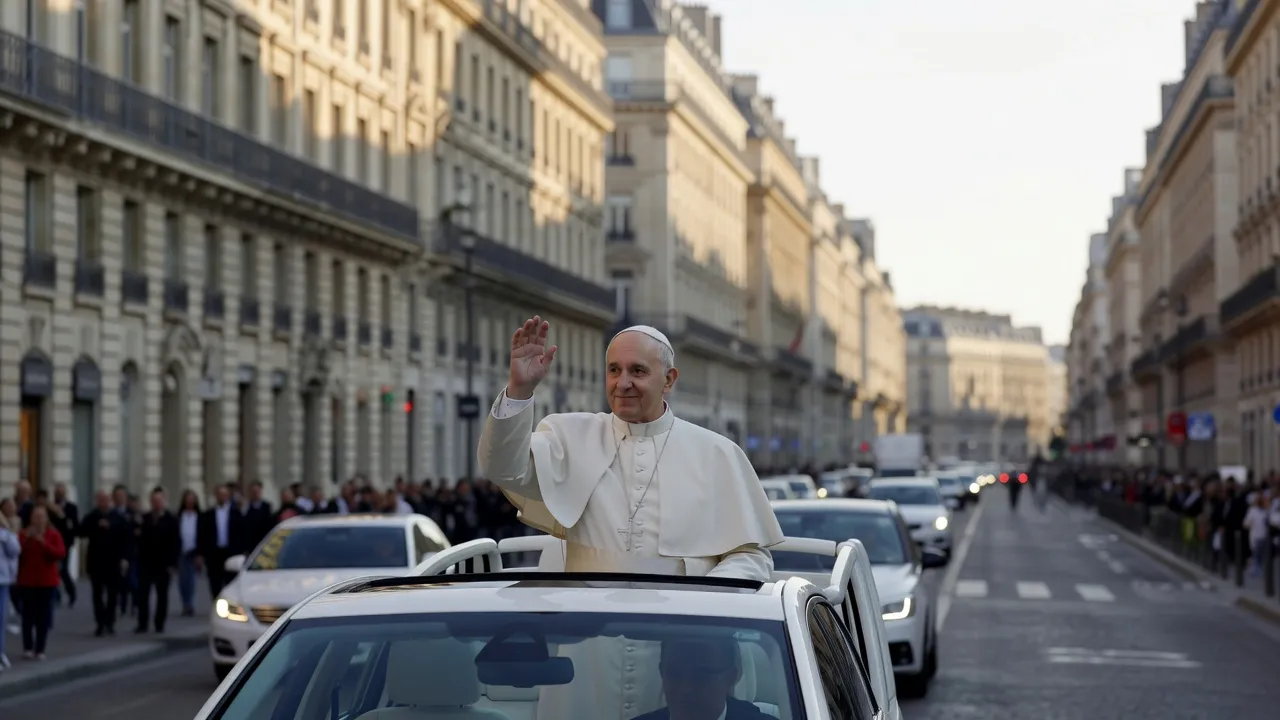
Abuja, September 26, 2026. The Nigerian press has widely reported on the warning issued by Pope Léon XIV against a "paradise of machines," delivered on Friday at the Élysée the day after his arrival in France for his first visit to the country in eighteen years. According to Vanguard, the American pontiff, welcomed by President Emmanuel Macron upon his arrival at Orly, warned that "if we want to avoid losing our humanity amidst a paradise of machines that invades and conditions our daily life, there is an urgent need for education in ethical discernment."
Punch Nigeria highlights that this message, relayed by the BBC, marks the beginning of a four-day visit characterized by an exceptional mobilization: over half a million faithful are expected to gather at the Place de la Concorde on Saturday for the grand mass, an altar having been set up under high security around the Champs-Élysées.
For the Nigerian press, France remains a case study on the role of religion in the public sphere. Vanguard recalls that the Pope, in a secular country since 1901, advocates for "authentic secularism" that does not consist of excluding religion from the public sphere or education, but rather of facilitating dialogue between the state and religious institutions for the common good. The article notes that French politicians have invoked this secularism to justify the ban on religious symbols, including Muslim women's attire, in public spaces and schools — a debate that resonates particularly in Nigeria, which faces its own tensions between Christian and Muslim communities over the wearing of the hijab in schools.
The pontiff also expressed concern, still according to Vanguard, over trends "to transform science and technology into profit-oriented enterprises," citing genetic manipulation, surrogacy, and organ trafficking, following the adoption in June of a law granting the right to assisted dying for certain adult patients.
Nigerian Eye reports that the visit, also expected to address migration, climate, and the role of religion in modern society, comes seven months before the French presidential election, in a climate marked by the announced surge of the far right. Macron, due to the strict separation of church and state, will not attend the mass, unlike his wife Brigitte Macron and Prime Minister Sébastien Lecornu.