
DOMINANT ANGLE
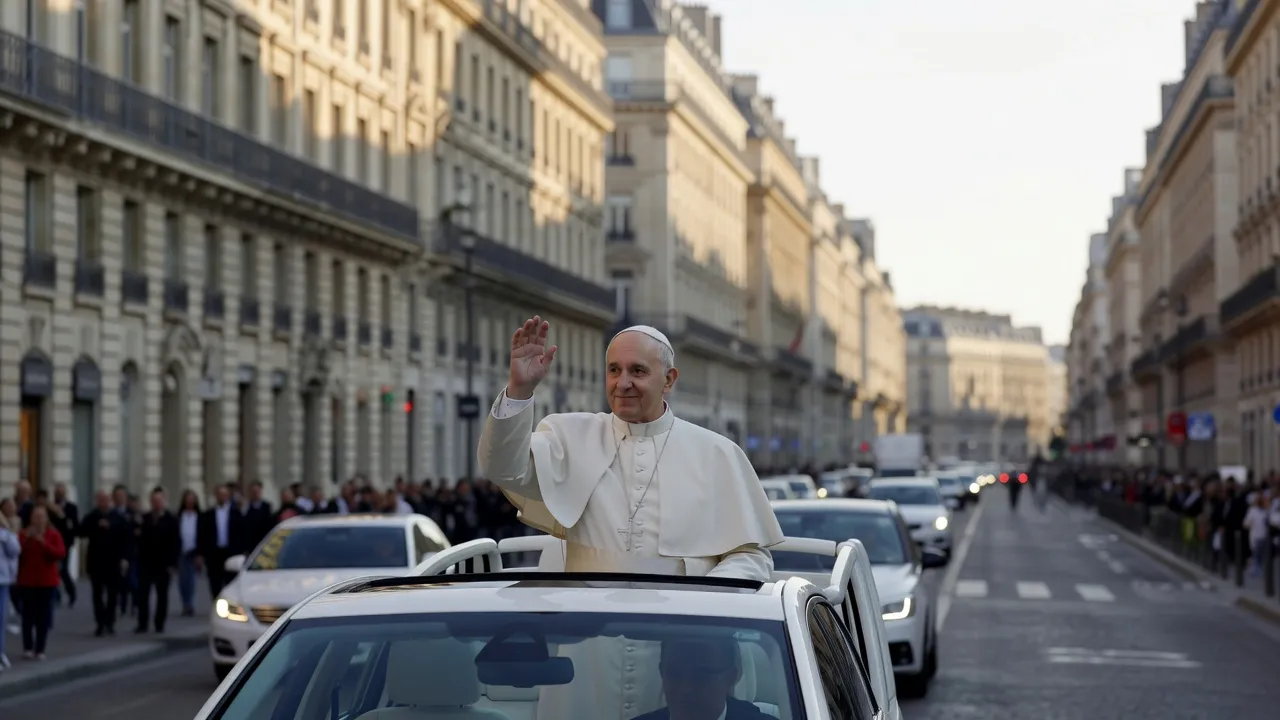
Bucharest sees the visit of Pope Francis to France as a lesson in society addressed to Paris - end of life, secularism, youth seeking faith - more than a simple protocol exercise at the Elysée.
Dominant angle identified — does not reflect unanimity of this country’s media
KEY POINTS
- 01
Léon XIV has become the first pope to enter Notre-Dame since its reopening in December 2024, a visit that his predecessor François had refused during the inauguration, according to Digi24.
- 02
At the Élysée, the pope denounced "genetic manipulations", "gestation for others", "organ trafficking" and "offering a programmed death" as drifts that risk diverting science towards lucrative businesses, according to Mediafax.
- 03
Hungarian Prime Minister Péter Magyar was received in private audience by the pope in Rome on Thursday, a half-hour devoted to wars, the energy crisis and artificial intelligence, before inviting the pontiff to Hungary, according to Mediafax.
ANALYSIS
Bucharest, Saturday, September 26, 2026. On Friday, in Paris, Léon XIV began the first visit of a pope to France in eighteen years, a four-day trip that the Romanian press is reconstructing hour by hour: a Parisian stage, then Lourdes on Saturday evening, and Metz on Monday. Digi24 notes that the pontiff has become the first pope to enter Notre-Dame since its reopening in December 2024, after the 2019 fire — a stage that his predecessor François had refused during the inauguration. The newspaper also notes that the pope did not fail to recall his "Norman and Béarnaise family origins," a personal wink seen as a sign of closeness to the visited country; according to Mediafax, one million people were expected in the French capital for the entire stay.
At the Élysée, received by the Macron couple, Léon XIV addressed, according to Digi24, "without detour" secularism, the dangers of artificial intelligence, and end-of-life issues. He denounced "genetic manipulations," "gestation for others," "organ trafficking," and "offers of programmed death," qualified as "drifts" that risk "diverting science and technology towards lucrative businesses." Mediafax extensively quotes his reasoning: "technological development has contributed over the centuries to a significant improvement in the living conditions of humanity; at the same time, each stage of progress has also shown the ambiguous face of instruments capable of harming when they are not oriented towards the good." The pope hammered home that "the protection of the right to life constitutes the indispensable foundation of all other human rights," recalling that the Universal Declaration of Human Rights was proclaimed in Paris.
The evening shifted to a completely different register: a vigil bringing together 80,000 young people at the Stade de France, combining pop music, dialogues with the pontiff, and an exhibition of the "holy tunic of Christ," a relic preserved in Argenteuil.
On the sidelines of French current events, Mediafax recalls that Hungarian Prime Minister Péter Magyar was received in private audience by the pope in Rome on Thursday, a half-hour exchange on wars, the energy crisis, and artificial intelligence, concluded by an official invitation to visit Hungary — a sign, for the Romanian press, that the pontiff's agenda far exceeds the sole Parisian framework.